Showing posts with label -B-. Show all posts

Tuesday, December 22, 2015

BattleBlock Theater

The Behemoth - 2013 - X360/PC

BattleBlock Theater is the third game from developer The Behemoth whose previous games are Alien Homnid and Castle Crashers. It was designed by Dan Paladin (aka Synj) and Tom Fulp, both of Newgrounds.com fame and features the same art style and sense of humor you'd expect if you've played The Behemoth's previous games or are aware of their Newgrounds submissions. BattleBlock Theater is a cooperative 2D platformer that requires two players, connected either online or played locally to navigate through a series of levels that require players to be good platformers, puzzle solvers, and beat-em-up-ers. 

The core gameplay in BattleBlock is mostly good, but what makes this game stand out is the humor. In a bizarre but funny opening cutscene, a narrator (voiced by Will Stamper who is also an active Newgrounds contributor) explains that several friends have been shipwrecked on an island full of cats, because this game's roots are in internet culture. The cats have captured the surviving members of the shipwreck, including Hatty Hattington, the former captain of the ship. The cats, now lead by Hatty Hattington who appears to be the victim of mind control, are forcing the survivors to participate in gladiatorial like challenges in a theater for the cats amusement, which is the very ridiculous context to the actions you're performing throughout the game. The narrator is the real star of BattleBlock Theater and will chime in frequently to comment on the actions you're performing during each stage. When an entire level is complete, you'll be treated to another cutscene featuring the narrator sometimes explaining what's happening in the plot, but mostly just being funny with this game's uniquely weird sense of humor.

Each stage requires both players to cooperate to navigate through a series of traps and enemies, all the while collecting green gems. When enough gems are collected, the stage exit is unlocked, allowing you to advance to the next one. But if you really want to be a completionist, you can try to search for all of the gems in each level. There are two difficulty settings on BattleBlock theater, "Normal" and "Insane", both of which I think are very flawed. On normal when a player dies, they instantly respawn next to their partner. There's pretty much no challenge with this difficulty and because there's practically no punishment or consequence for dying, players are free to be as careless as they want while progressing through each level. This may be fine for some, but I personally need a little more tension and challenge while playing, so I opted for "Insane" mode. In insane mode, when either player dies, both players are forced to restart the entire level. From the beginning. Now this is fine for the first few handfuls of levels, but when the number of enemies and difficulty of platforming starts to rise near the middle of the game, this mode starts to get really frustrating, especially when you pull off a difficult section perfectly, but your partner dies and both players are forced to start the entire level over. I think BattleBlock could have really benefited from some different difficulty settings here. Either a checkpoint system or a number of lives other than just one would have been very, very welcome. This is a relatively simple thing that I think unfortunately really hamstrings BattleBlock Theater

BattleBlock Theater Video Review

Summary 
Overall though, this is still a pretty solid game. It's another good couch co-op game, a type of game which I personally love and have been enjoying its recent resurgence. There are also several competitive mini games included here, most of which I actually didn't mess around with much, but they look like they could be fun if you're into competing rather than cooperating. There's also a built in level editor if you want to make your own sinister stages for your friends to navigate through. All in all BattleBlock Theater is a good game to share with friends, and features the most absurdly weird, yet still funny sense of humor you'll find in a video game

Saturday, November 14, 2015

The Beginner's Guide

Davey Wreden (Everything Unlimited Ltd.) - 2015 - PC

Davey Wreden, who co-created The Stanley Parable, a game which I absolutely adored for its smart deconstruction and examination of game design, has a new game out. His new game, The Beginner's Guide, seems very similar to The Stanley Parable at first glace. Both fall under the sometimes derogatory genre of "walking simulator". Both begin by dropping the player in a foreign environment with little or no context or introductory story elements. And both have a narrator who serves as the main storyteller and provides some context to what you're doing in the game. And that's about where the similarities end. Players who enjoyed The Stanley Parable's quirky sense of humor should know that The Beginner's Guide has a very different tone and there's not many jokes or things that will make you laugh in the game. It's a more serious and thought provoking experience that invites its players to think analytically not only about the games they play, but the creators that make the games they play. 

The Beginner's Guide begins on a custom Counterstrike map where Davey Wreden, the game's creator, introduces himself as the narrator. He explains that the custom Counterstrike map, and every level other and short game that appears in The Beginner's Guide were all created by a developer named CODA who retired a few years ago from making games. Wreden, who claims he was influenced and inspired by CODA's work has complied many of his short games together into one mega-game - The Beginner's Guide - and has shared them on the internet in order to pique interest in CODA's work and hopefully coax him back into making games.

CODA's levels and games start simple, beginning with a basic custom Counterstrike map and then progress to more thematically complex games that explore conveying emotion through level design and dialogue with NPCs. Wreden accompanies your exploration with narrative commenting on the level design, CODA's design intentions and development process and also continuously elaborates on the nature of the relationship between CODA and himself. The Beginner's Guide is a fascinating game to play if you have any interest at all in game design and it really gets you to think a lot about the design process and the fact that developers themselves are human beings and how their emotional state can affect a game's design and also vice versa. 

The Beginner's Guide Video Review

Summary
The Beginner's Guide is a solid follow-up to The Stanley Parable. Although it's tonally and thematically different, it's still just as interesting as The Stanley Parable and I found it to be even more thought provoking. Check this out if you want to experience a more "mature" version of the Stanley Parable, or to see some really neat level design and emotional storytelling

Friday, October 16, 2015

BioShock

2K - 2007 - PC/X360/PS3

Wooo!! 100 reviews! I figured it would be appropriate to cap off #100 with the original Bioshock since I started back in 2013 reviewing the same franchise with my very first review of BioShock Infinite. I still don't think I'm a great games critic or reviewer and I still have a lot to work on, but in re-reading my first review from two years ago, I can see how far I've come. In addition to more comprehensive and insightful writing, I've started including video reviews with my posts as well, in case you hadn't noticed. Of course having 100+ reviews and a ton of content introduces a problem of content discovery, which I'm attempting to remedy with new features like my games of the year list and my top 10 lists - both of which I intend to add to and update often, so keep an eye on those. Anyway, enough with the housekeeping, let's get on to talking about Bioshock.

I remember seeing Bioshock for the first time at E3 2006 before it was released later in 2007. It was by far the most interesting game trailer I saw at E3 that year. The underwater city setting, strange combat powers and gruesome violence were so unlike anything I had seen in a game before. When I eventually got my hands on the game it also played unlike anything I had experienced before, having at that time never played its spiritual predecessors, the System Shock games. Bioshock's combination of shooting mechanics, light RPG and puzzle solving elements, and high level of audiovisual presentation were unlike anything else around at that time. I remember being struck by how cinematic and directed the game felt. It felt like a movie. It felt like an amusement park ride where you're barraged by an overwhelming presentation of audiovisual effects that all spring to life as you pass by them. Bioshock's atmosphere was so unique and refreshing and it absolutely captivated me.

Bioshock takes place in the 1960s and follows the story of a man named Jack who, at the beginning of the game survives a plane crash that leaves him swimming in the middle of the ocean. You guide Jack away from the burning plane and to a lighthouse, the only structure visible in the vast ocean other than the flaming, sinking wreckage. Investigating the interior of the lighthouse reveals a bathysphere which takes you deep underwater and eventually reveals the massive underwater city of Rapture, where the remainder of the game takes place. The trip to Rapture is accompanied by a voiceover from a man named Andrew Ryan, who introduces himself as the creator of Rapture and conveys that he built the city as a haven free from external social, political or religious influences. But of course upon entering the city, it's immediately obvious that something has gone very wrong in Ryan's utopia and now masked and bandaged psychotic murderers known as splicers roam the remains of Rapture. You're contacted via radio by a man named Atlas who urges you to assist him in rescuing his family who he claims has been trapped in the bathysphere dock by Ryan. Atlas warns you to be wary of splicers who were previously Rapture's human residents, driven insane from abuse of a drug called ADAM.

When processed, ADAM becomes something called a plasmid, which when injected into a user's bloodstram can rewrite genetic code and grant its users dangerous and powerful new abilities. In addition to traditional firearms and melee weapons, pasmids serve as your main defense against splicers and Rapture's other many dangerous inhabitants. The use of plasmids also rewards players for their environmental awareness. For example, the electro-bolt plasmid is extra effective when targets are standing in water. Similarly, the incinerate plasmid is effective when used on oil spills that can be found throughout Rapture.

Experimentation with Bioshock's many plasmid powers is one of the most rewarding parts about the game. In fact, the game seems to reward experimentation and clever planning in general. For instance, when splicers are hurt, they often seek out a nearby health station to heal themselves. In addition to being used by the player to heal themselves, these health stations can be hacked to yield cheaper healing prices and to damage any enemies that tries to use it for themselves. Or the player can choose to simply destroy the station which yields several consumable first aid kits. Rapture's hostile security robots can be simply destroyed (they're weak vs. electro-bolt or armor-piercing rounds) or they can be hacked to aid the player in battle. There's a multitude of options available to the player on how to dispatch enemies and it's fun and rewarding to experiment with the game's many systems to find a playstyle and strategy that best suits you.

There's also a moral choice element to Bioshock. "Little Sisters" human girls who have been inplanted with a parasite and mentally conditioned to hunt for and gather ADAM are plentiful throughout Rapture. They and their powerful "Big Daddy" protectors are neutral to the player upon encounter, but Big Daddies will go hostile if they or the Little Sister are attacked. Dispatching a Big Daddy leaves the player with a choice: rescuing or harvesting the Little Sisters. Harvesting kills the Little Sister and grants the player a wealth of ADAM which can be used to purchase new plasmids and other useful upgrades. Rescuing the Little Sisters yields very little ADAM and gives few immediate bonuses, but rescuing multiple Little Sisters can unlock powerful plasmids later in the game.

BioShock Video Review:

Summary
Bioshock is a wonderful blend of an immersive and atmospheric environment, a memorable story, and well designed game systems that reward the player for experimentation. While Bioshock's sequels improved on some mechanics, I don't think they ever recaptured the brilliance of the original game and its great blend of atmosphere, story and game mechanics.

Friday, November 21, 2014

A Bird Story

Freebird Games - 2014 - PC

Earlier this year, Freebird Games and head developer Kan Gao released a free mini-DLC epilogue for their excellent 2011 game To The Moon. This DLC served as a sort of epilogue for To The Moon that wrapped up the story and tied into the next entry in the series. A Bird Story, which came out earlier this week, was teased as being the game in the To The Moon series and that's both true and misleading at the same time. I found A Bird Story to be actually more like the DLC that was released earlier this year - it's a short mini-episode that's meant to bridge To The Moon and its eventual full-length sequel together and introduce the sequel's new main character. While A Bird Story is a full, albeit very short, standalone game in the To The Moon universe, it also has some notable differences from its predecessor. Firstly, there is absolutely no dialogue in A Bird Story. Secondly, because A Bird Story takes place long before the events of To The Moon (and presumably long before Watts or Rosalene were even born), you play not as Dr. Watts or Dr. Rosalene, but as a young boy who will eventually become their patient in the next game.

The most defining characteristic of A Bird Story is its heavy focus on narrative, but complete lack of dialogue of any kind. This is in stark contrast to To The Moon which was a game made up almost entirely of reading text boxes. I found this to be the most interesting "mechanic" in A Bird Story. This places a greater importance on music to set the mood and the animation to convey the action in the game, which is pretty ambitious for a 2D sprite based game. After finding a few of the opening scenes to be ambiguous and difficult to interpret, I was initially not too fond of this style of storytelling. I was getting annoyed that I couldn't tell what the game was trying to convey to me, so I instead chose to focus on what *my* interpretations of the scenes were. I found this approach to the game made it much more enjoyable and I'll go as far as to say that I think the game was actually intended to be played this way. By the nature of removing all dialogue, A Bird Story sets itself up to be much more open to interpretation than literal like its predecessor. Plus A Bird Story has a very metaphorical and almost dreamlike quality to it which meshes well with its dialogue-less-ness.

While To The Moon had qualities of science fiction, these sci-fi laws were explained and defined and for the most part, the game played by its own rules throughout its story. A Bird Story is much less concerned with what rules govern its in game reality, and instead goes for a very dreamlike aesthetic. It's often hard to tell if what you're witnessing is "actually happening" or if its part of the main character's fantasy or daydream. This is exemplified not only in the events of the story, but in the game's level design too. In the first scenes of the game, the main character walks from his school to his apartment, establishing their physical locations in the game world. But then in a subsequent scene, the character walks back to his school from the apartment via a different path which goes in a totally contradictory direction than the one taken in the previous scene. You still know where you are, but the game invalidates its own rules for how its game world is laid out structurally. It reminded me of how sometimes the architecture of dreams isn't quite exactly correct. You still know where you are, but there are sometimes little shortcuts and inconsistencies with reality.

Kan Gao's excellent musical composition skills are on display again in A Bird Story. I did catch at least one recycled track from To The Moon, but I'm pretty sure all of the rest of the music in the game was original. I'm also a fan of the old school 2D sprite aesthetic and some of the backgrounds in the game are very well drawn. Without any dialogue, the music and artwork get an increased emphasis, and they do a good job of creating mood and atmosphere.

Summary:
A Bird Story does stand on its own, but I'm not sure I'd recommend this to people who haven't already played To The Moon and enjoyed it. It feels more like a shorter and more compressed version of everything that was great about To The Moon. Clocking in at just over an hour, it's a very short experience, but is probably priced appropriately at $5. The storytelling without dialogue works, but it just didn't quite have the same impact on me as To The Moon. I'm now looking forward to Finding Paradise which I guess will be the next "proper" game in the To The Moon series

Friday, November 14, 2014

Beyond: Two Souls

Quantic Dream - 2013 - PS3

Beyond: Two Souls is the fourth game from developer Quantic Dream and director David Cage. Other titles by Quantic Dream include the excellent Heavy Rain, Indigo Prophecy - which I really want to play, and Omikron: The Nomad Soul - which I had never heard of prior to reading the Wikipedia article for Quantic Dream. Beyond plays very similarly to Heavy Rain (and Indigo Prophecy, from what I understand) which made me very excited to try it as Heavy Rain was one of my favorite games I played last year. But, oh boy, Beyond has so many problems. This was such a disappointment after what was a very promising game in Heavy Rain. This review is probably going to get pretty rant-y, so heads up. I don't even know where to start with this game. I guess I'll start by tearing apart the plot.

Beyond: Two Souls tells the story of the life of Jodie Foster who is played by actress Ellen Page. Yes, this is the game that actually stars Ellen Page, as opposed to The Last of Us, which just stole her name and likeness. Anyway, Jodie was somehow linked at birth to a ghostly entity named Aiden, hence the "Two Souls" moniker in the title of the game. Aiden has the ability to manipulate objects in the physical world, give Jodie visions of the past, can phase through walls, and has the ability posses others and force them to do whatever actions he pleases. But Aiden cannot otherwise speak or interact with the physical world. How did Jodie and Aiden come to be linked together? How did Aiden get his powers? How do we even know Aiden's name to begin with??? These are important plot points that the game just chooses to never address.

The plot of Beyond is delivered Pulp Fiction style, which is to say that important parts of Jodie's life are sliced up and given to us out of chronological order. Why is the story presented this way? I have no idea, it only serves to make the narrative more confusing and it felt unjustified. A lot of the pieces of Jodie's life that we are given seem to be largely unrelated to one another and are stylistically and tonally completely different from the last. I remember noting this back in my Heavy Rain review - that some pieces of the plot didn't seem to fit in or progress the story in any meaningful way. But Beyond is an entire game made of these unrelated segments. It's as though 20 different writers wrote 20 different stories about Jodie and no one bothered checking to see if they were related in any way. Then to make things worse, they're presented to us all out of order.

I'll say this though: Beyond has a very promising and interesting open. The first tutorial chapter sees a young Jodie being tested for "physic powers" by recreating the scene in Ghostbusters where there's a supposed physic on one side of a room and someone with symbols on flash cards on the other side of the room. The game wants you to take control of Aiden to peek at the flash cards before Jodie gives her answer. This is a really interesting scenario because it gives the player information that the playable characters in the game shouldn't otherwise have. Aiden essentially becomes a personification of "The video game camera", which is a really interesting concept. The physic tester then asks Jodie to manipulate objects in the other room. The game lets you take control of Aiden to accomplish this. Then Jodie asks Aiden to stop, but you don't necessarily have to listen to her. This is another interesting scenario because it puts the player in the position of performing actions that directly oppose what Jodie, your player character, wants. This is another really interesting scenario that I was really excited to explore. But nowhere else in the game do these scenarios exist. Okay, maybe there's more time where the game gives you the option of pitting Jodie and Aiden against each other, but it's still a really interesting concept that went way underexplored.

These missed opportunities are a symptom of a larger problem: Beyond is a game that has no idea what it does well. The best parts of Beyond, for me at least, were the sections where I was roleplaying as Jodie and making decisions about how she would act in certain situations. Would she tell her friends about Aiden even though it may make her seem strange? Or lie to fit in? But the game seems less interested in these character shaping decisions and would rather tell this action story about how the U.S. government wants to weaponize Aiden's abilities.

(Mild spoilers in this paragraph). Okay so there's this scene later in the game where the CIA sends Jodie to Somalia to assassinate a warlord. After the successful assassination, Jodie learns that the CIA had lied to her and her target was not an evil warlord at all, but a democratically elected president. What's worse is that she learns she has made a young boy fatherless after also killing one of the president's bodyguards. It's a pivotal moment in the game where Jodie realizes she can't trust the CIA and is only a tool being used to perpetuate an endless cycle of death and violence. So she throws away her weapon, quits the CIA and goes into hiding. But then after the next couple scenes, she's right back to killin' more dudes again! Aaaand then she rejoins the CIA... YOU CAN'T DO THAT!!! You can't write these pivotal, character defining moments and then undo them a couple chapters later when you want to tell another story and it becomes convenient to the plot! It was pretty obvious that there were sections of the story that were added in order to pad out the game's length, but these sections didn't fit in at all thematically and sometimes clashed directly with the rest of the story. It seemed to me like Beyond struggled to find its identity throughout the entire duration of the plot. This culminates in the game's ending where the last topics and themes have absolutely nothing at all to do with the story leading up to that point. The game then tries to execute what I'm guessing was supposed to be this surprise twist ending, but the twist doesn't really add anything at all or change the player's understanding of the story in any way. It was a confirmation of my theory that the writers were not at all on the same page about what they wanted Beyond to be about and the result is an incohesive mess of a plot.

Alright, alright, enough ragging on the plot. So how does the game actually play? It's fairly similar to Heavy Rain which is to say there are lots of quick time events and moments when you can give input on what choices Jodie will make or what her dialogue will be. The main difference coming from Heavy Rain is that you can also take control of Aiden during certain action sequences to either strangle enemies or possess them in order to use their physical bodies to take out more enemies. How does the game determine which enemies you can possess and which you can strangle? It seemed totally random and inconsistent to me. There were enemies I wanted to strangle that I could only possess and there were enemies that I wanted to possess but could only strangle. Coming from Heavy Rain, the QTEs are a bit different as well. I see what they were going for here, they wanted to eliminate all of the button prompts from the screen so the player can focus on the action, but I don't think it really works. The idea is that when the game prompts you for a QTE, you're supposed to simply follow the motion of Jodie's body and press the joystick in that direction. But it's often really ambiguous and hard to tell which direction Jodie is punching or dodging or whatever. No meaningful feedback is given to the player when they miss a QTE either, the screen just flashes red as if to only say "NOPE! YOU DID IT WRONG!".

(Sigh). Beyond was a pretty big disappointment for me especially after playing through Heavy Rain. This game felt like a big step in the wrong direction. I'd like to close this review/rant with an open letter not only to Quantic Dream, but to all game developers: Please respect the player's time. If you have a story to tell, tell it. But please don't pad out the game with filler or copy/paste segments of the game to artificially lengthen the play time. I may not speak for all gamers, but I'm way more likely to be angry when I can tell that my time is being wasted as opposed to the notion that a game I'm playing might feel too short. Sincerely, James.

Summary:
As for a recommendation - if you haven't played Heavy Rain, please go do that first. It's a much more complete, cohesive and interesting game than Beyond. If you have already played Heavy Rain, just be sure you know what you're getting into before you start Beyond.

Friday, May 16, 2014

Braid

Jonathan Blow - 2008 - PC/PS3/X360

Braid is my gold standard for puzzle design in video games. It introduces a simple concept - most of the puzzles in Braid revolve around time manipulation. You have control of a character and also control over of the flow of time in that character's world. It throws a few puzzles at you that require understanding of these concepts. It starts simple and then elaborates. Each stage tests your understanding of the previous stage's mechanics and also adds in a new layer of complexity. As an avid gamer, as a programmer, and especially as a fan of puzzle games, I'm usually able to learn and understand game systems very quickly. In most puzzle games, it's usually fairly easy for me to figure out where the game wants me to go, what it wants me to do and how I'm supposed to do it. There were a few puzzles in Braid where I just stared at the TV screen for minutes, just trying to comprehend the complex game systems that were being layered to create Braid's sublime puzzles. Braid's puzzles are completely mind bending, but in the best way. It feels great when a solution clicks and you finally figure out what you're supposed to do. And it boggles my mind even more to think how the developer came up with these puzzles.

Braid's levels are divided up into 5 short worlds. Each world introduces and elaborates on a new puzzle solving mechanic. For instance the first world, which is labeled world 2 for some reason, simply introduces character movement and the rewind time mechanic. You can move left and right on a 2d plane and jump just like a platformer. Then it teaches you that you can rewind time to undo your actions Prince of Persia style. This can of course be used to cheat death and undo platforming mistakes you make. You'll need to collect all of the puzzle pieces in each world to unlock final world in Braid. Puzzle pieces are always obviously placed, but difficult to obtain. They are frequently placed behind locked doors or put up high in the air and its up to the player to figure out how to obtain them, which requires a good understanding of the game's time mechanics. A heads up though - the first world is home to my least favorite puzzle in the game. Anyone who has played Braid before knows the one I'm talking about. The solution is kind of ridiculous and out of place with the rest of Braid's excellent puzzle design. You're not wrong for looking up the solution for how to get all of the first world's puzzle pieces.

The second world introduces objects that have a green glow on their outline. With these objects, their physical position and movement is completely unaffected by the flow of time. This concept can be trickier than you would think. In the third world, the flow of time is directly tied to your character's physical position. As you move forward, time advances. As you walk backward, time rewinds. This idea is then combined with the second world's mechanics to create some really mind bending puzzles. The fourth and fifth worlds are similar, both introducing new mechanics and combining them with concepts from previous worlds. The fifth world especially is home to some really excellent and difficult problems.

Where Braid falters a bit is with its story. It's presented by reading short bits of text that are found before each level. The narrative feels very abstract and artsy. There's not a clear sense of who the main character is or what he's struggling with. There's something about the main character and a princess he's in love with or used to be in love with or something, I don't know. It's so unclear and "open to interpretation". I still can't decide if the ending to this game makes any sense or not. I kind of don't think it does. It feels like the developer may have had some message or theme he wanted to communicate to the player, but Braid failed to connect with me on a narrative level.

Summary:
Overall, Braid is a good demonstration of excellent game and puzzle design. Aside from that one stupid puzzle in the first world, I've never been so impressed by creative ideas mixed with well thought out design. It's a bit short and the story is kind of nonsense, but Braid more than makes up for that with its sublime puzzles. If you like these types of problem solving games, Braid is absolutely a must play. The Witness, Jonathan Blow's next game, should be out in the coming months. It's definitely my most anticipated game of 2014 and I'm hopeful it'll be as well made as Braid. Expect a post on it later this year.

Friday, January 10, 2014

Brothers: A Tale of Two Sons

Starbreeze Studios - 2013 - PC/PS3/X360

I saw this game come up several times on various “best games of 2013” lists across the internet, so I figured I needed to check this one out. Brothers is a short indie game where you guide the title characters on a quest to save their dying father by collecting an antidote from a far away place. It’s kind of got a dark European fairytale thing going on too, if that does anything for you.

Brothers is one of those games that kind of defies genre classification. It’s kind of story driven, it’s kind of a platformer and it’s also got some basic puzzles in it, but I didn’t think it did any of those things particularly well. You’ll control the two brothers simultaneously: the older brother with the left joystick and the younger brother with the right joystick. Oh by the way, this game requires you to play with a controller. I thought this game may do some interesting things with puzzles by requiring the player to move the two characters asynchronously or something like that, but not really. One of the most difficult things in this game is just trying to navigate the brothers down the path when your thumbs wont coordinate with each other.

Summary:
The one thing I did like about Brothers is that it did an excellent job of storytelling and conveying emotion without a single line of dialogue. I love when games do that well. Brothers is not a bad game par se, but it’s certainly wouldn’t be on my “best games of 2013” list. Brothers actually reminded me quite a bit of Journey in that most of the gameplay is simply navigating through the environment and just kind of watching things happen. Also both of those games implement storytelling without dialogue. Also I didn’t care much for either of those games. Their stories, while well delivered, just aren’t that interesting to me. And their gameplay is, well, just not that much fun. But I have a feeling that the same people who loved Journey will be the same people who will enjoy this game. It’s just not my thing, I guess

Tuesday, December 31, 2013

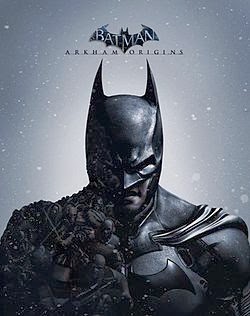
Batman: Arkham Origins

Warner Brothers Games Montreal - 2013 - PC/X360/PS3/WiiU


I think Batman needs to just give up on Gotham and find a city worth protecting. It seems like 99% of everyone you run into in Gotham is a criminal. I mean it made sense in the first game where Batman was in the asylum and all of the inmates had gotten loose. And I guess it made sense in the second game too, when all of Arkham’s residents had gotten loose again and taken over the city. But now in this game, aside from the fact that it’s Christmas Eve, it’s a normal day in Gotham city and the streets are still covered with criminals. Literally every single person you see on the street is either a criminal or a member of the SWAT team. Where are the normal citizens? Exactly who is Batman protecting here?

Anyway, Batman: Arhkham Origins is, as the title suggests, part of Batman’s origin story and takes place in the early years of Bruce Wayne’s career in crime fighting. It tells of Batman’s first encounters with characters like Killer Croc, James Gordon and, of course, The Joker. The game begins with the criminal organization leader known as Black Mask placing a 50 million dollar bounty on Batman’s head. Several B-list Batman villains, most of which I had never heard of before, show up in Gotham to try to take down Batman and collect the bounty. But then of course The Joker shows up and upstages all of the other villains. Sounds like a typical Christmas Eve for Batman.

This game was actually not made by Rocksteady, the studio that did the last two games, but by WB Montreal. If you don’t count the WiiU port of Arkham City (who does?), this is actually WB Montreal’s very first game, which made me a bit nervous to try it. You’d never know it though, the quality and polish of Arkham Origins is pretty high, so I suspect there were a lot of veteran developers brought on to the WB Montreal team. Actually, if I hadn't known the series had switched developers, I doubt I would've noticed at all; Origins is so similar to the other two games, especially Arkham City. A lot of the animations, game mechanics and even the models and assets from City seem to be copy/pasted into Origins, so I guess Rocksteady gave WB Montreal access to their source material.

There’s really not much new introduced in this game either, which I guess is a bit disappointing, but I had been meaning to replay Arkham City anyway and this was a nice way to do it - with a different narrative layered over the pre-existing gameplay. Actually, just about the only noticeable difference between Origins and City is the change in voice actors. I was disappointed to not see the actors from the animated series and the other games return to reprise their roles, but the new actors do a fine job. The new Batman actor does a younger and angrier emulation of Kevin Conroy’s Batman and the new Joker’s portrayal is a bit more edgy and dangerous feeling than Mark Hamill’s Joker. Different, but still good.

Summary:
This game is quite similar to Arkham City and what you thought of City will likely be the same thing you think about Origins. I had fun with this game, so check it out if you were a City fan.

Borderlands 2

Gearbox Software - 2012 - PC/PS3/X360

It’s pretty much more Borderlands. After playing the first Borderlands, I can’t really say there’s a lot of innovation or new content here. More guns, more enemies, bigger environments, stuff like that. But it’s pretty much the same game. I do love how varied and unique all of the different guns feel though. Each gun’s playstyle seems radically different from the last one, which is probably a hard thing to accomplish.

Summary:
I think my main problem with Borderlands is that it’s kind of the same thing over and over again, which usually wears on me pretty fast. To its credit, Borderlands makes doing the same thing over and over again as diverse and as fun as possible, but it still is what it is. I get why people like this game, it’s just not for me. I think part of it is this game being quest based and experience based and all that. It reminds me of playing an MMO, and I usually never find MMOs to be that much fun. This game’s attempts at humor don’t really do anything for me either, but again, I can see why people like it.

Bioshock Infinite

Irrational Games - 2013 - PC/PS3/X360

This, to me, was probably the most disappointing game I played this year. Nearly all of my friends and other people I spoke to who had played this game enjoyed it and the game was critically reviewed well, so I may be a bit alone here. I thought this game took a pretty big step backward in overall game design and pacing compared to the previous Bioshocks. There were large chunks of this game where I did nothing but shoot enemies, then there were large chunks where the game decided it wanted to tell a story for a while and just guided me around Columbia. But the chunks weren't mixed in throughout the game. They were just…chunks. It also took out the excellent level design that I loved from the first two games where upon entering a new area, you had to be aware of your surroundings and the enemies you were fighting and use the appropriate plasmids to lay traps and what not. Infinite mostly just had large open areas filled with enemies that you had to kill with… whatever. Again and again and again.

I didn't think Columbia had the charm, atmosphere and polish that Rapture did so well in the earlier games either. I also experienced some balancing issues with this game. I pretty much had my character maxed out in everything about halfway into the game and was mowing down anything in my way without much thought or effort.

Summary:
There’s so much more this game could have done with mixing up gameplay/artwork/music with their parallel dimensions theme too. A lot of lost potential. To its credit, the ending of this game was pretty cool though.