Showing posts with label -D-. Show all posts

Thursday, September 29, 2016

Duck Game

Landon Podbelski - 2014 - PC 

I am a sucker for a good local multiplayer game. Local multiplayer is one of my favorite experiences in games growing up with a Nintendo 64 and playing titles like Mario Party, GoldenEye and Mario Kart 64. It's an experience that's been getting more and more rare in recent AAA games especially since the advent of the internet and online multiplayer. I'm happy to see that indies and other small studios have noticed this absense and have picked up the mantle of developing awesome local multiplayer experiences. Duck Game is one such title, although it also has an online component. It's an arena combat game much like Towerfall: Ascension, another game I really loved. 

Duck Game takes those short and fast rounds from Towerfall and makes them even faster. For those not familiar with Towerfall, Duck Game is a 2D arena combat game. Think Super Smash Bros, but all weapons are a one hit kill. Levels are small and weapons are deadly, so rounds go really fast. Often times you're not even done laughing about the crazy thing that happened in the previous round by the time the next round starts. 

Another way Duck Game distinguishes itself from other games of its ilk is through its wacky sense of humor. It's a game published by Adult Swim games and I can't think of a more fitting publisher for this game's sense of humor. I mean you're controlling Ducks shooting each other with automatic weapons. There is a button on the controller mapped to "quack". That's it. That's all it does is make a quacking noise. That's the type of wacky humor that is on display here. 

The soundtrack, which strongly channels the sounds of the Sega Genesis, is another highlight. Like its gameplay, the tracks are short but sweet and pack a lot of punch. My favorites are Synth Rock, Steelmill Sunset and Butt Spin. Great stuff if you like the iconic electronic buzz of the Genesis sound chip.

Summary
If you're looking for an awesome and wacky time with some friends on the couch, you're looking for Duck Game. If you have no one to play with, it also features an online mode and a pretty fun single player challenge mode as well. Sometimes I just want to have a stupid and goofy time when I sit down to play a video game. And when I do, I'll be looking at Duck Game

Friday, July 8, 2016

Dark Souls 3

From Software - 2016 - PC/PS4/XboxOne

When I finished Dark Souls II earlier this year, I criticized it for having lackluster level design and a dull story especially when compared to the amazing precedent that was set with the original Dark Souls. Hidetaka Miyazaki, who directed Demon's Souls and Dark Souls was busy making Bloodborne while Dark Souls 2 was in development and I think his presence was missed. DS2 wasn't terrible, but it didn't quite have the magic of the first game. Miyazaki's magic, while difficult to describe, was something I immediately felt when I started Dark Souls 3. I think it's most noticeable in the level and enemy design. From Software in general has an unrivaled expertise in 3D level design. If you ever want to see video game level design's version of the Mona Lisa, you need to check out some of From Software's offerings from DS1 and DS3

Not only are the environments created in a very mechanically and structurally pleasing way, but the visuals are top notch here as well. As much as DS3's world in concerned with killing you, it's also just as concerned with having you admire its beauty. DS3 has some of the most breathtaking mountains, valleys, lakes and castles I've ever seen in a video game. It can be hard to admire the scenery with the constant threat of death right in front of you, but if you have a chance to stop and take it in, Dark Souls 3 is quite a sight to behold. It's also quite proficient at one of my favorite things to see done well: environmental storytelling. Want to get an idea of how old DS3's Firelink Shrine is? Head below the shrine and see the massive crypt filled with the remains of past fire keepers. Stuff like that really helps with player immersion and bringing the game world to life

The game mechanics are mostly what you'd come to expect if you've played any of From Software's similar offerings. It does seem like the team made a decision to push the combat mechanics more in the direction of DS1 than DS2. Gone is DS2's health bar reduction on every death. Enemies now respawn indefinitely like DS1. Also "humanity", which is now called "ember" is a binary state, again just like DS1. The primary new mix up to the gameplay formula comes in the form of weapon arts. Weapon arts are unique skills that are tied to your left hand item and can range from temporary buffs to entirely new unique moves. Often times your left hand item will be a shield which may have a shield bash or shield parry as like the previous Dark Souls games, or your shield may even default to your right hand weapon's weapon art skill as is the case when you have nothing at all equipped in the left hand slot. Most weapon arts consume your magic meter as well which also gives non magic classes incentive to put points into leveling up their magic bar. I found weapon arts to be a welcome addition to the Souls formula that adds interesting and unique skills and abilities and makes experimenting around with different equipment load outs even more fun and interesting

The strange and alluring mystique of Dark Souls' lore is back in full force. As I wandered through the Dark Souls 3's various mysterious locations, I found myself reading the item descriptions of various weapons and armor I picked up for additional lore. I was even drawn to watching several YouTube videos explaining the backstories of several bosses and NPC and theorizing on their connections. There are also several tie ins and reoccurring characters from the first Dark Souls so veterans of the series are in for a few surprising pay-offs especially for those who are deeply invested in the lore.

Summary
If this truly is the last Souls game we get, it is certainly a worthy send off for the series. Level design, audiovisuals, gameplay and lore are all top notch here and in some cases arguably the best we've seen of the Dark Souls series. This is one of my favorite games of the year so far and a must play for fans of these games who are up for one more challenge.

Saturday, June 4, 2016

Digital: A Love Story

Christine Love - 2010 - PC

Aaaaand we're back after a nice two month break. Strange to think that this is pretty much the first extended break I've taken from this since starting writing games reviews and criticism since like 2013. This week I want to talk about Christine Love's Digital: A Love Story. Yes, it's another visual novel. I know I've posted several of these recently, but if you're not into visual novels, check back soon for more reviews of "real games". But you should know that there will be a review up in the next few months for Zero Time Dilemma which is another visual novel and a game that I am highly anticipating since it will finally resolve the cliffhanger ending of Virtue's Last Reward. Anyway, back to being on topic...

Digital: A Love Story is developer/writer Christine Love's first successful game. It started picking up traction and gaining attention after being released on the internet for free in 2010. Digital is a mystery/romance story set in the late 80s where you, the player character, purchase a PC and connect it to the internet for the first time. The game can kind of be considered a desktop simulator as the entirety of the story is communicated to you by logging in to early era electronic bulletin board systems and reading message posts. The game clearly has a nostalgia for this early era of the internet and wants you to feel that nostalgia too as it plays the entirety of the old dial-up modem sound while you wait for your computer to connect to the message board. It even has you type out the entire phone number for your modem and makes you keep track of your logins and names of different bulletin boards. 

One of the most interesting creative choices Digital makes is that you only see the messages and replies of other people, but never what your character types. It's a neat way of engaging the player and your creativity when you read a response message and then try to infer what your character must have typed. In order to keep up with the story, you also need to pay close attention to the names of the people you're chatting with in various message board forums and any information they give you as you may need this to progress further in the game. Thankfully, the game keeps an archive of all messages you received so you can go back and re-read any important information if you find yourself stuck. And you WILL find yourself stuff in this game, which I feel was one of my biggest frustrations with Digital. It's an interesting story and I felt the pacing kept being slowed by repeated nostalgia trips which eventually become annoyances when listening to the modem connecting sound effect and typing out usernames and passwords to various forums over and over. The peak of my annoyance with this weird pacing came when I downloaded a virus in the game that obscured the text on my screen and made it nearly impossible to tell what I was doing. I couldn't really tell what the point of this part of the game was, it really just seemed like Digital was getting in the way of itself

Summary
Digital is a quirky visual novel with a lot of nostalgia for the late 80s. It has some self imposed pacing issues in an otherwise interesting and and novel form of story presentation. I'm not sure if this game really has a good soundtrack, but "Paper Dolls" is one of the most catchy tunes you will hear in a video game. I'm not even sure where this plays in game. Anyway, your mileage with Digital will likely depend on whether you find this game's constant throwbacks to the technology of the late 80s charming or tedious. I think I fall into the latter camp, but this is still worth a look if visual novels are your thing

You can download Digital: A Love Story for free here

Monday, March 14, 2016

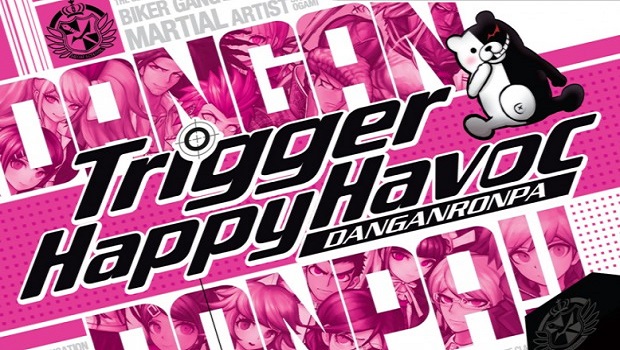
Danganronpa: Trigger Happy Havoc

 Spike Chunsoft - 2010 - iOS/Android/Vita/PSP/PC

Danganronpa: Trigger Happy Havoc is a visual novel style game with elements of the Phoenix Wright: Ace Attorney games. I was turned on to Danganronpa after it released on Steam and I saw it was developed by Spike Chunsoft who was also responsible for 999 and Virtue's Last Reward, both of which I'm quite fond of despite their respective flaws. Even though Danganronpa and the Zero Escape games do not share the same writing talent, they do all feature Japanese anime styled characters and have similar-ish themes.

In Danganronpa, you play as Makoto Naegi - an average student who was nevertheless accepted to an elite high school academy that only admits students considered to be the best at what they do. During his first day of school, Makoto blacks out and when he comes to he finds that he is one of several students that are trapped in the high school. All the exit doors have been barred and the windows sealed. The high school is deserted with the exception of the students and a creepy remote-controlled teddy bear who calls himself Monokuma. Monokuma tells the students that the only way to escape the high school is by killing another student without getting caught. As the days go by, various murders eventually take place and it's up to you as Makoto to gather the evidence and solve each crime

After investigating a murder scene and gathering evidence, a "class trial" takes place where the facts of the case are deliberated. Here, you'll often need to catch other students either misstating a fact or outright lying and support your cause with pieces of evidence from the case that contradict what a classmate is saying. This is where Danganronpa is most game-y and most separates itself from being just a pure visual novel. It's also where I feel this game is at its worst. The evidence puzzles seem to usually fall into one of two categories. Either the puzzle is so painfully obvious that it feels unsatisfying to solve or the puzzle is so contrived and obscure that you have to trial and error your way into the game's very specific line of thinking. The latter is particularly frustrating when the game tries to railroad you down one particular line of thinking when other possibilities seemed just as plausible to me. There are also weird rhythm game sections during the class trial that feel weak and forced. I appreciate that the game was trying to break the monotony of just reading text forever, but I often found these sections to be more frustrating than exciting

The strength of Danganronpa lies with its storytelling. It's probably unfair to compare this with the Zero Escape games even if it's the same developer, it's a different writer, but I'm going to do so anyway. I felt Danganronpa had a pretty good cast of well written characters - probably a stronger cast than any of the Zero Escape games. If you like wacky high school anime characters, Danganronpa is your game. But I found the mystery of each murder and the overall mystery of the high school much less compelling than anything written in the Zero Escape games. The Zero Escape games had me on the edge of my seat trying to figure out "whodunnit" and how it was possible and the revelation of those mysteries was always mind-blowing. Danganronpa's murders seemed a little too random and contrived. The revelation of its mysteries was always weird and wacky, but in a way that was often too unbelievable.

Summary
Danganronpa was fairly solid - good enough for me to await the release of its sequel on Steam. But I can't recommend this game without a caveat. It's still probably unfair of me to compare Danganronpa to another game not even in the same series or by the same writer, but I feel these games are similar enough to warrant me doing so: If you haven't played 999, do that first. If you have, then know that Danganronpa sacrifices a focus on a compelling and well thought out mystery in favor of more character focused moments full of anime melodrama and silliness.

Monday, January 18, 2016

Dark Souls II

FromSoftware - 2014 - PS3\PS4\X360\XboxOne\PC

I started playing Dark Souls 2 immediately after completing the first Dark Souls game as I couldn't get enough of the first game. It's tough but fair action RPG combat system had taught me to pay attention to enemy attack patterns, be wary of traps and to frequently praise the sun. I needed more. On the surface, Dark Souls 2 appears to be a very safe "more of the same" sequel to the first game. However, there are some notable departures from the original formula once you dig in to the game.

Firstly humanity and hollowing are no longer a boolean "yes" or "no", you're either human or you're partially hollow. The more you die, the more hollow you become and the more your maximum health decreases. This can be reversed by using a consumable "human effigy", which are thankfully quite plentiful in this game. But if you're human or close to being human, the more susceptible to invasions you are. But you can still only summon a friendly companion to battle if you're 100% human.

I know Hidetaka Miyazaki, who directed both Demon's Souls and Dark Souls was busy making Bloodborne during Dark Souls 2's development. I think the lack of his presence is felt when examining some of the details of Dark Souls 2 up close. For example the level design of the first Dark Souls game was something I really loved. All of the levels looped back on each other so that as you progressed, you would unlock natural paths and shortcuts back to earlier levels in the game. Not so much with Dark Souls 2. The level design is much more linear and you'll need to just keep progressing in a certain direction until you can't progress any more, then warp back to another bonfire, which is an ability you have from the get-go in this game. Another really strange design decision is that you can only level up in one particular bonfire by talking to a nearby NPC as opposed to leveling up at any bonfire as was the case in the first game. In practice this becomes rather annoying as you have to warp back and forth to level up and suffer through loading screens each time which seems unnecessary.

Another place where Miyazaki's absence is felt is with the story. Yes, the first Dark Souls game had a sparse and cryptic story as is the case with the second game, but there were memorable characters and bosses and locations. They were made memorable through repeated mentions and given weight by the way they the characters referred to them. Even though the story was sparse and cryptic, it felt plausibly real. Dark Souls 2's story is just simply sparse and cryptic. New locations are discovered and conquered without fanfare or reaction by the game's story. Fighting a boss in Dark Souls 2 is not an epic clash with the legendary creature you've heard so much about. It's just another boss. Even the "greater soul" bosses seem unremarkable from both a story and gameplay perspective.

Speaking of gameplay, the combat is still pretty solid. It's a bit more balanced and polished, and there seems to be more a few more valid builds now. However, I will say that the difficulty curve does seem especially wonky. There are a few pain points in the beginning and middle of the game, but everything else including the end of the game is a relative cakewalk. I've talked with a few friends who have played this game about their experience with the difficulty curve and have had some conflicting reports, so which parts of the game you find challenging may partially depend on your character build and playstyle.

Summary
It may not have the brilliance of its predecessor, but Dark Souls 2 is still a solid game for those people looking for more masochistic fun. Story and level design aren't quite what they were in the first Dark Souls game, but this game is still solid enough to warrant a recommendation. I've now moved on to Bloodborne to satiate my love of these games and have so far been enjoying this same style of game with a fresh setting.

Friday, August 21, 2015

Dear Esther

The Chinese Room - 2012 (2008 Original) - PC

I've played a few of the games that are sometimes referred to dismissively as "walking simulators" by some. Journey and Proteus totally didn't connect with me while Gone Home came close. I thought The Stanley Parable was absolutely brilliant. Dear Esther, which probably can be credited with popularizing this genre, is no Stanley Parable but it did resonate more strongly with me than most of the other similar games I've played that fall into this grouping.

Dear Esther is a game about exploration. You explore an island by yourself and are occasionally accompanied by voiceover dialogue that elaborates on bits of the story. The story that is presented in the voiceovers is somewhat vague, and I'm pretty sure that was an intentional design decision. I later found out that on subsequent replays of Dear Ester, the bits of dialogue that play are actually randomly chosen, so you might hear one voiceover on one given playthough, but not on the next. Or vice versa. I'm okay with this decision to deliberately obfuscate the story, because I think you can piece together enough information from whatever dialogue is randomly chosen and combine that with the knowledge you gain by observing and exploring to come up with the gist of the story, even if some of its details are fuzzy. It's a game I found narratively similar to Dark Souls, of all games. While there may or may not be an absolute truth to Dear Esther's story, I found myself filling in the deliberate vagaries of the story with my own imagination, similar to what I had done in Dark Souls.

Dear Esther got its start in 2008 as a Half Life 2 mod, and was later re-released as a standalone game in 2012. I played the 2012 remake and found the audiovisuals to be top notch. Both hearing and seeing the wind rustling through the grass and the waves crashing on the shore really helped immerse me in this world in a way that none of the other "walking simulators" had done previously. I let my mind wander with the strange details of the story and tried to piece it together while simultaneously drinking in the high fidelity audiovisual presentation

Dear Esther Video Review

Summary
"Walking Simulators" are a pretty niche appeal. I think this game does it right though. High quality graphics and an interesting story were enough to keep me engaged throughout the experience, though I can definitely see those not used to this sort of thing finding it boring, or the vagueness of its story frustrating. It's definitely not one of my favorite games ever, but it's a neat experience if you're up for something different

Wednesday, July 22, 2015

Dark Souls

FromSoftware - 2011 - PS3/PC/X360

I did it! Praise the sun! I've finished Dark Souls! Good Lord this game is mercilessly difficult. And also one of the best designed games I've ever played. If you've heard people tell you how good this game is, it's true. It's also no exaggeration how difficult this game is, so this is definitely not a game for everyone. I think if you're an seasoned gamer who's up for a challenge and you approach this game with patience and an open mind, you'll be able to discover the fun in building your character, experimenting with the game's systems, exploring the masterfully designed levels and discovering this game's hidden lore.

This game simultaneously does the best and worst job teaching mechanics I've seen in a video game recently.The Northern Undead Asylum where you begin the game serves as the game's tutorial. It teaches you how to move your character, to read messages on the floor, and that shiny things and bonfires are good. It teaches you how to defend with a shield by forcing you to walk down a narrow corridor with a guy on the far end shooting arrows at you. The only way you'll make it is learning to use the shield. It then throws a fairly difficult boss at you, teaching you that Dark Souls will be hard and that running away is a valid option and is sometimes the best one. You eventually have to kill the boss to complete the tutorial, but if you manage to scramble across the boss room before he kills you, a better weapon can be found and the game also gives you some hints for dealing more damage. The tutorial also teaches you what is probably Dark Souls' most important lesson which is that you cannot hack and slash your way through this game. You must pay attention to enemy attack animations, learn their tells, and understand when it's safe to attack them. It's an excellent tutorial for the game and teaches you all of Dark Souls' basic mechanics... but it doesn't address or teach its more complex mechanics at all. It's also easy to be overwhelmed by the spreadsheet of statistics presented to you on the player stats page, which isn't explained in detail. Dark Souls is a game that expects its players to learn its more complicated systems by experimentation or trial and error. Or just google everything, which is probably what most people do.

After completing the tutorial level, Dark Souls opens up quite a bit and becomes very non-linear for the rest of the game. You can take any path in any order you want, some paths are easier and intended to be taken first, some paths are harder and intended to be done later in the game, and some paths are completely optional and never required to finish the game. But you don't know which paths are which until you take them. Trial and error is another one of the design themes found throughout Dark Souls. Yes, it's frustrating at times, but the joy of exploring and discovering new paths or new secrets offsets the frustration of accidentally taking a path intended for later in the game and getting your butt kicked.

You can level up your character by spending the souls of the enemies you killed on upgrades while at a bonfire. If you die, you lose all of your accumulated souls, so you're encouraged to spend them often. Mercifully, if you can make it back to where you died, you can recover your lost souls, but dying twice in a row without recovery will see your unspent souls lost forever. It creates a sort of system where even when you're dying over and over again, you feel like you're making progress both through leveling up, and also by learning from deaths, memorizing enemy patterns and remembering level layouts. Progress in Dark Souls can be marked by killing bosses or discovering shortcuts that lead back to previously explored areas in the game, giving the game a bit of a metroidvania feel. You'll find that a lot of the weapons and armor in Dark Souls are not really statistically better or worse, just different. Some weapons may have comparable stats, but differing swing arcs or varying ranges. It's not so much a matter of finding the best weapons and armor in Dark Souls, but finding the ones that best suit your playstyle

There's also an ever-present multiplayer component to Dark Souls. You basically always play the game online, seeing ghostly glimpses of other players and reading the sometimes helpful, sometimes trolling messages left by them. You can also optionally opt-in to a cooperative multiplayer component to get assistance from another player to take down a difficult boss. The thing is, when you opt-in to the cooperative multiplayer, it also makes you susceptible to hostile PvP invasions from other players. It's a really cool mechanical tradeoff and another really smart design decision

The story of Dark Souls is communicated very unconventionally. Often NPCs will reveal very little about themselves or the world around them, so most of the narrative is communicated through environmental storytelling and also reading the item descriptions on new things you pick up. Don't be mistaken, there really is a lot of lore in Dark Souls, it's just hard to find and it's very open ended. The story purposely poses a lot of interesting unanswered questions and leaves it up to the player to fill in the gaps with their own imagination and interpretation of what happened.

Dark Souls Video Review

Summary
Dark Souls is probably the hardest game I've completed. It's also one of the best designed games I've played recently. If you can approach this game with a certain amount of patience and endurance, you'll really enjoy it. The feeling of finally killing that boss you've been stuck on is a feeling of reward that is unmatched in any other game. Even the little rewarding moments of finding a new weapon, or discovering a new shortcut or learning something new about the game's mechanics you didn't know before feels awesome. It's not for everyone, but the people who it IS for will find Dark Souls very enjoyable.

Wednesday, June 3, 2015

DOTA 2

Valve - 2013 - PC

This is a bit of a strange review as I'm not sure who my target audience is. I feel like most people who have heard of DOTA 2 are quite aware of what it is and already know whether or not they like it. Similarly, I feel like the gamers who have somehow managed to not have heard of the massively popular DOTA 2 are also probably the people who either won't like or won't care about this game. So let me preface this review with a few disclaimers: First of all, I'm not being critical of DOTA 2 due to some MOBA bias. I realize both DOTA 2 and League of Legends are currently both massively popular and players of each game tend to have strong opinions about which is better. I don't care. I'm completely apathetic towards both games. Secondly, it should probably be known that I'm not very good at DOTA 2. Like at all. I've probably played maybe 4 or 5 games of DOTA 2 total, but it's enough to know that this is not a game for me.

So for those who aren't aware, the basic rules of a multiplayer online battle arena or MOBA are that two competing teams of players are pushing towards some sort of team goal which is usually the capture or destruction of the enemy team's base. There are also usually strong RPG elements to the game where players will have to level up to improve and strengthen their character. This can be done both by killing players on the enemy team which is risky, but rewarding or also by killing weaker non playable characters known in the MOBA communities as "creep". Character choice plays an important role in MOBAs as most characters have vastly varying strengths, weaknesses, statistics, abilities and playstyles. Ideally, teams will consist of complimentary characters and playstyles to create a strong and versatile team. Some MOBAs have further in-match customization of characters through equippable items, weapons, or armor

I love competitive games with a lot of depth, strategy and skill, so several of my friends have recommended this game to me many times. I don't deny that DOTA 2 has a ton of depth, demands a lot of high level thinking and strategy and also requires a fair amount of actual technical skill to be good. These are the aspects of DOTA 2 that appeal to me and make me want to play the game. But it comes in a wrapper that includes so many other aspects that I don't care for. The biggest and most off-putting aspect of DOTA 2 is the community. The DOTA 2 community is notoriously hostile and unwelcoming towards new players, which I am one of. I mean, I kind of understand the problem. It's a team game and people want to win. No one wants to play with a team member who doesn't know what they're doing. The other problem is match length. A typical game of DOTA can last upwards of 45 minutes. Finding 45 consecutive uninterrupted minutes is a lot to ask of my free time. That's not even counting the time spend waiting for other players to join and queue up the game. I like the freedom of starting and stopping my games on my own time.

The final and maybe most fixable problem is the immense barrier of entry to this game. There's a ton of game mechanics, item functions and matchup knowledge to learn before you can start to really compete in this game. Any good game has a learning curve, but I found DOTA's tutorial to be buggy and uninformative. During one part of the tutorial, my character got stuck on a bridge and was unable to move. Then a later section of the tutorial was uncompletable for me because the game wouldn't detect when I bought the correct items from the shop, then I ran out of gold. The character specific player guides didn't seem that helpful unless you were already comfortable with the basic mechanics and terminology of the game. DOTA 2 has an assumed set of knowledge from its users that brand new players don't and won't have. Even the UI seems clunky and unintuitive to me. It took me 5 minutes just to figure out how to leave a game. I'm sure if I was really driven to learn this game by myself, I could look past some of these flaws, but I just don't want to put in the time to learn a game I don't think I'll have fun with

Summary
I know I'm being harsh on a popular and well-liked game, but it's not for me. A hostile community, long play sessions and a nightmarishly large learning curve will likely bar me from playing this game indefinitely. On the bright side though, it's free to play. So try it yourself and make up your own mind as to whether DOTA 2 is worth your time investment

Monday, May 25, 2015

Donkey Kong Country: Tropical Freeze

 Retro Studios (Nintendo) / Monster Games - 2014 - WiiU

(On my Top 10 Game Soundtracks list)

I grew up with the Donkey Kong Country games and am a huge fan. When Donkey Kong Country Returns came out in 2010, I was super excited to see the franchise revived after nearly a 15 year absence. But I was ultimately pretty dissapointed with that game mostly due to control scheme problems. It was back when every Wii game was obliged to shoehorn in Wii Remote waggling of some sort or another, so DKC:Returns forced you to shake the controller every time you want to roll. It was just awful. A simple design decision made what would have been an otherwise pretty good platformer nearly unplayable for me. I found a downloadable hack online that patched in the ability to map the controller shaking to a button, so I'd recommend Googling for it if you want to go back and play DKC: Returns because that game is fundamentally broken out of the box. The egregious controller shaking was unforgivable, but I noticed another small problem with DKC:Returns. It had a bit of an identity problem. It was a decent platformer with some admittedly pretty good level design, but it didn't really feel like a Donkey Kong Country game. Where were the Kremlings? Where were all the animal buddies other than Rambi? Where was the amazing head rocking music I was used to from previous entries? Sure it featured Donkey Kong characters, but the soul of the game was stripped away. For a game titled "Donkey Kong Country Returns", it didn't really feel like the franchise HAD actually returned.

So now onto Tropical Freeze. The first thing it does right is provide support for other control schemes. There is still Wii Remote waggling, but you don't have to do it if you play with either the WiiU gamepad or pro controller. Hallelujah!! This automatically makes the game much more enjoyable. The game also looks gorgeous in HD. The visuals were always so striking in DKC games, even on the SNES so it was nice to see some TLC paid to the backgrounds and artwork. The next thing you'll notice is the soundtrack. David Wise, the main composer of the SNES trilogy, has returned to the franchise to pump some soul back into it. I'll talk about him later, but what really made this a Donkey Kong Country game for me was a simple animation. Dixie Kong's falling/sliding animation. It's an animation that's rarely ever seen in either Tropical Freeze or the SNES DKC games, but it plays when Dixie is sliding down a surface. She sticks her arms and legs straight up and flails them around in the air. Again, it's a silly animation rarely ever used, but as soon as I saw it, it made me smile. It's the little polish developers can apply that make die-hard fans like myself feel at home in the franchise. No, there's still no Kremlings or animal buddies other than Rambi. But Tropical Freeze is a Donkey Kong Country game.

Dixie Kong is back from DKC 2/3! And Cranky Kong is now a playable character! Each Kong has their own special abilities. Diddy retains his jetpack hover from DKC:Returns and can now use it underwater to swim super quickly. Dixie makes Diddy somewhat obsolete with her hair flutter which carries the player higher/father in the air than Diddy's jetpack. Cranky Kong, my new favorite Kong, can pogo bounce on enemies and over spikes with his cane a la Duck Tales. Choosing which Kong to accompany you on a level is a new interesting decision as certain levels are tailored to certain Kong's abilities. Each level has been designed perfectly for speed running and platform and enemy placement is done just so basting through at full speed is possible if you have enough skill. Another speedrunner-friendly addition is then inclusion of replays. When you finish a level, you can post your replay online for friends/challengers to see. You can also view the replays of the top speed runs for a given level to see how it was actually possible to complete it in 43 seconds or whatever. This was a pretty cool addition. And don't let the cutsey Nintendo mascots fool you. This game is hard. Old-school hard. And if the normal levels aren't hard enough for you, you can find all of the K-O-N-G letters in each world to unlock bonus levels that are obnoxiously hard. I have only been able to finish one of the bonus levels so far. And I'm pretty darn good at this game.

Can we talk about the genius of David Wise for a second? When I heard he was back to work on the Tropical Freeze soundtrack, I was super pumped. Listening to the soundtrack was what actually made me want to play this game. The original tracks are awesome - Windmill Hills, Deep Keep and Fruity Factory. And the remix tracks are awesome too - Current Capers (Remix of DKC Aquatic Ambience), Irate Eight Chase (Remix of DKC2 Lockjaw's Saga) and Twilight Terror (Remix of DKC2 Stickerbrush Symphony). I actually think I like that cover of Stickerbrush Symphony better than the original. And I love the Original. If you like video game music or David Wise's work, I'd encourage you to listen to the whole soundtrack. There's lots of musical variety and it's absolutely phenomenal.

Video Review of DKC: Tropical Freeze

Summary
Tropical Freeze is the true return of the Donkey Kong Country franchise. A game with tight controls (yay!), excellent level design, striking visuals and rocking music are what you'll find here. If you're a fan of challenging platformers, speedrunning or excellent audiovisual presentation, you'll enjoy Tropical Freeze. It's a fun game to play cooperatively as well.

Friday, November 28, 2014

Depression Quest

Zoe Quinn - 2013 - PC

Depression Quest is a game that makes me really excited about where the medium of video games is now and direction it's going in the future. Depression Quest is an interactive educational simulation about living with depression. It attempts to use game mechanics to communicate to the player what living with depression feels like. The mechanics are simple and certainly nothing revolutionary. But what makes me excited about this game is that to me it serves as an indicator that the medium of video games is maturing to a point where games can start to cover serious topics like this and tell deeply personal stories.

The game of Depression Quest is basically a text-only roleplaying experience that repeatedly presents you with a scenario and then offers you several choices of how to deal with a the presented scenario. For instance, your in-game girlfriend may call you up and ask you if you'd like to attend a birthday party. You're then given several choices like "attend" or "politely decline" or "say you're not feeling well" or something like that. The catch is that while you can see all of the options, the ones you can actually select are almost always limited based on how depressed you're feeling. There's a few blurbs of text near the bottom of the screen which essentially serve as your "depression meter" and as you get better or worse, more or fewer options are available to you. As far as a simulation of depression goes, it was pretty effective. Sometimes you can see the option you'd really like to choose, but you just can't pick it, which is kind of frustrating.

The game states that its authors have personally struggled with depression before which makes Depression Quest's story feel very authentic. Now I'm not sure if it was the quality of the writing or how personal it felt, but I was alarmed at how many times the writing really struck a chord and resonated with me. There were many times where I was like "Oh wow, I think that to myself all the time". Again, I've never struggled with the serious, deep kind of depression this game is about, but those thoughts I had were a testament to how relatable the writing is even to someone who doesn't know much about the subject matter.

Summary:
As someone who has never personally dealt with depression before, this game was a very educational tool for me and I'm very glad that this game exists. I hope it helps to raise awareness of what exactly depression is and how the people suffering from it can feel limited in their lives. I also hope that this can influence more developers to make more really personal experiences like this game. It's probably less than an hour long, but it's totally free and I'd recommend it to anyone looking for a personal game or anyone who would like to try to roleplay what it's like to live life with depression


Friday, August 22, 2014

Diddy Kong Racing

Rare - 1997 - N64/DS

I unfortunately recently lost a family member who was very important to me. I don't think this person quite had the intense passion for gaming that I do, but he was always down to play whatever I was into at the time, and that was awesome. I was trying to think of just one game to pick that we shared together growing up, but there were so many. I can clearly remember Christmas of 1997 when I first got my N64 with Diddy Kong Racing. I don't think I've ever been so excited in my life. I was pretty much this kid. I remember all of the sleepovers we had in the following weeks where we played battle mode and co-op and took turns trying to beat the various bosses in this game. Good times. Good memories. I'm sure you've got much better things to do now than read video game blogs, but in any case, Jay Wolf: This one's for you.

So usually when I write these reviews, I'm either reviewing a game that I've played so many times that I've committed it to memory, or it's a game that I've just finished and it's fresh in my mind. Neither one is really true of Diddy Kong Racing for me, but I played it a ton when it came out and I replayed it about 5 years ago in college. I'll be drawing on old memories for this one, so if I exclude a few details here and there, forgive me. Okay one quick thing before I begin: Is it just childhood nostalgia or did some of the best games ever come out during the N64/PS1 era? Ocarina of Time, Super Smash Bros, Tomb Raider, GoldenEye, Final Fantasy 7-9 etc. It's not just me, right? These are HUGELY influential games. I'm not saying Diddy Kong Racing quite belongs with these titles, but I feel like even the "B" games from this era are better than today's "B" games, no?

Diddy Kong Racing was released for the Nintendo 64 in November of 1997. It was actually developed by Rare under the title Pro Am 64 and had absolutely nothing to do with any Nintendo characters until Shigeru Miyamoto saw the game and, at the last second, suggested adding Diddy Kong as the game's mascot to try to boost sales. It worked, and Diddy Kong Racing became one of the best selling N64 titles and was later remade for the Nintendo DS. This was actually also the debut appearances for the Rare characters Banjo the Bear and Conker the Squirrel who went on to star in Banjo Kazooie and Conker's Bad Fur Day, respectively. Both of those games were also pretty awesome. It tickles me quite a bit that Conker, the mischievous, foul-mouthed alcoholic squirrel got his start in Diddy Kong Racing, a game marketed for kids with an "Everyone" ESRB rating.

I don't normally care for racing games. Especially the ones that try to be hyper-realistic. I went over my feelings on realism in sports games in my Ken Griffey Jr. Baseball review. I like racing games like Mario Kart or Diddy Kong Racing that add excitement to racing games by adding weapons and ridiculous hazards and absurd level design. I'm sure racing purists will disagree, but these games are my jam. The main way Diddy Kong Racing sets itself apart from Mario Kart 64 is with multiple vehicle types. Not only are there cars, but planes and hovercrafts are selectable on most levels as well. Hovercrafts are a little harder to control than cars, but there may be shortcuts in some levels accessible only by hovercraft. Or you can choose to take to the air, but doing so may require some finesse and skilled piloting in close quarters, plus planes have slow acceleration, if I recall correctly. In addition to the variety of vehicles and weapons, there are some cool secrets with the game that reward skillful technical play. Pro tip: Take your finger off of the accelerator when going over a boost. You'll go faster. Or if you're really good, power-slide into a boost while driving a car AND take your finger off of the accelerator. You'll go crazy fast. You can also optionally try to collect stray bananas while racing to increase your top speed. The neat little tricks like this add polish and depth to the game.

In addition to just racing with friends, DKR has a pretty cool battle mode. I'm not sure I like it as much as Mario Kart 64, but it certainly feels more customizable and fleshed out. In addition to a deathmatch mode, there's a sort of capture the flag mode where you compete over possession of certain items and try to bring them back to your base. DKR also has a pretty excellent single player adventure mode which is definitely better than Mario Kart 64's single player. Instead of just racing track after track, DKR's single player combats repetitiveness by offering different challenges for you to complete like collecting hidden coins while racing or defeating super-fast bosses in races through special tracks. Exploring the race tracks and the "hub world" that connects them is highly encouraged and the game world is pretty interesting and well designed for a racing game. There are some cool unlockables and secrets that can only be found through careful exploration. And the soundtrack. Oh, the soundtrack. Even after not playing this game for many years, I can still whistle along to all of the catchy tracks. David Wise, the Donkey Kong Country composer, returned to work his magic on the DKR soundtrack. Pirate Lagoon, Frosty Village and Ancient Lake are some of my favorites.

Summary:
If you like the Mario Kart games and are looking for something similar, check out Diddy Kong Racing. The single player is a little more fleshed out than Mario Kart's and I believe you can actually play some of the single player missions cooperatively with two people, if memory serves. I've never played the DS version, so I can't vouch for that. But if you can dig up an N64 and a working copy of this game, you're in for a good time. It's an extremely solid and polished racing game.

Friday, July 18, 2014

Device 6

Simogo - 2013 - Mobile

As of this writing, Device 6 is only available as an iOS download, which is a shame. Now I know most phone games, and most deservedly so, have a stigma attached to them for not being "real" games. I find most phone games to be mindless time-wasters, but Device 6 is certinaly an exception. It's too bad that the only method to download Device 6 is an app store that's cluttered with a bunch of other throwaway games, but the real shame that Device 6 is iOS-only is that I have no Apple devices to play it on! I've wanted to play this game ever since its release last year when it got boatloads of positive buzz. I finally got a chance to play it this week after borrowing a family member's iPad, and let me tell you, the hype is real.

In Device 6, you control a girl named Anna, who wakes up alone in a castle on an island with no memory of why or how she got there. As you guide Anna through the castle, you'll discover lots of the castle's weird and creepy secrets. The narrative was very self-aware and sometimes humorous. There were parts that reminded me of The Stanley Parable. But it was also often creepy and abstract. I admit there were a few elements of the story that seemed to be over my head. I couldn't tell if it was just me that wasn't following the story well enough, or if the narrative wasn't doing that great of a job getting its points across. Either way, I think Device 6 is well written, it's just kinda... out there. Which isn't to say that it's bad, it's just very different.

In an industry that has far too many clones, copycats and sequels, Device 6 is proof that there is still a very deep well of creative narrative and fresh new ideas that modern games are just beginning to drill into. From a presentation standpoint, Device 6 is completely unlike anything I've ever played before. The narrative is presented to the player as text on a screen that the player scrolls across using finger swiping motions. The text will sometimes change it's positional location or rotation based on what's happening in the story. For instance if Anna walks down a flight of stairs, the text will slope diagonally downward. And if Anna has a decision on which way to go, the text will branch off in opposite directions, allowing the player to choose which way Anna will go by swiping their finger in the desired direction. While you swipe your finger to move the text, the sound of footsteps can be heard. If Anna arrives at a door, a door opening sound effect is played while the text scrolls. Occasionally pictures are shown alongside the text when Anna sees something of importance. These pictures frequently contain clues to puzzles and often employ a very cool looking parallax scrolling effect. The audiovisual presentation of this game is so unique and gives the game a very distinct style

Device 6 has excellent puzzle design, but it's different from the puzzles in a game like Braid. In Braid, all of the puzzles had to do with manipulating objects or locations in the game engine. Device 6 presents you mysteries and then offers you clues in the narrative or in the pictures included with the narrative. It's just as brilliant, but in a different way. It reminded me of old school adventure games like Myst which I used to love as a kid. Just like in Myst, I had a pen and paper out to take notes with the entire time I was playing Device 6. Not a lot of games are designed that way anymore. The only thing slightly negative I can say about Device 6 is its length. It's pretty short. I knocked it out in about 3-4 hours. Usually I'm a fan of shorter game experiences, as long as they're priced right (Device 6 is currently $3.99). But I enjoyed my time with Device 6 so much that I was left wanting more when the ending came. I guess that could also be a good thing though, depending on how you look at it.

Summary:
If you like puzzle games, unusual stories, or games that are completely unlike anything you've ever played before, you must play Device 6. It's just so unique and different and oozes creativity and style. That alone should be reason enough to play it. Just be aware that it's pretty short and pretty weird. I hope its developer, Simogo, will eventually port Device 6 to platforms other than iOS so more people get a chance to play this. In any case, Simogo is now on my "cool developers" list and I'll be looking forward to their next project.

Friday, March 7, 2014

Donkey Kong Country 2: Diddy's Kong Quest

Rare - 1995 - SNES

(On my Top 10 Game Soundtracks list)

This game is my childhood. Which is ironic because I never actually owned this game. I can remember riding my bike down to Blockbuster video on the weekend and spending my allowance on renting this game again and again. I'm sure I probably spent enough money renting this game that I could have just bought it. I was a huge fan of the original Donkey Kong Country and this game was an excellent sequel. I remember how mind blowing it was when I found out there was a secret bonus world as a kid.

As an adult, I still love this game and I may have replayed it more now than I ever did as a kid. The platforming is excellently done. It requires a mix of skill, timing and precision and is very satisfying when pulled off correctly. In DKC2, Donkey Kong has been kidnapped by the vile Kaptain K. Rool and it's up to Diddy Kong and his girlfriend Dixie to rescue him. Dixie can float and hover after her jumps while Diddy has a longer cartwheel attack and is a bit faster than Dixie. I remember as a kid loving the safety of Dixie's slow floaty jumps. Now I much prefer blasting through the levels as fast as possible with Diddy's speed.

Of course you can always play the levels more slowly, finding all of the bonus rooms, hidden DK coins and Kong letters. But to me, the satisfaction of perfectly speed running a DKC2 level is unmatched in any other platformer, even a Mario or a Sonic game. The level design in most levels is really excellent and lends itself to be a good challenge for speed running.

DKC2 was the first video game soundtrack I really fell in love with as a kid. I can remember putting a tape recorder up to the TV's speakers and recording the soundtrack on cassette tape so I could listen to it later. Even as an adult I love listening to it at work and David Wise is one of my favorite video game composers next to Nobuo Uematsu (Final Fantasy) and Yasunori Mitsuda (Chrono Trigger). Stickerbrush Symphony, Hot Head Hop, and Disco Train are some highlights, but the whole soundtrack is really solid from top to bottom.

One interesting mechanic in the game that I don't think I've seen in any other platformers is that DKC2 actually kind of discourages you from saving too much. Each time you find a save point in a world, the first save is free. But each time you save the game after that, it costs 2 coins. If you're not playing the game on an emulator, it sort of makes you think twice before mindlessly and habitually saving after every single level. Kind of an interesting risk/reward mechanic, I think it like to see that implemented in modern games. I mean I've played this game enough times that actually beating the levels has become trivial and I rack up quite an abundance of extra coins, but a beginner to this game will likely find it quite challenging.

There's a really good difficulty curve in this game that teaches you the mechanics in the easier early levels, but then nicely matches your skill progression with more difficult levels as you advance through the game, which I feel is difficult to do in game design. Then the final levels and the secret world are a great and challenging test of you platforming skill and reflexes. There's also great variety in the level design between horizontal/vertical levels, climbing levels, underwater levels, barrel levels, minecart levels, animal levels and so on. The game can be played solo or tackled cooperatively although both players can't play simultaneously unfortunately.

Summary:
Check it out if you enjoy platformers, difficult games, or excellent soundtracks. To me, DKC2 stands shoulder to shoulder with Mario 3 and Sonic 2 as one of the best all-time platformers.

Tuesday, December 31, 2013

Divekick

One True Game Studios/Iron Galaxy Studios - 2013 - PS3/Vita/PC

Divekick is a two button fighting game. Just two buttons. No joystick, no d-pad, no other buttons, just two. One for jump and one for kick. Each hit in Divekick is a one-hit-Knockout, so games go pretty quick. The game has a roster of 13 characters which all play surprisingly differently. At least I was surprised how much character variety can be had with a two button game.

Because there’s only two buttons, Divekick is also very accessible; there’s no memorizing combos or movesets, so anyone can jump right in and start playing. The game also has a very ridiculous sense of humor. There’s lots of poking fun at other fighting games, pop-culture references and internet humor references. There’s a character in the game who just quotes Will Smith lines from all of his movies. It’s quite silly.

Summary:
Overall though, I’d say there’s probably not a whole lot of depth or replayability with Divekick. It’s a fun novelty to have in your game collection, but it’s probably not going to hold anyone’s attention for very long.