Showing posts with label RPG. Show all posts

Monday, August 22, 2016

South Park: The Stick of Truth

Obsidian/South Park Digital Studios - 2014 - PC/PS3/PS4/Xbox360/XboxOne

I think the best thing I could tell anyone about this game is not to play it unless you have at least some idea of what South Park is. South Park's patented "did they really just say that?" sense of humor is on display here - only dialed up to 11 because I assume the censorship guidelines for video games are much less strict than network television. So if you're easily offended by, well, anything really, you probably shouldn't play this game. However if you're a fan of South Park and know what you're getting yourself into, you're in for a treat

South Park: The Stick of Truth (TSOT), just like any episode of the television show, is a parody. Whereas the TV show picks a current topic or event or celebrity to parody, The Stick of Truth is a parody of video games while also obviously being one. Specifically, TSOT invokes The Elder Scolls: Skyrim quite a lot between making fart jokes out of dragonshouts and also emulating Skyrim's soundtrack surprisingly well. A few of the characters in the game, especially Cartman, are quite aware of the fact that they are characters in a video game and break the fourth wall frequently to point out that fact to humorous effect. There are several call outs to South Park's most popular episodes and reoccurring characters that will resonate for the fans of the TV show. Without spoiling anything, this game contains some of the most outrageous scenes I've ever played in a video game that may even surprise hardcore fans of the show.

The closest touchstone for the battle system is the Paper Mario series which requires you to perform short mini game-like quick time events to boost your attack power or partially block damage from an enemy. Just as in Paper Mario, I find this type of battle system compliments traditional turn based RPG combat very well as it keeps players a little more engaged since you have to play a little timing mini game while also making strategic decisions on which enemies to target with which attacks at the same time. Even if the mini games are mostly easy and trivial, it's one extra layer of interaction with the combat system that keeps the player engaged and creates the illusion of player skill. In addition to this, you still need to keep track of what enemies are weak to what attacks in the glorified game of rock paper scissors that is the same RPG combat tropes in TSOT as the games it's parodying. 

Summary
TSOT is fairly standard RPG faire with a pretty solid battle system. But the reason you'll play this game is for South Park's patented outrageous and irreverant sense of humor which is executed in TSOT just as good as any episode of the TV show. It's a must play for South Park fans. If you're not a South Park follower, I'd reccommend watching a few episodes of the show before playing TSOT to see if the game is your sort of thing

Wednesday, July 13, 2016

Pokemon GO

Niantic - 2016 - iOS/Android

This is probably the most timely review I've ever written since at the time of this writing, practically everyone I bump into is on their phones furiously tapping away at Pokemon GO. I was on my lunchbreak and saw people in the restaurant playing, on my way back, I saw a car pull up next to a known gym and whip out their phones, and on the way back to work, there was a lady in my elevator trying to catch a Pidgey. It's safe to say that Pokemania is sweeping the nation again for the first time since the franchise's initial release. 

So for those not swept up in the fever of Pokemon GO players, this game is a phone app that functions largely by placing virtual objects in real space by using the Google Maps API and your phone's GPS. It functions very similarly to Ingress, Niantic's other popular game, albeit much less popular. The game encourages you to explore the real world to find virtual monsters on your phone. The terrain around where you are may encourage certain types of pokemon to appear. For instance, water type pokemon are often found near bodies of water while more common Pokemon like Pidgey or Ratatta can be found pretty much anywhere.

Real world places of interest appear in the game as either Pokestops or gyms. At a Pokestop, you can restock on poke balls or other healing items where at a gym what you can do depends on what team controls the gym and also what team you've decided to join. There are three teams: mystic, valor and instinct all vying for control over in game gyms. At an enemy gym, defeating all Pokemon in the gym will allow you to claim the gym for your team and earn daily rewards as long as you still have a Pokemon present in the gym. Training at a friendly gym may increase the gym's prestige level and allow it to house more friendly Pokemon. Battles are not turn based, as in nearly all other Pokemon games. In Pokemon GO, battles pretty much consist of furiously tapping on the enemy Pokemon to reduce its health. You can also hold down on the screen to attempt a stronger attack, but this can only be done once a stamina meter has been sufficiently charged. 

Summary
The shell for a really amazing Pokemon game is all here, but I find this game to be pretty feature incomplete at the moment in addition to being very buggy. The app seems to freeze a lot when catching Pokemon or battling at a gym which can only be remedied by restarting the game completely. But the freezes only occur when you can login to the game in the first place, as the servers are very frequently down due to overloading. I'd love to see trading and friendly battles added soon, and maybe a little more depth added to the combat system, although I'd like to see server issues addressed first obviously. None of my concerns about bugs or lack of features have dissuaded half the population from playing this though and it's exploding in popularity at the time of this writing. Gotta catch 'em all!

Friday, July 8, 2016

Dark Souls 3

From Software - 2016 - PC/PS4/XboxOne

When I finished Dark Souls II earlier this year, I criticized it for having lackluster level design and a dull story especially when compared to the amazing precedent that was set with the original Dark Souls. Hidetaka Miyazaki, who directed Demon's Souls and Dark Souls was busy making Bloodborne while Dark Souls 2 was in development and I think his presence was missed. DS2 wasn't terrible, but it didn't quite have the magic of the first game. Miyazaki's magic, while difficult to describe, was something I immediately felt when I started Dark Souls 3. I think it's most noticeable in the level and enemy design. From Software in general has an unrivaled expertise in 3D level design. If you ever want to see video game level design's version of the Mona Lisa, you need to check out some of From Software's offerings from DS1 and DS3

Not only are the environments created in a very mechanically and structurally pleasing way, but the visuals are top notch here as well. As much as DS3's world in concerned with killing you, it's also just as concerned with having you admire its beauty. DS3 has some of the most breathtaking mountains, valleys, lakes and castles I've ever seen in a video game. It can be hard to admire the scenery with the constant threat of death right in front of you, but if you have a chance to stop and take it in, Dark Souls 3 is quite a sight to behold. It's also quite proficient at one of my favorite things to see done well: environmental storytelling. Want to get an idea of how old DS3's Firelink Shrine is? Head below the shrine and see the massive crypt filled with the remains of past fire keepers. Stuff like that really helps with player immersion and bringing the game world to life

The game mechanics are mostly what you'd come to expect if you've played any of From Software's similar offerings. It does seem like the team made a decision to push the combat mechanics more in the direction of DS1 than DS2. Gone is DS2's health bar reduction on every death. Enemies now respawn indefinitely like DS1. Also "humanity", which is now called "ember" is a binary state, again just like DS1. The primary new mix up to the gameplay formula comes in the form of weapon arts. Weapon arts are unique skills that are tied to your left hand item and can range from temporary buffs to entirely new unique moves. Often times your left hand item will be a shield which may have a shield bash or shield parry as like the previous Dark Souls games, or your shield may even default to your right hand weapon's weapon art skill as is the case when you have nothing at all equipped in the left hand slot. Most weapon arts consume your magic meter as well which also gives non magic classes incentive to put points into leveling up their magic bar. I found weapon arts to be a welcome addition to the Souls formula that adds interesting and unique skills and abilities and makes experimenting around with different equipment load outs even more fun and interesting

The strange and alluring mystique of Dark Souls' lore is back in full force. As I wandered through the Dark Souls 3's various mysterious locations, I found myself reading the item descriptions of various weapons and armor I picked up for additional lore. I was even drawn to watching several YouTube videos explaining the backstories of several bosses and NPC and theorizing on their connections. There are also several tie ins and reoccurring characters from the first Dark Souls so veterans of the series are in for a few surprising pay-offs especially for those who are deeply invested in the lore.

Summary
If this truly is the last Souls game we get, it is certainly a worthy send off for the series. Level design, audiovisuals, gameplay and lore are all top notch here and in some cases arguably the best we've seen of the Dark Souls series. This is one of my favorite games of the year so far and a must play for fans of these games who are up for one more challenge.

Friday, June 17, 2016

Pocket Mortys

Big Pixel Studios - 2016 - Android/iOS

Ho ho another free to play game. And a licensed game no less. I've become a filthy casual. I guess. Developed by Big Pixel Studios and published by Adult Swim games, Pocket Mortys is based on the television show Rick & Morty and is a blatant and often self aware Pokemon clone. If you haven't checked out Rick & Morty, this game probably won't have much mileage with you. And if you haven't checked out Rick & Morty, you totally should. It's like Adventure Time but with more swearing. It's co-created by Justin Roiland (Earl of Lemongrab) and both title characters are also voiced by Roiland. It really is one of the best things on television right now. Anyway Pocket Mortys is mostly based around Season 1 - Episode 10: Close Rick-counters of the Rick Kind which establishes that there are multiple concurrent timelines with multiple Ricks and multiple Mortys. In the game you play as Rick and you must collect and train your Mortys to eventually defeat the council of Ricks to get your teleport gun back to return to your own timeline.

Pocket Mortys is free to play, but also doesn't rub your face in the paid content for the game hardly at all which I really appreciated. Most of the paid content is just to buy more items which can capture new Mortys or heal your existing team, but it's certainly not necessary to pay money to progress in this game. There is also a crafting system in the game where random items you pick up throughout your adventures. Pro tip - look up all of the crafting recipes. The only other way to figure them out if by trial and error which is really tedious. Once you progress far enough in the game, it'll become clear that the core loop of this game is simply collecting and battling Mortys and there's not much more content to the game. But considering I paid nothing for this experience, I can't complain too much.

Summary
For a free game, Pocket Mortys is pretty solid even if it is a shameless rip of of Pokemon. I can't really strongly recommend this if you're not a Rick & Morty fan as a lot of the references are going to fall flat. But if you're looking for a free version of Pokemon, you could probably do worse that this

Monday, January 18, 2016

Dark Souls II

FromSoftware - 2014 - PS3\PS4\X360\XboxOne\PC

I started playing Dark Souls 2 immediately after completing the first Dark Souls game as I couldn't get enough of the first game. It's tough but fair action RPG combat system had taught me to pay attention to enemy attack patterns, be wary of traps and to frequently praise the sun. I needed more. On the surface, Dark Souls 2 appears to be a very safe "more of the same" sequel to the first game. However, there are some notable departures from the original formula once you dig in to the game.

Firstly humanity and hollowing are no longer a boolean "yes" or "no", you're either human or you're partially hollow. The more you die, the more hollow you become and the more your maximum health decreases. This can be reversed by using a consumable "human effigy", which are thankfully quite plentiful in this game. But if you're human or close to being human, the more susceptible to invasions you are. But you can still only summon a friendly companion to battle if you're 100% human.

I know Hidetaka Miyazaki, who directed both Demon's Souls and Dark Souls was busy making Bloodborne during Dark Souls 2's development. I think the lack of his presence is felt when examining some of the details of Dark Souls 2 up close. For example the level design of the first Dark Souls game was something I really loved. All of the levels looped back on each other so that as you progressed, you would unlock natural paths and shortcuts back to earlier levels in the game. Not so much with Dark Souls 2. The level design is much more linear and you'll need to just keep progressing in a certain direction until you can't progress any more, then warp back to another bonfire, which is an ability you have from the get-go in this game. Another really strange design decision is that you can only level up in one particular bonfire by talking to a nearby NPC as opposed to leveling up at any bonfire as was the case in the first game. In practice this becomes rather annoying as you have to warp back and forth to level up and suffer through loading screens each time which seems unnecessary.

Another place where Miyazaki's absence is felt is with the story. Yes, the first Dark Souls game had a sparse and cryptic story as is the case with the second game, but there were memorable characters and bosses and locations. They were made memorable through repeated mentions and given weight by the way they the characters referred to them. Even though the story was sparse and cryptic, it felt plausibly real. Dark Souls 2's story is just simply sparse and cryptic. New locations are discovered and conquered without fanfare or reaction by the game's story. Fighting a boss in Dark Souls 2 is not an epic clash with the legendary creature you've heard so much about. It's just another boss. Even the "greater soul" bosses seem unremarkable from both a story and gameplay perspective.

Speaking of gameplay, the combat is still pretty solid. It's a bit more balanced and polished, and there seems to be more a few more valid builds now. However, I will say that the difficulty curve does seem especially wonky. There are a few pain points in the beginning and middle of the game, but everything else including the end of the game is a relative cakewalk. I've talked with a few friends who have played this game about their experience with the difficulty curve and have had some conflicting reports, so which parts of the game you find challenging may partially depend on your character build and playstyle.

Summary
It may not have the brilliance of its predecessor, but Dark Souls 2 is still a solid game for those people looking for more masochistic fun. Story and level design aren't quite what they were in the first Dark Souls game, but this game is still solid enough to warrant a recommendation. I've now moved on to Bloodborne to satiate my love of these games and have so far been enjoying this same style of game with a fresh setting.

Saturday, January 9, 2016

The Legend of Zelda: The Wind Waker

Nintendo - 2002 - GameCube/WiiU

See also my Top 10 Zelda Games

Happy new year! I hope everyone had a fun and safe holiday break. If you haven't done so already, you can check out my best games I played in 2015 list right here. You may also be interested in my top 10 Zelda games list or my top 10 Star Wars games lists as well. Anyway, on with the review

When replaying The Wind Waker recently, it really struck me how well this game has aged. I think this game could literally come out tomorrow and it would have an amazing reception, despite the fact that this game is nearly 15 years old. Now I wasn't playing the HD remake on WiiU either, I'm talking about the original on GameCube. The cell shaded graphics which had a mixed reception on release now blend right in with the modern "toon" style graphics popularized by recent indie titles. This graphic style also allows for what I believe is the most expressive and emotive iteration of Link in any Zelda title. I love seeing the suspicion or anger or happiness that was so clearly readable on Link's face.

The Wind Waker finds Link exploring the open seas on a small sailboat in a very vast and open game world. The Wind Waker especially excels at the same thing a lot of the other Zelda titles do well which is immersive world building. The Wind Waker's world feels immersive and real because the characters and events in the world are well written enough to make it feel that way. There's a part of the game not too far into Wind Waker where Link needs to crawl through a maze of tunnels underneath Windfall Island. There's nothing in the main storyline of the game that will specifically or directly prompt you to crawl through these tunnels, this is just a hidden optional side quest. Once you reach the end of the tunnels, you'll find a treasure chest with a pictograph box which is an item that kicks off several more sidequests, but what struck me about the pictograph quest was the inclusion of some readable text next to the treasure chest where you find the pictograph box. The text explains that there was a thief who was imprisoned presumably for stealing the pictograph box, and who dug a series of tunnels below Windfall Island in an attempt to find a way to escape the prison cell. This was pretty cool to me, and a neat example of the high quality of writing and world building on display in the Wind Waker. The game could have just made you crawl through a maze and then simply given you the pictograph box, but the fact that they included this little story behind it that justifies the level design in a believable way adds some realism and fidelity to the world in the Wind Waker

Wind Waker Video Review

Summary
The game is also not without its faults. I think the stealth section that occurs near the beginning of the game is really tedious, too long and one of the weakest points of the game. I can remember having a poor first impression of this game and thinking on my first playthrough how dull this stealth part of the game was. And then right after introducing stealth to you, the game promptly drops it and never revisits it for the rest of the game. Plus there's a few too many mandatory fetch quests with a repetitive and boring sailing sections near the end of the game (which was I think partially remedied in the HD WiiU version). But even with its faults, the Wind Waker is one of the strongest Zelda titles out there, and a perfect place to start if you've never played a game in this series before.

Sunday, November 22, 2015

Undertale

Toby Fox - 2015 - PC

I like the Mother series well enough. I actually preferred Mother 3 over Mother 2 (a.k.a. Earthbound in the U.S.). Both of those games construct a fun and wacky world populated with lovably silly enemies but despite the goofy nature of their settings, they still both manage to pull off well written characters in an emotionally charged story. Underneath the layers of American culture parody and just general wackiness, there's still direct messages from the game's authors commenting on human life and friendships and other similar topics. Experiencing the wackiness and interesting stories of those games was my favorite thing about them. My least favorite part was the combat. Aside from the often humorous in-battle text, these games featured pretty standard and simple RPG combat systems. Mother 3 tried to mix this up a bit by awarding players bonus damage for attacking with the rhythm of the music (think Crypt of the Necrodancer), but I still didn't really find the combat system that interesting. Especially with the amount of grinding that these games practically require you to do before being able to advance to the next area. It felt like the combat was getting in the way of the excellent story, rather than complimenting it.

So now fast forward 10 years from Mother 3 to Toby Fox's Undertale which strongly evokes the Mother series visually, musically, thematically, and even directly at some points in the game. Like the Mother games, you play as a young kid wearing a striped shirt exploring a weird and dangerous world filled with wacky monsters. Thankfully, one of the big deviations from the Mother games is the unique combat system found in Undertale. Undertale's combat presents the player with an interesting twist which is that you actually don't have to kill any of the monsters in the game. If you choose to fight monsters, you'll be faced with a timing mechanic similar to something you might find in one of the Paper Mario games. But an alternative to fighting is using the "act" menu which allows you to talk to or interact with the monsters to finish the encounter without killing them. This usually plays out as a bit of a puzzle where you meed figure out the right combination of actions to pacify the enemy. Regardless of which of these two actions you choose, you'll be faced with a "bullet hell"-like system when you defend and the monster attacks. Different monsters have different attack patterns, so memorizing how to dodge them is it's own fun mini-game

Also created by Toby Fox, Undertale's soundtrack is an absolute delight. It's a mix of chiptunes, synths and the occasional live instrument and echoes various other RPG soundtracks from Final Fantasy to Earthbound. My favorites are Ruins which sounds like it could fit in any RPG ever, Another Medium which at times sounds like it's trying to evoke Thousand Year Door's X-Naut Fortress, Snowy, which perfectly sets the mood for walking through a winter forest, CORE which is a rockin' electronic dance tune, Death by Glamour which is a variation on the aforementioned CORE track, and ASGORE which sounds like appropriate epic RPG final boss music. For more examples of what I believe to be music references to other games, listen to Dummy! (which I believe to be an "Off" reference) Alphys' Theme (which I believe to be another Paper Mario reference), Amalgam (which sounds very Earthbound-y to me) and Oh! One True Love (which is undoubtedly a reference to Final Fantasy VI's opera scene). The whole soundtrack is really, really solid and I fell in love with it almost instantly

As neat as the combat is an even as lovingly crafted as the soundtrack is, the real star of Undertale is the story. The characters are very memorable and endearing and the quality of writing here is top notch. The way Undertale builds expectation and then throws you a twist just when you think you've got things figured out is masterful. It's rare when games can make me laugh, and I usually count it as a success if a game can tell a joke and even get me to crack a smile. Undertale had me laughing out loud on several occasions. It handles the serious, somber, relaxing, strange and horrifying moments in the story just as well as the humor. It's so rare when a game can hit all these narrative notes as well as Undertale.

Undertale Video Review

Summary
Undertale is one of the best and RPGs I've played in years. I found it to be not only an homage to, but an evolution and improvement on blueprint established by the Mother series. It's not a systematically deep RPG with layers of strategy or anything like that. But what it does do is use game systems to tell a well written story with endearing characters full of memorable moments. It also has a soundtrack that leaves a lasting impact almost as big as its characters. Undertale's unique battle system keeps players engaged dodging various projectiles in a bullet-hell like frenzy on defense while giving the player an option of a timing based fighting system, or a non-violent puzzle to resolve combat. Depending on your actions in battle, Undertale adapts acknowledges your actions in the story as well, which gives real weight to the decisions you make in the game. It's such a smart game and I enjoyed every second I played of it. I finished my first playthough in one sitting and am currently halfway through a second. I'll likely play through this a third time as well since there's just so many cool easter eggs and little things to learn about the game's story that you inevitably miss in one single playthrough. All fans of RPGs and good storytelling need to play this game. This was one of my absolute favorites of 2015 so far this year.

Friday, October 16, 2015

BioShock

2K - 2007 - PC/X360/PS3

Wooo!! 100 reviews! I figured it would be appropriate to cap off #100 with the original Bioshock since I started back in 2013 reviewing the same franchise with my very first review of BioShock Infinite. I still don't think I'm a great games critic or reviewer and I still have a lot to work on, but in re-reading my first review from two years ago, I can see how far I've come. In addition to more comprehensive and insightful writing, I've started including video reviews with my posts as well, in case you hadn't noticed. Of course having 100+ reviews and a ton of content introduces a problem of content discovery, which I'm attempting to remedy with new features like my games of the year list and my top 10 lists - both of which I intend to add to and update often, so keep an eye on those. Anyway, enough with the housekeeping, let's get on to talking about Bioshock.

I remember seeing Bioshock for the first time at E3 2006 before it was released later in 2007. It was by far the most interesting game trailer I saw at E3 that year. The underwater city setting, strange combat powers and gruesome violence were so unlike anything I had seen in a game before. When I eventually got my hands on the game it also played unlike anything I had experienced before, having at that time never played its spiritual predecessors, the System Shock games. Bioshock's combination of shooting mechanics, light RPG and puzzle solving elements, and high level of audiovisual presentation were unlike anything else around at that time. I remember being struck by how cinematic and directed the game felt. It felt like a movie. It felt like an amusement park ride where you're barraged by an overwhelming presentation of audiovisual effects that all spring to life as you pass by them. Bioshock's atmosphere was so unique and refreshing and it absolutely captivated me.

Bioshock takes place in the 1960s and follows the story of a man named Jack who, at the beginning of the game survives a plane crash that leaves him swimming in the middle of the ocean. You guide Jack away from the burning plane and to a lighthouse, the only structure visible in the vast ocean other than the flaming, sinking wreckage. Investigating the interior of the lighthouse reveals a bathysphere which takes you deep underwater and eventually reveals the massive underwater city of Rapture, where the remainder of the game takes place. The trip to Rapture is accompanied by a voiceover from a man named Andrew Ryan, who introduces himself as the creator of Rapture and conveys that he built the city as a haven free from external social, political or religious influences. But of course upon entering the city, it's immediately obvious that something has gone very wrong in Ryan's utopia and now masked and bandaged psychotic murderers known as splicers roam the remains of Rapture. You're contacted via radio by a man named Atlas who urges you to assist him in rescuing his family who he claims has been trapped in the bathysphere dock by Ryan. Atlas warns you to be wary of splicers who were previously Rapture's human residents, driven insane from abuse of a drug called ADAM.

When processed, ADAM becomes something called a plasmid, which when injected into a user's bloodstram can rewrite genetic code and grant its users dangerous and powerful new abilities. In addition to traditional firearms and melee weapons, pasmids serve as your main defense against splicers and Rapture's other many dangerous inhabitants. The use of plasmids also rewards players for their environmental awareness. For example, the electro-bolt plasmid is extra effective when targets are standing in water. Similarly, the incinerate plasmid is effective when used on oil spills that can be found throughout Rapture.

Experimentation with Bioshock's many plasmid powers is one of the most rewarding parts about the game. In fact, the game seems to reward experimentation and clever planning in general. For instance, when splicers are hurt, they often seek out a nearby health station to heal themselves. In addition to being used by the player to heal themselves, these health stations can be hacked to yield cheaper healing prices and to damage any enemies that tries to use it for themselves. Or the player can choose to simply destroy the station which yields several consumable first aid kits. Rapture's hostile security robots can be simply destroyed (they're weak vs. electro-bolt or armor-piercing rounds) or they can be hacked to aid the player in battle. There's a multitude of options available to the player on how to dispatch enemies and it's fun and rewarding to experiment with the game's many systems to find a playstyle and strategy that best suits you.

There's also a moral choice element to Bioshock. "Little Sisters" human girls who have been inplanted with a parasite and mentally conditioned to hunt for and gather ADAM are plentiful throughout Rapture. They and their powerful "Big Daddy" protectors are neutral to the player upon encounter, but Big Daddies will go hostile if they or the Little Sister are attacked. Dispatching a Big Daddy leaves the player with a choice: rescuing or harvesting the Little Sisters. Harvesting kills the Little Sister and grants the player a wealth of ADAM which can be used to purchase new plasmids and other useful upgrades. Rescuing the Little Sisters yields very little ADAM and gives few immediate bonuses, but rescuing multiple Little Sisters can unlock powerful plasmids later in the game.

BioShock Video Review:

Summary
Bioshock is a wonderful blend of an immersive and atmospheric environment, a memorable story, and well designed game systems that reward the player for experimentation. While Bioshock's sequels improved on some mechanics, I don't think they ever recaptured the brilliance of the original game and its great blend of atmosphere, story and game mechanics.

Sunday, September 13, 2015

Final Fantasy IX

Squaresoft - 2000 - PS1

(On my Top 10 Favorite Games list)

(On my Top 10 Game Soundtracks list)

See Also My Top 10 Final Fantasy Games List

After the more modern/sci-fi settings used in FF 6-8, Final Fantasy IX is a return to the series roots. It takes place in the world of Gaia, a world full of knights, mages, magic, and other traditional high fantasy. The story initially follows Zidane, who is a member of a band of thieves who is charged with kidnapping the princess Garnet of Alexandria kingdom. In a twist, Garnet is actually looking a discreet transport from Alexandria and consents to the kidnapping as it fits her own agenda. They are joined by Vivi, a young child black mage who is also accidentally kidnapped and knight captain Steiner who is Garnet's royal bodyguard and is loyal to his kingdom to a fault. The four are eventually joined by other party members and are swept up in adventure, conflict and conspiracy as tends to happen in Final Fantasy games. Also in continuing with trends in other Final Fantasy games, the plot does sort of take a dive off of the deep end at around disc 3 or so. Without getting too spoiler-y, the traditional fantasy setting does get strangely thrown out the window at some point, but the game is still worth playing if you appreciate good writing.

What sets this game apart from other Final Fantasy titles for me, aside from its setting, is its well written characters. Now those of you who have played other Final Fantasy games may be rolling your eyes at "well written characters", but I think it really applies to FFIX in a way that no other FF game before or since has achieved. The characters in FFIX aren't the flat, one-dimensional stereotypes of characters that are found in most JRPGs. There's also none of (or very little of) the angsty JRPG melodrama found in the rest of the series. The characters in FFIX are more subtle and nuanced which speaks volumes for not only the writers but the translation and localization process this game had to undergo. This game even has humor. Like legitimate, actual, intentional humor. And it works. Usually when humorous dialogue is written in a Final Fantasy game, it's facepalm material. It's funny, but for all the wrong reasons. FFIX gets it right in a way that really endears all of its characters to the player.

The battle system is... well... it's just fine. There's nothing really wrong with it. But there's also nothing really right with it either. There's nothing too broken like FFVIII, but also nothing that really sticks out and grabs your attention to make you want to keep playing just one more battle like FFVII. It's pretty straightforward and standard for a Final Fantasy game. It's pseudo turn based with the ATB introduced in previous games and your characters fit into pre-defined roles of black mage, white mage, summoner, knight, thief etc. Just about the only thing noteworthy is that all abilities you learn throughout the game are learned from using a specific weapon a certain number of times in battle. For instance, if you want to learn the "fire" spell, you have to equip Vivi with the "Fire Staff" or whatever it's called. This creates a sort of interesting dynamic where the weapons and armor you have equipped for your party may not always be the "best" speaking strictly statistically. There's also the new "limit break" system called trance, where your character becomes more powerful and gets access to new abilities, but this triggers pretty much just randomly and always seems to happen when you're in a random, easily winnable battle and never against a boss when you really need it. So yeah, the battle system is... just fine I guess.

What's way better than "just fine" and another notable reason to check out this game is another superb, phenomenal, varied and otherwise spectacular soundtrack composed by Uematsu. I think Uematsu has gone on record saying this was his favorite soundtrack he composed. It's not necessarily my favorite as a whole, but picking a favorite Uematsu soundtrack is like trying to pick a favorite burger off of the menu at Red Robin. I love them all. Standouts are the "Battle Theme", "Stirring in the Forest", "Crossing Those Hills", "Border Village Dali" and "Hunter's Chance" but the whole soundtrack is really a standout as tends to be the case with Nobou Uematsu.

Final Fantasy IX Video Review

Summary
It may not have the best battle system and the plot gets a little weird about halfway through, but FFIX is still worth checking out if you like a well written story with well defined characters. The writing and soundtrack are enough to carry you through when the battle system is being dull and the story is getting weird. This game really is pretty charming once you get invested in it and it's become one of my favorites in the Final Fantasy series and just in general

Wednesday, July 22, 2015

Dark Souls

FromSoftware - 2011 - PS3/PC/X360

I did it! Praise the sun! I've finished Dark Souls! Good Lord this game is mercilessly difficult. And also one of the best designed games I've ever played. If you've heard people tell you how good this game is, it's true. It's also no exaggeration how difficult this game is, so this is definitely not a game for everyone. I think if you're an seasoned gamer who's up for a challenge and you approach this game with patience and an open mind, you'll be able to discover the fun in building your character, experimenting with the game's systems, exploring the masterfully designed levels and discovering this game's hidden lore.

This game simultaneously does the best and worst job teaching mechanics I've seen in a video game recently.The Northern Undead Asylum where you begin the game serves as the game's tutorial. It teaches you how to move your character, to read messages on the floor, and that shiny things and bonfires are good. It teaches you how to defend with a shield by forcing you to walk down a narrow corridor with a guy on the far end shooting arrows at you. The only way you'll make it is learning to use the shield. It then throws a fairly difficult boss at you, teaching you that Dark Souls will be hard and that running away is a valid option and is sometimes the best one. You eventually have to kill the boss to complete the tutorial, but if you manage to scramble across the boss room before he kills you, a better weapon can be found and the game also gives you some hints for dealing more damage. The tutorial also teaches you what is probably Dark Souls' most important lesson which is that you cannot hack and slash your way through this game. You must pay attention to enemy attack animations, learn their tells, and understand when it's safe to attack them. It's an excellent tutorial for the game and teaches you all of Dark Souls' basic mechanics... but it doesn't address or teach its more complex mechanics at all. It's also easy to be overwhelmed by the spreadsheet of statistics presented to you on the player stats page, which isn't explained in detail. Dark Souls is a game that expects its players to learn its more complicated systems by experimentation or trial and error. Or just google everything, which is probably what most people do.

After completing the tutorial level, Dark Souls opens up quite a bit and becomes very non-linear for the rest of the game. You can take any path in any order you want, some paths are easier and intended to be taken first, some paths are harder and intended to be done later in the game, and some paths are completely optional and never required to finish the game. But you don't know which paths are which until you take them. Trial and error is another one of the design themes found throughout Dark Souls. Yes, it's frustrating at times, but the joy of exploring and discovering new paths or new secrets offsets the frustration of accidentally taking a path intended for later in the game and getting your butt kicked.

You can level up your character by spending the souls of the enemies you killed on upgrades while at a bonfire. If you die, you lose all of your accumulated souls, so you're encouraged to spend them often. Mercifully, if you can make it back to where you died, you can recover your lost souls, but dying twice in a row without recovery will see your unspent souls lost forever. It creates a sort of system where even when you're dying over and over again, you feel like you're making progress both through leveling up, and also by learning from deaths, memorizing enemy patterns and remembering level layouts. Progress in Dark Souls can be marked by killing bosses or discovering shortcuts that lead back to previously explored areas in the game, giving the game a bit of a metroidvania feel. You'll find that a lot of the weapons and armor in Dark Souls are not really statistically better or worse, just different. Some weapons may have comparable stats, but differing swing arcs or varying ranges. It's not so much a matter of finding the best weapons and armor in Dark Souls, but finding the ones that best suit your playstyle

There's also an ever-present multiplayer component to Dark Souls. You basically always play the game online, seeing ghostly glimpses of other players and reading the sometimes helpful, sometimes trolling messages left by them. You can also optionally opt-in to a cooperative multiplayer component to get assistance from another player to take down a difficult boss. The thing is, when you opt-in to the cooperative multiplayer, it also makes you susceptible to hostile PvP invasions from other players. It's a really cool mechanical tradeoff and another really smart design decision

The story of Dark Souls is communicated very unconventionally. Often NPCs will reveal very little about themselves or the world around them, so most of the narrative is communicated through environmental storytelling and also reading the item descriptions on new things you pick up. Don't be mistaken, there really is a lot of lore in Dark Souls, it's just hard to find and it's very open ended. The story purposely poses a lot of interesting unanswered questions and leaves it up to the player to fill in the gaps with their own imagination and interpretation of what happened.

Dark Souls Video Review

Summary
Dark Souls is probably the hardest game I've completed. It's also one of the best designed games I've played recently. If you can approach this game with a certain amount of patience and endurance, you'll really enjoy it. The feeling of finally killing that boss you've been stuck on is a feeling of reward that is unmatched in any other game. Even the little rewarding moments of finding a new weapon, or discovering a new shortcut or learning something new about the game's mechanics you didn't know before feels awesome. It's not for everyone, but the people who it IS for will find Dark Souls very enjoyable.

Wednesday, July 15, 2015

Final Fantasy VIII

Squaresoft - 1999 - PC/PS1

(On my Top 10 Game Soundtracks list)

See Also My Top 10 Final Fantasy Games List

Part of why I think this game gets so much hate, even from me, is that it came on the heels of Final Fantasy 7, of of the best selling and most well loved RPGs of all time. Final Fantasy 7 had a brilliant and customizable battle system, an engaging story with interesting characters and an awesome soundtrack. Final Fantasy 8 has... an awesome soundtrack, at least. To be fair, the story is pretty interesting all the way through the end of disc 1, but then things get so weird and hard to follow and major plot points are added and removed on a whim, as though the game has ADD and can't decide on what kind of story it wants to tell you. But the battle system is...oh god it's a total trainwreck.

So one of the many flaws of this game's battle system is its "junction" system. In FF8, magic spells are treated as a consumable item. Kind of a weird choice, but I don't have a problem with that necessarily. What I DO have a problem with is that spells are a consumable item AND the game allows you to "junction" them to your character to improve their stats. The better the spell, the more the stat increase. If you follow this chain of logic, you'll realize that if you have a high level spell junctioned to your character and you cast that spell, your character's stats will actually decrease. So then what's the point of casting magic? There is none in a normal playthrough, especially when you consider that your summon monsters, called GFs in this game, can be called upon to essentially cast any magic spells you'd want anyway, provided you don't mind watching a 45 second cutscene of the GF appearing EVERY FREAKIN' TIME. There's lots of odd decisions like this that slow the battles down in FF8 and make them tedious. Even the way you get magic is a chore. You can "draw" spells from an enemy, but depending on a few factors the game doesn't really explain, you'll only typically get around 3-6 spells per draw. Which means you have to sit in a battle and farm draw for quite a long time if you want to get up to the maximum of 100. But really the most broken thing about this game is when you discover you can manipulate limit breaks. Your character's chance of limit breaks are actually random in this game, another odd choice. The less health you have, the higher the chance of the limit break. But if you cycle your turn order, you can keep re-rolling the calculation that determines your limit break, essentially letting you limit break whenever you want. Totally. Broken.

Now that I'm done ranting about the battle system, on to the story (mild spoilers in this paragraph). It really does seem like it's gonna go somewhere for the first, maybe quarter or third of the game. But then we hit a point after disc 1 where the narrative has an identity crisis and starts grasping at different ideas and concepts and inserts them randomly into the story which results in a totally insane mish-mash of disconnected themes and gaping plot holes. I know Final Fantasy is a universe where characters get shot, sliced and burned in every battle, but the first huge narrative red flag is when one of the main characters is freakin' impaled through the heart with a giant icicle during a cutscene... and then is totally okay in the next scene. Like the game barely even acknowledges that it took place. Come on Final Fantasy 8! If you're not gonna take your story seriously then I can't either. 

The artwork and music are the huge redeeming factors of this game. FF8 features some of the most gorgeous hand-drawn backdrops in any RPG I've seen. And this might be controversial, but I think FF8 is Uematsu's best work. At the very least it's my favorite of his work. The relaxing "Breezy", the entrancing "Find Your Way", the mysterious "Under Her Control" and the nostalgic "Fisherman's Horizon" highlight the soundtrack. And of course "Man With the Machine Gun" does its best to keep the mindlessly tedious and broken battles from being too much of a nuisance.

Summary
This is far from the best Final Fantasy, and misses the mark on battle system design and storytelling. At best it's an average-ish RPG with a trippy story, some awesome music and inspiring artwork. Still there is something sort of intangibly alluring about playing this game. I must admit I've replayed this trainwreck at least 3 times now.

Wednesday, April 15, 2015

Pokemon Omega Ruby/Alpha Sapphire

Game Freak - 2014 - 3DS

After Gold/Silver, I had taken a pretty long break from the Pokemon franchise until two years ago when I picked up Pokemon X/Y for my 3DS on its release. I thought X/Y was a decent enough game, I liked the 3D models, enhancements to the battle system (especially the Exp. ALL given at the very beginning of the game) and finally the integration of Pokemon trading over the internet. I criticized the extremely weak story writing and the laughably easy difficulty. Like I said before, I thought it was a decent Pokemon game and a good first foray into the 3D environment for the franchise, but it didn't really rekindle the love I had for the series when I had played Red/Blue or Gold/Silver as a kid. I wasn't even planning on playing Omega Ruby or Alpha Sapphire until my girlfriend suggested it was something she was interested in and thought we could play through them together. I figured I would pick it up, play through the first few gyms with her and then most likely forget about it as there are so many other games I've been playing recently. Quite the opposite happened. At the time of this writing, I have completed the game a mere couple weeks after picking it up while my girlfriend has moved on to other games. I could feel the "One more battle" addiction that I had as a kid returning while I was also simultaneously fighting off the "Gotta catch 'em all" compulsion.

Omega Ruby and Alpha Sapphire (ORAS) aren't really totally new Pokemon games, they're really more 3D upgrades or re-imaginings of the 2002 Ruby and Sapphire Game Boy Advance games. Before playing ORAS, I had previously thought I had never played the old Ruby and Sapphire versions, which was mostly true, but as I began playing I realized I had casually played Pokemon Emerald on an emulator back in college. Emerald was a 2003 pseudo sequel/remake to Ruby and Sapphire the same way that Pokemon Yellow was a sequel/remake of Red/Blue. So faint memories of playing the original began returning even though the new game is in 3D and features new Pokemon and all that. The events and story of the original are mostly intact, although my memory of this game is admittedly quite fuzzy, while the battle system and mechanics have been upgraded to match X/Y and also include all of the new X/Y pokemon. You can actually transfer over all of your Pokemon from X/Y using Nintendo's Pokemon Bank software, but there is of course a $5 fee charged to use this service which I shamefully admit I paid for. Gotta catch 'em all, I suppose.

ORAS isn't the same giant leap forward for the franchise the same way X/Y was with new graphics and features and game modes, but it does polish what X/Y did very nicely. The difficulty curve in ORAS feels much more adequate and I found I wasn't constantly annihilating opposing Pokemon trainers in my way, but at the same time it's not exactly what I would describe as a difficult RPG. There are a few new features they've added to the game which were pretty cool. The first of which, called "DexNav", makes it possible to spot wild Pokemon in the grass before even entering a battle with them. This is really nice for completionists like myself who want to guarantee an encounter with a specific Pokemon instead of wandering around back and forth in the grass, just hoping to encounter that one rare Jigglypuff or whatever it is you're looking for. They've also finally made a 3D model of the world map that you can optionally soar around in when you use the HM move "Fly", but this isn't as interesting as you might think. I didn't find the 3D world map model to be that detailed or interesting and, in practice, you'll find that this mode is just a less convenient version of picking your destination off of the 2D map. They've also added a ton more mini-games to play with your Pokemon that improve their base stats or improve their happiness value, but I have no idea what the latter even matters.

Summary
Pokemon ORAS is a pretty cool re-imagining of the original Ruby and Sapphire games which are now nearly 15 years old believe it or not. If you're a fan of the original Ruby and Sapphire versions, you won't be disappointed with this remake. If you're a new fan and looking for an entry point to the series on the 3DS, I'd recommend ORAS over X/Y. A slightly more interesting story, further refinements and additions to the pokemon gameplay, more mega evolutions, and a better balanced and more challenging difficulty gives these games the clear edge in my book. Now if you'll excuse me, I'm off to finish the "delta episode", which is apparently some new end-game story they've added on.

Thursday, January 15, 2015

Theatrythym Final Fantasy: Curtain Call

Square Enix - 2014 - 3DS

See Also My Top 10 Final Fantasy Games List

Finally back with my first review of 2015! Hope everyone out there had a fun and safe holiday break. I happened to take my 3DS with me while visiting family and got a chance to play some Theatrhythm Curtain Call. It's a rhythm game whose soundtrack is made of compositions from nearly every Final Fantasy game to date. Curtain Call is a sequel to the first Final Fantasy Theatrhythm game which came out in 2012. I actually got a chance to play the first game earlier last year, but didn't write a review on it. Both games are basically Square Enix's attempt to try to capture the audience of Final Fantasy fans who love the soundtracks for the series. And as someone who is a huge Final Fantasy and Nobou Uematsu fan, this game is a great tribute to the series and its music

The gameplay in Curtain Call basically consists of listening to a Final Fantasy song and then tapping along on your DS screen with your stylus, guided by on screen tapping prompts. The game scores you on how well you did or if you perform too poorly, you can fail a song a la Rock Band or Guitar Hero. But as long as we're comparing rhythm games to one another, Curtain Call is much more similar to Elite Beat Agents gameplay wise. There are also some light RPG elements which I guess are obligatory because Final Fantasy. You can choose a party of Final Fantasy characters from pretty much every game in the series, give them skills and items and level them up. Your character's level and skills can give you point bonuses or extra health or other helpful things while playing, but the RPG elements of Curtain Call can really be ignored if you're not into that sort of thing. If you're just playing the game for the music and rhythm parts, not micromanaging your party won't hurt you. Or if you're really into maxing out your party for the highest points and most health, that's cool too. But I guess it doesn't speak too well about the importance of Curtain Call's RPG system if you can completely ignore it while playing the game

Let me just say that having played both games, Curtain Call is completely superior to the original game in every way. If you want to try this series out, go straight after Curtain Call and don't bother with its predecessor if you have the choice. Curtain Call has every single song from the original plus way more. It also has more unlockable characters, a slightly more complex RPG system, a hefty growing library of DLC, and more gameplay modes than the original including a multiplayer mode.

Summary:
Curtain call is the the perfect type of portable game for me. Gameplay sessions can be short - you don't have to commit a huge amount of time to playing the game and you can save pretty much at any point. It's also quite easy to pick back up after not having played for several weeks. It's a great tribute to the quality musical compositions in the Final Fantasy series and seeing all of the FF characters be cartoonized was actually kind of adorable. There's also now some DLC out for Square Enix games other than Final Fantasy. Hooray for Chrono Trigger DLC! It's a nice addition to your 3DS library if you're a Final Fantasy fan or a fan of rhythm games. It's a must-buy if you're both!

Friday, December 26, 2014

The Legend of Zelda: Ocarina of Time

Nintendo - 1998 - N64/3DS

(On my Top 10 Favorite Games list)

See also my Top 10 Zelda Games list

I was having a discussion with a friend about which Zelda game a newcomer to the franchise should play first. Wind Waker and Twilight Princess were brought up, but Ocarina of Time wasn't even mentioned. And I wasn't really opposed to that. This game is a difficult sell to someone who has never played a Zelda title before. It's not so much that subsequent games have made massive improvements on the formula that OoT established or anything like that. But I realize that the reason I love this game is that I have SO MUCH NOSTALGIA tied up in this game. It was the first Zelda game where I got to explore the sprawling fields of Hyrule, the first Zelda game that really hooked me on its story and got me interested in its locations and characters and it was the first Zelda game I replayed over and over again obsessively. And the music! Oh man, the music. It always brings back so many memories. So either you read the last few sentences and knew exactly what I was talking about or you haven't played OoT. While I don't necessarily believe that subsequent Zeldas are "better" games, it's hard to come up with a sell for this game over other Zelda titles that isn't childhood nostalgia. But it's important to note how hugely important and impactful this game was when it came out.

This game was made in the era where 3D games were starting to come into their own. The first 3D game I played that really blew my mind was Mario 64. Those Mario worlds were fun to play and run around in, but what set the 3D worlds of OoT apart from Mario 64 were that OoT's 3D world felt "real" and lived in. It was a joy to explore. Especially with all of the detail put into the world; it made you want to explore each nook and cranny to make sure you didn't miss a hidden secret. I can distinctly remember being totally blown away by this the first time I played the game. I remember just walking around some of the villages and using the first person camera to admire all of the details.

The gameplay of OoT was revolutionary at the time and set a lot of precedents for how the rest of the 3D Zelda games would play. It sounds kind of silly now, but a lot of what we take for granted gameplay and systems wise not only in Zelda games, but 3D games in general had to be invented from scratch here. Everything from the way the puzzles worked to how the combat would function had to be converted from a 2D world to a 3D world. One of the most notable of these new 3D game systems was OoT's "Z targeting" system which governed how the camera would function in combat. By facing an enemy and pressing the Z button, the player could focus the camera on just one enemy until either the focus is switched by pressing the Z button again or the enemy is defeated. The developers did a fantastic job bringing this franchise into a 3D world

The Legend of Zelda - Ocarina of Time Video Review

Summary:
OoT is sort of a difficult sell for someone who has never played a Zelda game before, because I'd only be selling them on nostalgia. My personal recommendation is to play Wind Waker if you've never tried this franchise before. I understand the WiiU version, which contains some graphical enhancements and gameplay tweaks, is the definitive version of the Wind Waker. But for "game connoisseurs" and people who have somehow otherwise missed out on playing OoT and are interested, it is one of my all time favorite games. I actually haven't played the 3DS remake of Ocarina of Time, so I can't speak for its quality, but I hear good things. I'm not really interested in playing OoT on a handheld and while the enhanced graphics look beautiful, they also clash with all of the great memories I have of playing the original version. And while I admit there's a great amount of nostalgia tied to my Ocarina of Time love, I am still confident in saying it is one of the greatest video games ever made.

Friday, December 19, 2014

Final Fantasy VII

Squaresoft - 1997 - PC/PS1

(On my Top 10 Favorite Games list)

See Also My Top 10 Final Fantasy Games List

I actually played Final Fantasy 7 for the first time several years after it was released. A friend of mine gave me both the FF7 and FF8 discs at the same time. I initially decided to play FF8 as it was the newer and more graphically realistic of the two games. FF7's blocky and cartoony graphics initially turned me off and I didn't get around to playing through it until after I finished FF8. I liked FF8 well enough at the time, but it wasn't until I went back and played through FF7 that I realized how superior of a game Final Fantasy 7 is. It taught me an important lesson that I still think about when playing games now: graphics are just not as important as good gameplay and an interesting story

Final Fantasy 7 was the first game in the series released on the PS1 and was also the first game in the series to not appear on a Nintendo console. More importantly, it is also the game that is credited with popularizing the Japanese role playing game genre for western audiences. It is also the first game in the Final Fantasy series to fully embrace a futuristic sci-fi setting as opposed to the Tolkien-esque fantasy settings found in the previous games. Earlier games in the series had some futuristic and science fiction elements, but Final Fantasy 7 really embraced this aesthetic and fully built its characters and setting around it

Final Fantasy 7 follows the story of Cloud Strife, an amnesiac mercenary who joins a band of freedom fighters who call themselves Avalanche and are trying to stop the money-loving Shinra corporation from installing environment polluting "mako reactors" across the planet. The first part of the game deals with the Avalanche vs. Shinra conflict, but then the game and story really opens up as you begin to uncover the details of Cloud's past, his lost memories and how a mysterious man known as Sephiroth ties in to the story. You'll also of course explore the backstory to all of your party members, who are all well written and interesting characters. It's a truly gripping and mysterious story that had me hooked from the beginning and kept me interested to the end. It's a difficult game to put down because if whatever's happening in the story doesn't hold your attention, the addicting and well designed battle system probably will.

Just like any other entry in the Final Fantasy series, the battle system in FF7 is completely unique, but I believe this is my favorite battle system found in any of the Final Fantasy games. This battle system allows for a high degree of character customization through the new "materia" system. In the game, materia are basically little magic jewels that characters can equip on their weapons and armor to grant additional stat bonuses or new abilities. For instance, if you want a party member to learn a fire spell, you simply place the "fire" materia into one of the materia slots on that character's weapon or armor. What makes this system interesting is that some materia can be paired together. For example, if you wanted to be able to cast fire on all enemies at once, you can pair a "fire" materia with an "all" materia, assuming you have both. Players have to make some fun strategic decisions when building out their party as some weapons may be statistically better, but have fewer materia slots. Further adding to the strategic complexity of this system is that materia can gain experience and level up, granting you further statistical bonuses or more powerful spells. Another smart piece of game design is that some weapons and armors can increase the growth rate of the materia, but at the cost of fewer total materia slots. It's an excellent battle system that forces the player to think carefully about their party's build.

Adding to the perfect harmony of excellent gameplay and well-told story is the masterfully composed soundtrack. I know I've said it before, but Nobou Uematsu is a genius. The PS1 sound chip makes the tracks sound very MIDI-ish, but pay attention to the composition of the pieces. It's genius. Even more mind blowing is the crazy musical variety found in each track. There's the sleazy "Oppressed People", the dark and beautiful "Anxious Heart", the playful carnival-like "Gold Saucer", the nightmarish "Those Chosen by the Planet" and of course, the rockin' boss battle anthem "Those who Fight Further". But really, the whole soundtrack is totally amazing from top to bottom. Give it a listen if you're into video game music

Final Fantasy VII Video Review:

Summary:
Final Fantasy 7 is a masterpiece of a game. It's a perfect blend of engaging story, smart game design and a top-notch soundtrack. I've tried many times to recreate the experience of playing FF7 for the first time be trying various other Japanese role playing games, but none can quite recapture the brilliance of FF7. It's a must-play for fans of RPGs with great storytelling, don't let the blocky graphics scare you off. Speaking of which, I'd love to see that FF7 HD remake sometime in my lifetime

Friday, December 5, 2014

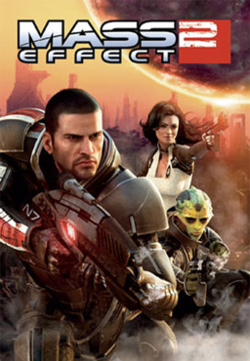
Mass Effect 2

BioWare (EA) - 2010 - PC/X360/PS3

(On my Top 10 Favorite Games list)

I initially thought it would be a neat idea to close out this year and the month of December by doing a countdown of my all-time favorite games and writing reviews for them. But then I realized that I had already done reviews for some of my all-time favorite games like Project M, Minecraft, and Paper Mario: The Thousand Year Door. So while this isn't truly a countdown of my favorite games, the games I write about this month are still very important to me and I have replayed all of them many times. 

The first BioWare game I ever played was Knights of the Old Republic. I admittedly picked it up mostly cause, you know, it's Star Wars! But I actually thought it was mostly a pretty good game. Then Mass Effect came out. I freaking LOVED the first Mass Effect game. Even without the Star Wars license, it was an undeniable improvement over KOTOR in every way. It had a much more interesting and engaging combat system, it had more impactful narrative decision making, and it had more interesting characters and better told story. But maybe most important of all is that the in-game world felt so real and immersive. It had massive lore and backstory and I could read as much or as little about all of the locations and technologies as I wanted. The voice acting and writing was excellent and the game pulled off humor and sarcasm better than most other games at the time. Plus the game looked (and still looks) pretty darn impressive.

Mass Effect 2 is all of these things and more. I believe it to be the epitome of the Mass Effect franchise. ME3 is a good game too, but it didn't feel as refined or complete of a game as ME2. It seemed like one of the design goals of ME2 was to trim a lot of the excess fat that was present in the first Mass Effect. Gone are the clunky vehicle sections. Gone are the annoying canisters of useless extra weapons and armor that you trip over every 5 steps. But returning is the excellent writing and character design. The crewmates on the ship were so varied and interesting, even more so than ME1. Arguably the least interesting characters were the ones that returned from the first game which isn't so much a slight of the first game as much as it is a compliment to the excellent character design of the second. I loved that you also got to see some of the impact of the decisions you made in the first game. It's also a nice reminder that the impact of a lot of the important decisions you make in ME2 will be felt in the next game. Or at least felt at the end of ME2.

Perhaps the most notable improvement in Mass Effect 2 is the combat system. Combat in the first game was somewhat clunky and awkward. It was sometimes hard to tell if you were actually hitting your target and shots tended to clip into invisible barriers or sometimes seem to miss for no reason at all. The combat in ME2 is much more polished and visceral. You KNOW when you get a kill and it feels satisfying. My favorite change in the combat system is with the different weapon types. It's much more rare when you acquire a new weapon, so it feels more exciting. And it's not simply a binary "Is this gun better or worse?" like in ME1. The weapons are all different and have varied strengths and weaknesses. They all play and feel fundamentally differently with different reload speeds, ammo clip sizes, range, and also varied damage and accuracy. You have to play around with the weapons a little to see which one best suits your playstyle. And I love that. Also the excellent level design in ME2 facilitates constant changing of weapons. Some levels are close quarters with lots of short hallways that are perfect for strong shotguns while others can be long, open courtyards perfect for sniper rifles. And the refined abilities and powers are a nice added touch that separates Mass Effect from other action-shooter games. 

While the refinements to the combat system are nice, the real reason I come to ME2 is to get my story on. I loved the darker or at least somewhat more mysterious themes of ME2. I liked that Commander Shepard was no longer a pawn of the Alliance, but was a renegade in league with Cerberus who were villains in the previous game. Sure, Shepard sort of takes orders from the mysterious "Elusive Man" throughout the game, but you're always free to pick your own destinations on the map and unfold the story at your own pace. It gives the game a more open-ended "explore the galaxy on your own terms" kind of feel. The game seems thematically closer to Star Trek than Star Wars which is ironic considering the development team's pedigree. But I loved exploring and discovering the game world in ME2 and the set pieces are all so well written and memorable. Especially at the end of the game. I won't spoil what happens for those who still haven't played it, but ME2 nicely and meaningfully wraps up all of the choices and decisions you've made in the game up to that point. And it does it in a way that is both exciting and memorable.

Mass Effect 2 Video Review:

Summary:
Mass Effect 2 is a great example of a perfect marriage between excellent gameplay and storytelling. It's an excellent sequel that refines everything that was good about the first game in the series and trims out everything else that was not. It should be a must-play game for fans of shooters and fans of great storytelling alike