Showing posts with label *X360. Show all posts

Monday, August 22, 2016

South Park: The Stick of Truth

Obsidian/South Park Digital Studios - 2014 - PC/PS3/PS4/Xbox360/XboxOne

I think the best thing I could tell anyone about this game is not to play it unless you have at least some idea of what South Park is. South Park's patented "did they really just say that?" sense of humor is on display here - only dialed up to 11 because I assume the censorship guidelines for video games are much less strict than network television. So if you're easily offended by, well, anything really, you probably shouldn't play this game. However if you're a fan of South Park and know what you're getting yourself into, you're in for a treat

South Park: The Stick of Truth (TSOT), just like any episode of the television show, is a parody. Whereas the TV show picks a current topic or event or celebrity to parody, The Stick of Truth is a parody of video games while also obviously being one. Specifically, TSOT invokes The Elder Scolls: Skyrim quite a lot between making fart jokes out of dragonshouts and also emulating Skyrim's soundtrack surprisingly well. A few of the characters in the game, especially Cartman, are quite aware of the fact that they are characters in a video game and break the fourth wall frequently to point out that fact to humorous effect. There are several call outs to South Park's most popular episodes and reoccurring characters that will resonate for the fans of the TV show. Without spoiling anything, this game contains some of the most outrageous scenes I've ever played in a video game that may even surprise hardcore fans of the show.

The closest touchstone for the battle system is the Paper Mario series which requires you to perform short mini game-like quick time events to boost your attack power or partially block damage from an enemy. Just as in Paper Mario, I find this type of battle system compliments traditional turn based RPG combat very well as it keeps players a little more engaged since you have to play a little timing mini game while also making strategic decisions on which enemies to target with which attacks at the same time. Even if the mini games are mostly easy and trivial, it's one extra layer of interaction with the combat system that keeps the player engaged and creates the illusion of player skill. In addition to this, you still need to keep track of what enemies are weak to what attacks in the glorified game of rock paper scissors that is the same RPG combat tropes in TSOT as the games it's parodying. 

Summary
TSOT is fairly standard RPG faire with a pretty solid battle system. But the reason you'll play this game is for South Park's patented outrageous and irreverant sense of humor which is executed in TSOT just as good as any episode of the TV show. It's a must play for South Park fans. If you're not a South Park follower, I'd reccommend watching a few episodes of the show before playing TSOT to see if the game is your sort of thing

Monday, January 18, 2016

Dark Souls II

FromSoftware - 2014 - PS3\PS4\X360\XboxOne\PC

I started playing Dark Souls 2 immediately after completing the first Dark Souls game as I couldn't get enough of the first game. It's tough but fair action RPG combat system had taught me to pay attention to enemy attack patterns, be wary of traps and to frequently praise the sun. I needed more. On the surface, Dark Souls 2 appears to be a very safe "more of the same" sequel to the first game. However, there are some notable departures from the original formula once you dig in to the game.

Firstly humanity and hollowing are no longer a boolean "yes" or "no", you're either human or you're partially hollow. The more you die, the more hollow you become and the more your maximum health decreases. This can be reversed by using a consumable "human effigy", which are thankfully quite plentiful in this game. But if you're human or close to being human, the more susceptible to invasions you are. But you can still only summon a friendly companion to battle if you're 100% human.

I know Hidetaka Miyazaki, who directed both Demon's Souls and Dark Souls was busy making Bloodborne during Dark Souls 2's development. I think the lack of his presence is felt when examining some of the details of Dark Souls 2 up close. For example the level design of the first Dark Souls game was something I really loved. All of the levels looped back on each other so that as you progressed, you would unlock natural paths and shortcuts back to earlier levels in the game. Not so much with Dark Souls 2. The level design is much more linear and you'll need to just keep progressing in a certain direction until you can't progress any more, then warp back to another bonfire, which is an ability you have from the get-go in this game. Another really strange design decision is that you can only level up in one particular bonfire by talking to a nearby NPC as opposed to leveling up at any bonfire as was the case in the first game. In practice this becomes rather annoying as you have to warp back and forth to level up and suffer through loading screens each time which seems unnecessary.

Another place where Miyazaki's absence is felt is with the story. Yes, the first Dark Souls game had a sparse and cryptic story as is the case with the second game, but there were memorable characters and bosses and locations. They were made memorable through repeated mentions and given weight by the way they the characters referred to them. Even though the story was sparse and cryptic, it felt plausibly real. Dark Souls 2's story is just simply sparse and cryptic. New locations are discovered and conquered without fanfare or reaction by the game's story. Fighting a boss in Dark Souls 2 is not an epic clash with the legendary creature you've heard so much about. It's just another boss. Even the "greater soul" bosses seem unremarkable from both a story and gameplay perspective.

Speaking of gameplay, the combat is still pretty solid. It's a bit more balanced and polished, and there seems to be more a few more valid builds now. However, I will say that the difficulty curve does seem especially wonky. There are a few pain points in the beginning and middle of the game, but everything else including the end of the game is a relative cakewalk. I've talked with a few friends who have played this game about their experience with the difficulty curve and have had some conflicting reports, so which parts of the game you find challenging may partially depend on your character build and playstyle.

Summary
It may not have the brilliance of its predecessor, but Dark Souls 2 is still a solid game for those people looking for more masochistic fun. Story and level design aren't quite what they were in the first Dark Souls game, but this game is still solid enough to warrant a recommendation. I've now moved on to Bloodborne to satiate my love of these games and have so far been enjoying this same style of game with a fresh setting.

Tuesday, December 22, 2015

BattleBlock Theater

The Behemoth - 2013 - X360/PC

BattleBlock Theater is the third game from developer The Behemoth whose previous games are Alien Homnid and Castle Crashers. It was designed by Dan Paladin (aka Synj) and Tom Fulp, both of Newgrounds.com fame and features the same art style and sense of humor you'd expect if you've played The Behemoth's previous games or are aware of their Newgrounds submissions. BattleBlock Theater is a cooperative 2D platformer that requires two players, connected either online or played locally to navigate through a series of levels that require players to be good platformers, puzzle solvers, and beat-em-up-ers. 

The core gameplay in BattleBlock is mostly good, but what makes this game stand out is the humor. In a bizarre but funny opening cutscene, a narrator (voiced by Will Stamper who is also an active Newgrounds contributor) explains that several friends have been shipwrecked on an island full of cats, because this game's roots are in internet culture. The cats have captured the surviving members of the shipwreck, including Hatty Hattington, the former captain of the ship. The cats, now lead by Hatty Hattington who appears to be the victim of mind control, are forcing the survivors to participate in gladiatorial like challenges in a theater for the cats amusement, which is the very ridiculous context to the actions you're performing throughout the game. The narrator is the real star of BattleBlock Theater and will chime in frequently to comment on the actions you're performing during each stage. When an entire level is complete, you'll be treated to another cutscene featuring the narrator sometimes explaining what's happening in the plot, but mostly just being funny with this game's uniquely weird sense of humor.

Each stage requires both players to cooperate to navigate through a series of traps and enemies, all the while collecting green gems. When enough gems are collected, the stage exit is unlocked, allowing you to advance to the next one. But if you really want to be a completionist, you can try to search for all of the gems in each level. There are two difficulty settings on BattleBlock theater, "Normal" and "Insane", both of which I think are very flawed. On normal when a player dies, they instantly respawn next to their partner. There's pretty much no challenge with this difficulty and because there's practically no punishment or consequence for dying, players are free to be as careless as they want while progressing through each level. This may be fine for some, but I personally need a little more tension and challenge while playing, so I opted for "Insane" mode. In insane mode, when either player dies, both players are forced to restart the entire level. From the beginning. Now this is fine for the first few handfuls of levels, but when the number of enemies and difficulty of platforming starts to rise near the middle of the game, this mode starts to get really frustrating, especially when you pull off a difficult section perfectly, but your partner dies and both players are forced to start the entire level over. I think BattleBlock could have really benefited from some different difficulty settings here. Either a checkpoint system or a number of lives other than just one would have been very, very welcome. This is a relatively simple thing that I think unfortunately really hamstrings BattleBlock Theater

BattleBlock Theater Video Review

Summary 
Overall though, this is still a pretty solid game. It's another good couch co-op game, a type of game which I personally love and have been enjoying its recent resurgence. There are also several competitive mini games included here, most of which I actually didn't mess around with much, but they look like they could be fun if you're into competing rather than cooperating. There's also a built in level editor if you want to make your own sinister stages for your friends to navigate through. All in all BattleBlock Theater is a good game to share with friends, and features the most absurdly weird, yet still funny sense of humor you'll find in a video game

Friday, October 16, 2015

BioShock

2K - 2007 - PC/X360/PS3

Wooo!! 100 reviews! I figured it would be appropriate to cap off #100 with the original Bioshock since I started back in 2013 reviewing the same franchise with my very first review of BioShock Infinite. I still don't think I'm a great games critic or reviewer and I still have a lot to work on, but in re-reading my first review from two years ago, I can see how far I've come. In addition to more comprehensive and insightful writing, I've started including video reviews with my posts as well, in case you hadn't noticed. Of course having 100+ reviews and a ton of content introduces a problem of content discovery, which I'm attempting to remedy with new features like my games of the year list and my top 10 lists - both of which I intend to add to and update often, so keep an eye on those. Anyway, enough with the housekeeping, let's get on to talking about Bioshock.

I remember seeing Bioshock for the first time at E3 2006 before it was released later in 2007. It was by far the most interesting game trailer I saw at E3 that year. The underwater city setting, strange combat powers and gruesome violence were so unlike anything I had seen in a game before. When I eventually got my hands on the game it also played unlike anything I had experienced before, having at that time never played its spiritual predecessors, the System Shock games. Bioshock's combination of shooting mechanics, light RPG and puzzle solving elements, and high level of audiovisual presentation were unlike anything else around at that time. I remember being struck by how cinematic and directed the game felt. It felt like a movie. It felt like an amusement park ride where you're barraged by an overwhelming presentation of audiovisual effects that all spring to life as you pass by them. Bioshock's atmosphere was so unique and refreshing and it absolutely captivated me.

Bioshock takes place in the 1960s and follows the story of a man named Jack who, at the beginning of the game survives a plane crash that leaves him swimming in the middle of the ocean. You guide Jack away from the burning plane and to a lighthouse, the only structure visible in the vast ocean other than the flaming, sinking wreckage. Investigating the interior of the lighthouse reveals a bathysphere which takes you deep underwater and eventually reveals the massive underwater city of Rapture, where the remainder of the game takes place. The trip to Rapture is accompanied by a voiceover from a man named Andrew Ryan, who introduces himself as the creator of Rapture and conveys that he built the city as a haven free from external social, political or religious influences. But of course upon entering the city, it's immediately obvious that something has gone very wrong in Ryan's utopia and now masked and bandaged psychotic murderers known as splicers roam the remains of Rapture. You're contacted via radio by a man named Atlas who urges you to assist him in rescuing his family who he claims has been trapped in the bathysphere dock by Ryan. Atlas warns you to be wary of splicers who were previously Rapture's human residents, driven insane from abuse of a drug called ADAM.

When processed, ADAM becomes something called a plasmid, which when injected into a user's bloodstram can rewrite genetic code and grant its users dangerous and powerful new abilities. In addition to traditional firearms and melee weapons, pasmids serve as your main defense against splicers and Rapture's other many dangerous inhabitants. The use of plasmids also rewards players for their environmental awareness. For example, the electro-bolt plasmid is extra effective when targets are standing in water. Similarly, the incinerate plasmid is effective when used on oil spills that can be found throughout Rapture.

Experimentation with Bioshock's many plasmid powers is one of the most rewarding parts about the game. In fact, the game seems to reward experimentation and clever planning in general. For instance, when splicers are hurt, they often seek out a nearby health station to heal themselves. In addition to being used by the player to heal themselves, these health stations can be hacked to yield cheaper healing prices and to damage any enemies that tries to use it for themselves. Or the player can choose to simply destroy the station which yields several consumable first aid kits. Rapture's hostile security robots can be simply destroyed (they're weak vs. electro-bolt or armor-piercing rounds) or they can be hacked to aid the player in battle. There's a multitude of options available to the player on how to dispatch enemies and it's fun and rewarding to experiment with the game's many systems to find a playstyle and strategy that best suits you.

There's also a moral choice element to Bioshock. "Little Sisters" human girls who have been inplanted with a parasite and mentally conditioned to hunt for and gather ADAM are plentiful throughout Rapture. They and their powerful "Big Daddy" protectors are neutral to the player upon encounter, but Big Daddies will go hostile if they or the Little Sister are attacked. Dispatching a Big Daddy leaves the player with a choice: rescuing or harvesting the Little Sisters. Harvesting kills the Little Sister and grants the player a wealth of ADAM which can be used to purchase new plasmids and other useful upgrades. Rescuing the Little Sisters yields very little ADAM and gives few immediate bonuses, but rescuing multiple Little Sisters can unlock powerful plasmids later in the game.

BioShock Video Review:

Summary
Bioshock is a wonderful blend of an immersive and atmospheric environment, a memorable story, and well designed game systems that reward the player for experimentation. While Bioshock's sequels improved on some mechanics, I don't think they ever recaptured the brilliance of the original game and its great blend of atmosphere, story and game mechanics.

Friday, September 25, 2015

Rock Band 3

Harmonix/Backbone Entertainment - 2010 - X360/PS3/Wii/DS

(On my Top 10 Favorite Games list)

I'm a big fan of the rhythm game genre and in particular the Guitar Hero and Rock Band games. Now there hasn't been a release in either of these franchises since 2010. This fact, coupled with the decreasing sales and popularity of these franchises caused many people to speculate that these types of games were "dead". Then out of the blue, Harmonix announced Rock Band 4 and Activision followed suit with an announcement of Guitar Hero Live. Obviously neither of these franchises are dead (at least at the time of writing) and both have new games launching in the coming weeks, but I do think there are a few reasons we haven't heard from these games in five years. First and probably foremost was oversaturation. If you include the DJ Hero games and the various portable releases from each franchise, Harmonix and Activision combined to release thirty five Rock Band and Guitar Hero titles between 2005 and 2010. I'm serious. Check Wikipedia. The American economic downturn that occurred at the end of last decade certainly didn't do any good to either of these franchises that require players to buy relatively expensive accessories. Plus I think some players decided they didn't want to have ridiculous Fisher Price-looking plastic instruments cluttering their living space anymore. I think that last point still holds true in 2015, but there obviously hasn't been any oversaturation in a while and the U.S. economy is doing better which is why I think we're now seeing releases from these franchises. So what do I want to see from either Rock Band 4 or Guitar Hero Live? Let's take a dive into one of my all-time favorite rhythm games, Rock Band 3, and examine some of the things I think it does well and some of the things it does not so well.

Let's get the bad things with Rock Band 3 out of the way first. The game has obsession with realism and wanting the player to learn real instruments. This is fine when done well, and a game like Rocksmith really shows how this concept can be pulled off successfully. But Rockband 3's execution of this was way too complicated. Rock Band 3 introduced "Pro Mode" for guitar, drums, and its new keyboard accessory. Mad Catz partnered with Harmonix to sell a "pro guitar" with 102 plastic buttons. There wasn't really a great tutorial for this instrument, and the strange chord notation was almost impossible to interpret at the speed Rock Band throws notes at you. Especially for someone who has no actual experience playing guitar (me). This was the same problem with the "pro keyboard" which expected the player to play a 25 button mini-keyboard at full song speed. I actually liked the "pro drums", which added 3 cymbals to Rock Band's normal drumkit of 4 pads. I found it to be a welcomed challenge as opposed to an impossible one. But aside from the drums, I think the whole "pro mode" experiment was a failure, especially when you consider that none of the older DLC or other imported songs supported the pro guitar, and most didn't support the keyboard at all. They strangely did however, support pro drums. My speculation is that the songs were always encoded to differentiate between cymbals and drums, even though the original drum kits only had 4 pads. I think Harmonix has recognized this failure and has removed support for pro instruments and the keyboard peripheral entirely for Rock Band 4 although they will continue to support pro drums. 

The most awesome thing about Rock Band 3 is the massive library of DLC songs you have access to. If you include importable tracks from previous entries in the series, the total of playable songs is upwards of 4,000 which is pretty awesome especially assuming Harmonix makes this library available again for Rock Band 4. You can be practically guaranteed to find something you'll like when browsing the online store. Rock Band 3 also introduces vocal harmonies, allowing there to be more than one vocalist, provided you have more than one microphone. Tracks that support vocal harmonies will show separate vocal tracks with separate lyrics for each singer. Another new feature is the ability for players to drop in and out of songs on the fly without restarting a track. This, combined with the ability to make song playlists and enable "no-fail mode" made it very accessible as a casual party game. Rock Band 3 also features an expanded career mode and a more in depth character creator. All of these features combine to make Rock Band 3 a very full featured and well polished game

Rock Band 3 Video Review

Summary
Despite it's faults and it's misguided attempt to integrate playing "real" instruments, Rock Band 3 is still the most fun I've had playing rhythm party game. I've actually already played a pre-release build of Rock Band 4 at Pax and I think it captures all of the great things that Rock Band 3 did well. If people are willing to dust off their plastic instruments and hook them up to their next-gen consoles, I think Rock Band 4 should do just fine. I probably won't buy it initially as I don't even own a next-gen console yet, but I'm glad these franchises have been resurrected and I'm looking forward to eventually playing more fake plastic instruments.

Wednesday, July 22, 2015

Dark Souls

FromSoftware - 2011 - PS3/PC/X360

I did it! Praise the sun! I've finished Dark Souls! Good Lord this game is mercilessly difficult. And also one of the best designed games I've ever played. If you've heard people tell you how good this game is, it's true. It's also no exaggeration how difficult this game is, so this is definitely not a game for everyone. I think if you're an seasoned gamer who's up for a challenge and you approach this game with patience and an open mind, you'll be able to discover the fun in building your character, experimenting with the game's systems, exploring the masterfully designed levels and discovering this game's hidden lore.

This game simultaneously does the best and worst job teaching mechanics I've seen in a video game recently.The Northern Undead Asylum where you begin the game serves as the game's tutorial. It teaches you how to move your character, to read messages on the floor, and that shiny things and bonfires are good. It teaches you how to defend with a shield by forcing you to walk down a narrow corridor with a guy on the far end shooting arrows at you. The only way you'll make it is learning to use the shield. It then throws a fairly difficult boss at you, teaching you that Dark Souls will be hard and that running away is a valid option and is sometimes the best one. You eventually have to kill the boss to complete the tutorial, but if you manage to scramble across the boss room before he kills you, a better weapon can be found and the game also gives you some hints for dealing more damage. The tutorial also teaches you what is probably Dark Souls' most important lesson which is that you cannot hack and slash your way through this game. You must pay attention to enemy attack animations, learn their tells, and understand when it's safe to attack them. It's an excellent tutorial for the game and teaches you all of Dark Souls' basic mechanics... but it doesn't address or teach its more complex mechanics at all. It's also easy to be overwhelmed by the spreadsheet of statistics presented to you on the player stats page, which isn't explained in detail. Dark Souls is a game that expects its players to learn its more complicated systems by experimentation or trial and error. Or just google everything, which is probably what most people do.

After completing the tutorial level, Dark Souls opens up quite a bit and becomes very non-linear for the rest of the game. You can take any path in any order you want, some paths are easier and intended to be taken first, some paths are harder and intended to be done later in the game, and some paths are completely optional and never required to finish the game. But you don't know which paths are which until you take them. Trial and error is another one of the design themes found throughout Dark Souls. Yes, it's frustrating at times, but the joy of exploring and discovering new paths or new secrets offsets the frustration of accidentally taking a path intended for later in the game and getting your butt kicked.

You can level up your character by spending the souls of the enemies you killed on upgrades while at a bonfire. If you die, you lose all of your accumulated souls, so you're encouraged to spend them often. Mercifully, if you can make it back to where you died, you can recover your lost souls, but dying twice in a row without recovery will see your unspent souls lost forever. It creates a sort of system where even when you're dying over and over again, you feel like you're making progress both through leveling up, and also by learning from deaths, memorizing enemy patterns and remembering level layouts. Progress in Dark Souls can be marked by killing bosses or discovering shortcuts that lead back to previously explored areas in the game, giving the game a bit of a metroidvania feel. You'll find that a lot of the weapons and armor in Dark Souls are not really statistically better or worse, just different. Some weapons may have comparable stats, but differing swing arcs or varying ranges. It's not so much a matter of finding the best weapons and armor in Dark Souls, but finding the ones that best suit your playstyle

There's also an ever-present multiplayer component to Dark Souls. You basically always play the game online, seeing ghostly glimpses of other players and reading the sometimes helpful, sometimes trolling messages left by them. You can also optionally opt-in to a cooperative multiplayer component to get assistance from another player to take down a difficult boss. The thing is, when you opt-in to the cooperative multiplayer, it also makes you susceptible to hostile PvP invasions from other players. It's a really cool mechanical tradeoff and another really smart design decision

The story of Dark Souls is communicated very unconventionally. Often NPCs will reveal very little about themselves or the world around them, so most of the narrative is communicated through environmental storytelling and also reading the item descriptions on new things you pick up. Don't be mistaken, there really is a lot of lore in Dark Souls, it's just hard to find and it's very open ended. The story purposely poses a lot of interesting unanswered questions and leaves it up to the player to fill in the gaps with their own imagination and interpretation of what happened.

Dark Souls Video Review

Summary
Dark Souls is probably the hardest game I've completed. It's also one of the best designed games I've played recently. If you can approach this game with a certain amount of patience and endurance, you'll really enjoy it. The feeling of finally killing that boss you've been stuck on is a feeling of reward that is unmatched in any other game. Even the little rewarding moments of finding a new weapon, or discovering a new shortcut or learning something new about the game's mechanics you didn't know before feels awesome. It's not for everyone, but the people who it IS for will find Dark Souls very enjoyable.

Saturday, May 2, 2015

Rayman Legends

Ubisoft - 2013 - PC/PS3/PS4/Vita/WiiU/X360/XboxOne

If you're looking for excellent platformers, or great couch co-op experiences, the WiiU is the next-gen console you want. To me, what sets the WiiU apart from any of the other next gen consoles are its tablet and its first-party games. The first-party games for WiiIU are the high level of quality you'd expect from Nintendo. Mario Kart 8 and Smash 4 are great and Super Mario 3D world is the best Mario game I've played to date. But I've noticed Nintendo doesn't really know how to implement its own tablet into its own first-party games. Mario Kart 8 simply maps the touch screen to a horn, Smash 4 only uses it to duplicate what's on the TV screen while Donkey Kong Tropical Freeze opts to turn the tablet screen completely off. None of these are inherently bad designs, but it's curios to see Nintendo stumped about what to do with its own hardware. Sure, Mario 3D World does have some light uses of the tablet where occasionally the game will require you to touch some block or something. But nothing like Rayman Legends. I know this game is on a plethora of other platforms, but you NEED to play the WiiU version of this game that utilizes all of the functionality of the WiiU tablet. I'm sure the developers would agree. I also hope Nintendo developers have played this game and are taking notes on how to properly utilize the gamepad.

The beauty of playing this game with the WiiU gamepad comes into play when there's at least more than one player playing the game. One player can play with a Wii Remote or Pro controller and plays through the platforming in a traditional fashion while the other player plays with the tablet screen and is tasked with helping the platforming player progress through levels. This is accomplished by touching to move and slide walls or platforms on the tablet screen or by keeping the platforming player safe by tapping to tickle monsters or by deflecting projectiles away from hitting the platforming player. It seems like each level has a new and inventive use of the tablet's touch screen that made playing each level fun and fresh. Neither the tablet player nor the platforming player are performing the same set of actions either, but both sets of actions are necessary for the level to be completed. This type of asynchronous gameplay experience is especially well implemented in Rayman Legends and requires both the tablet player and the platforming player to work together as a team to solve puzzles and complete the level. This, to me, is also why the definitive version of Rayman Legends can only be played on the WiiU and is probably best played with a partner.

Another thing that sets Rayman Legends apart from other platformers is its use of music. I've seen it before in other games where some background elements will move or dance in time with the music, but Rayman Legends takes this to another level. A lot of Rayman Legends levels require you to actually do platforming actions in time with music. If what I'm describing doesn't make sense, check out this video. But if you do, it may detract from the joy of discovering Rayman Legend's musical levels for yourself for the first time. The musical levels were so cool and I'd love to see this concept implemented in other platformers or even other game genres

Rayman Legends Video Review

Summary
Rayman Legends is one of the best platformers I've played in a long time and I'm enjoying seeing this resurgence of platformers and couch co-op experiences on the WiiU. The WiiU version of Rayman Legends also makes great use of the WiiU gamepad to implement a fun asynchronous co-op experience for both players. The music levels are wonderful and the game does have a great soundtrack in its own right too. Oh and it even features some of the best levels taken from Rayman Origins too! This is a great game and a must-play if you like platformers, co-op play, excellent music and art direction, or creative implementation of asynchronous gameplay

Friday, December 12, 2014

Portal

Valve - 2007 - PC/PS3/X360

(On my Top 10 Favorite Games list)

Continuing my little list of favorite games, this week I want to write about portal. I'm quite aware that most everyone who is reading this is probably already quite aware of the brilliance of Portal, but if there is by some chance some soul out there that is reading this and hasn't played this game, YOU NEED TO PLAY IT. Portal gets an emphatic and universal recommendation for me no matter what gaming preferences are or what genres you usually gravitate towards. It is that important of a game. 

Back in 2007, Valve released "The Orange Box" in retail stores. It was a combo pack of Half Life 2, both Half Life 2 episodes, Team fortress 2, and a little game called Portal. I bought the Orange Box mostly for Half Life 2 and Team Fortress 2 as these were titles I was already familiar with. Portal was pushed to the side for a while while I played the other games. HL2 and TF2 were fantastic games, but when I finally started Portal, my mind was totally blown. I don't use that term lightly either. I can count on one hand the number of games whose mechanics have blown my mind. The original Pokemon blew my mind. Mario 64 blew my mind. Ocarina of Time blew my mind. And Portal blew my freaking mind. 

So for those who are reading this and are unaware, the main gameplay mechanic in Portal is the titular portal gun. The gun allows the shooter to create two separate spatial rifts on flat surfaces that connect one place to another. For instance, if I placed one portal on my floor and one on my ceiling, I could jump down through my floor and come out of the ceiling. Or if I placed one portal in my kitchen and one in my bedroom, I could have an easy shortcut for getting midnight snacks. You can start to imagine the gameplay and puzzle possibilities with this mechanic. The spatial reasoning puzzles were absolutely mind bending and I loved it. Even the momentum based platforming challenges were a blast. The gameplay varied from puzzles to platforming to bullet dodging and sometimes blended all three. The entire game felt fresh and each room was a new challenge to conquer

From a game design, balancing and difficulty curve perspective, this game is as close to perfection as I think I'll ever see a game come. It's a game that knows its mechanics are difficult to grasp for first time players, so it starts out slow to make sure the player understands the basics before things get more complicated. It first introduces the basics of how portals work before it even gives you the gun. Then once you get the gun, it only shoots one end of a portal at a time while the other connecting portal remains stationary to help minimize unwanted confusion while players are adjusting to the mechanics of the game. Then once all of the mechanics are introduced, the game starts slowly ramping up the difficulty of the puzzles and platforming at a perfect pace to match the player's understanding and comfortability with the game. Once you master one mechanic, the next room throws a different one at you. Or sometimes even layers several mechanics from previous rooms all together to make sure you understand them all. Another important thing Portal does is that it never outstays its welcome. Right when it's done throwing all of its layers of tricky game mechanics at you, the game winds down. It winds down particularly well with a satisfying and hilarious boss fight too, but my point is that there is nothing that feels stretched out or tacked on with Portal. Every part of that game feels very necessary and deliberate. It's totally brilliantly constructed and Portal is my gold standard for excellent game design

Also not to be forgotten about is Portal's excellent sense of humor. There's really only two characters in Portal, yourself and the intelligent computer system guiding you through the maze of rooms who is known as GLaDOS. Since your player character is silent, all of the humor in the game is delivered through GLaDOS. It's a subtle type of humor. The game initially wants you to trust GLaDOS as she is the voice who is instructing and coaching you through the test chambers. But then every once in a while, GLaDOS will utter a line of dialogue that makes you think "wait, what?" "did the computer just say what I think it said?". A lot of these lines are intentionally humorous and the game uses this subtle humor to eventually break down the trust that you place in GLaDOS in the beginning of the game as it slowly becomes obvious that GLaDOS is trying to kill you. The game brilliantly uses its subtle brand of humor throughout the course of the game and it has become famous for well known memes based around "the weighted companion cube" and "The cake is a lie".

Portal video review:

Summary:
Portal is an experience that every gamer should have. The puzzles are mind-bendingly brilliant, the platforming is fun and challenging, and the subtle humor keeps the game interesting throughout its duration. Portal 2 was a great game as well, but it didn't really add anything THAT new or mind blowing other than the multiplayer. The game's humor was still really funny, but it was more of an "in your face" comedy than the subtle "what did she say?" style. In any case, you absolutely must play Portal if you haven't already. It's my favorite video game in the last 15 years. 

Friday, December 5, 2014

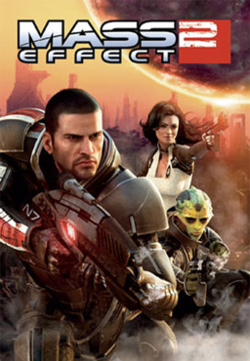
Mass Effect 2

BioWare (EA) - 2010 - PC/X360/PS3

(On my Top 10 Favorite Games list)

I initially thought it would be a neat idea to close out this year and the month of December by doing a countdown of my all-time favorite games and writing reviews for them. But then I realized that I had already done reviews for some of my all-time favorite games like Project M, Minecraft, and Paper Mario: The Thousand Year Door. So while this isn't truly a countdown of my favorite games, the games I write about this month are still very important to me and I have replayed all of them many times. 

The first BioWare game I ever played was Knights of the Old Republic. I admittedly picked it up mostly cause, you know, it's Star Wars! But I actually thought it was mostly a pretty good game. Then Mass Effect came out. I freaking LOVED the first Mass Effect game. Even without the Star Wars license, it was an undeniable improvement over KOTOR in every way. It had a much more interesting and engaging combat system, it had more impactful narrative decision making, and it had more interesting characters and better told story. But maybe most important of all is that the in-game world felt so real and immersive. It had massive lore and backstory and I could read as much or as little about all of the locations and technologies as I wanted. The voice acting and writing was excellent and the game pulled off humor and sarcasm better than most other games at the time. Plus the game looked (and still looks) pretty darn impressive.

Mass Effect 2 is all of these things and more. I believe it to be the epitome of the Mass Effect franchise. ME3 is a good game too, but it didn't feel as refined or complete of a game as ME2. It seemed like one of the design goals of ME2 was to trim a lot of the excess fat that was present in the first Mass Effect. Gone are the clunky vehicle sections. Gone are the annoying canisters of useless extra weapons and armor that you trip over every 5 steps. But returning is the excellent writing and character design. The crewmates on the ship were so varied and interesting, even more so than ME1. Arguably the least interesting characters were the ones that returned from the first game which isn't so much a slight of the first game as much as it is a compliment to the excellent character design of the second. I loved that you also got to see some of the impact of the decisions you made in the first game. It's also a nice reminder that the impact of a lot of the important decisions you make in ME2 will be felt in the next game. Or at least felt at the end of ME2.

Perhaps the most notable improvement in Mass Effect 2 is the combat system. Combat in the first game was somewhat clunky and awkward. It was sometimes hard to tell if you were actually hitting your target and shots tended to clip into invisible barriers or sometimes seem to miss for no reason at all. The combat in ME2 is much more polished and visceral. You KNOW when you get a kill and it feels satisfying. My favorite change in the combat system is with the different weapon types. It's much more rare when you acquire a new weapon, so it feels more exciting. And it's not simply a binary "Is this gun better or worse?" like in ME1. The weapons are all different and have varied strengths and weaknesses. They all play and feel fundamentally differently with different reload speeds, ammo clip sizes, range, and also varied damage and accuracy. You have to play around with the weapons a little to see which one best suits your playstyle. And I love that. Also the excellent level design in ME2 facilitates constant changing of weapons. Some levels are close quarters with lots of short hallways that are perfect for strong shotguns while others can be long, open courtyards perfect for sniper rifles. And the refined abilities and powers are a nice added touch that separates Mass Effect from other action-shooter games. 

While the refinements to the combat system are nice, the real reason I come to ME2 is to get my story on. I loved the darker or at least somewhat more mysterious themes of ME2. I liked that Commander Shepard was no longer a pawn of the Alliance, but was a renegade in league with Cerberus who were villains in the previous game. Sure, Shepard sort of takes orders from the mysterious "Elusive Man" throughout the game, but you're always free to pick your own destinations on the map and unfold the story at your own pace. It gives the game a more open-ended "explore the galaxy on your own terms" kind of feel. The game seems thematically closer to Star Trek than Star Wars which is ironic considering the development team's pedigree. But I loved exploring and discovering the game world in ME2 and the set pieces are all so well written and memorable. Especially at the end of the game. I won't spoil what happens for those who still haven't played it, but ME2 nicely and meaningfully wraps up all of the choices and decisions you've made in the game up to that point. And it does it in a way that is both exciting and memorable.

Mass Effect 2 Video Review:

Summary:
Mass Effect 2 is a great example of a perfect marriage between excellent gameplay and storytelling. It's an excellent sequel that refines everything that was good about the first game in the series and trims out everything else that was not. It should be a must-play game for fans of shooters and fans of great storytelling alike

Friday, October 3, 2014

Resident Evil

Capcom - 2002 (1996 Original) - GameCube/Wii/PS3/X360

Ahhh, October. October has always been one of my favorite months. Maybe it's because I was born in the beginning of the month, or maybe it's because October means football season is in full swing or maybe it's because the oppressive Florida weather where I live starts to cool down a bit and you can go outside again without feeling like you're going to die. Or maybe it's because October is home to Halloween, which has become one of my favorite holidays in my adult life. Aside from eating candy and dressing up like ridiculous characters, the fact that Halloween is a sort of celebration of fear and scary things has always been a novel concept to me. Last year, I observed Halloween by watching a bunch of horror films and exploring specifically why I did or did not find them scary. This year, I'm planning to do the same thing here, but with games. I'm going to kick things off with one of the most obvious and well-known horror games of all time, but I promise in the coming weeks I'll cover some horror games you probably haven't played before. Also if you're looking for other horror titles to try, check out anything I've labeled with the horror tag so far. All of those titles are interesting in their own way and definitely worth a look with Silent Hill 2 being a particular favorite of mine.

The original Resident Evil made its debut on the PS1 in 1996 and is considered to be the genesis of the survival horror game genre. It was very well received critically and commercially and it of course spawned many sequels, spin-offs and movie tie-ins. Starting with Resident Evil 4, recent entries in the series have been more action/shooter than survival horror, but the original Resident Evil is certainly true survival horror. As important and influential as the original is, the game I want to specifically talk about is the 2002 remake for GameCube that was then ported to a bunch of other consoles. The 2002 remake contains completely redone visuals and cutscenes, alterations to gameplay, completely different puzzles and re-recorded voice acting, sound effects and music. This sounds like total blasphemy, especially to remake a game as iconic as the original. But the remake is SO well done; it's faithful to the vision of its predecessor and it's a testament to the quality of the remake that the remake is arguably even more well received than the original. Aside from more immersive sound and graphics, probably the most important thing the remake did was re-record the voice overs. The voice acting was, well, pretty terrible. I think the enhancements made in the remake enable this game to age a little more gracefully and stand the test of time as a horror game masterpiece.

If you've ever played any of the other entries in the Resident Evil series, you know that the story is kind of ridiculous and throw away. There's all sorts of plot holes and inconsistencies and it can get pretty absurd at times. Most of my other favorite horror games use excellent writing to help create their creepy mood, but not really so with Resident Evil. What it lacks in storytelling, it makes up for with superb audiovisual presentation and excellent game design. One of the first unusual things you'll notice when playing the game is that it uses a fixed and stationary camera. The game is still rendered in full 3D, but the camera never moves, only the the player and enemies do. This can be a little disorienting at first, especially when changing scenes, but I'm surprised I haven't seen this elsewhere in other Survival Horror games. It makes the game feel very cinematic and gives the designers complete control over exactly what they want the player to see. In first person games or games with an adjustable camera, the designers have to design set pieces and jump scares around knowing or guessing where the player's camera will be. Resident Evil is freed up to design its scares however it pleases, and it does so very well.

Resident Evil does a great job of not only creating creepy atmosphere with its audiovisuals, but also by creating stress and nervousness through gameplay. Encountering an enemy in is scary in its own right, but that fear is also accompanied by the stress of considering how to deal with the enemy. You may have a pistol, but ammo is limited. Should you still shoot it? Knives don't consume ammo, but are also more risky as you have to get close to the enemy in order to kill it. And even if you do manage to "kill" a zombie, it will actually eventually reanimate and become stronger and faster. You can prevent a zombie from reanimating by burning their corpse, but that means you'll have to carry around kerosene and a lighter which take up precious inventory slots. Burning corpses will also consume kerosene which is preciously finite resource. Is the corpse in a key corridor that you'll have to walk through frequently? It might not be worth your kerosene. And if ammo or health are low, sometimes the best option may be to simply run away.

Another smart game design choice was the limitation of the player's inventory slots. You'll eventually find a giant crate in the game that can store all of your items, but you can only take so many of them with you at a time when you leave. You'll have to make strategic decisions about how many healing items you want to bring, how much ammo you want to bring, whether or not to bring the kerosene/lighter and you'll also want to think about how many inventory slots you want to keep open in case you find something interesting while exploring the mansion. There's also a finite number of saves you can make while playing Resident Evil, which is a really interesting mechanic that I'm surprised more games haven't copied. Your character in the game saves their progress by typing on an old-fashioned typewriter, but using a typewriter requires ink ribbons which are then consumed. When you burn through all of your ink ribbons, you can't make any more saves until you find more ribbons in the mansion. This keeps the player from just killing a few enemies and quickly running back to a save their progress. There's an ample amount of ink ribbons to find in the mansion as to not make the number of saves an annoying issue, but it still makes you think twice before making a save with minimal progress. Very smart game design.

Summary:
Resident Evil is a horror game classic, and the remake is a masterpiece. You absolutely must play this if you're a horror game fan, but if you call yourself that you probably already have. For those looking to test the waters of the survival horror genre for the first time, the Resident Evil remake is a great place to start. It excellently builds and maintains tension through superb audiovisual presentation and smart game design. In the most Capcom of moves, I hear they're remaking the remake for next-gen consoles and PC and it will be out early 2015. I think this is just going to be an "HD remaster" of the remake, but this will still hopefully give more people a chance to play this game. Shinji Mikami, the creative director of Resident Evil, also has his latest game "The Evil Within" coming out later this month. From what I've seen of the game so far, it looks very interesting. Hopefully he can recapture the terror and suspense he created so well initially with Resident Evil

Friday, August 15, 2014

Super Meat Boy

Team Meat - 2010 - PC/X360

As far as indie games go, I know the awareness of Super Meat Boy is pretty high up there. It was featured in the excellent 2012 documentary Indie Game: The Movie, alongside Fez and Braid. And despite being a relatively popular and seemingly well-liked game, it's also frequently deeply discounted (for like $5 or less) in Steam's many summer and holiday sales. But for those who haven't played or heard of Super Meat Boy, read on. Also if you haven't seen Indie Game: The Movie, stop reading this and go watch it. I'm pretty sure it's on Netflix.

Super Meat Boy is the brainchild of artist Edmund McMillen and programmer Tommy Refenes, who call themselves Team Meat. It's actually the sequel to a 2008 browser based flash game which was just called Meat Boy. Check it out here for free if you're interested in trying it. Just know that the sequel is a massive improvement over the original. Tighter controls, better level design, better artwork, higher music quality, multiple playable characters and a lot more polish overall. Both Meat Boy and its sequel seem to have drawn a lot of inspiration from N, and/or N+ a.k.a. "The way of the Ninja" games, which are also free, flash-based games that I totally loved. The one thing these games all share is that they are infuriatingly difficult, but also excellently designed 2D platformers.

Each level of Super Meat Boy requires you to save Meat Boy's girlfriend, bandage girl, from the evil Dr. Fetus. This is accomplished simply by navigating from a starting point to an ending point on a 2D plane, but there are usually many deadly hazards in between. Once you get into the meat of the game -see what I did there?- you'll probably find this game to be extremely difficult. However, by using a well thought out difficulty curve and smart design decisions, I believe Super Meat Boy handles its difficulty extremely well. First of all, the levels are so short that you don't feel like you lose significant progress when you die. There's rarely a level that takes more than 60 seconds to beat.  It can still be frustrating when you die repeatedly on the same level, but because you respawn instantly at the beginning of the level, it makes you want to go right back at it again. It's the good kind of frustrating. The earlier levels introduce you to the precision platforming, wall jumping and sprinting. Then the later levels add more obstacles that incrementally increase the difficulty. By the end of the game, you're doing things that looked completely impossible when you started. It's still very hard, but it's an extremely satisfying difficulty curve.

Super Meat Boy has some really cool bonus features, unlockables and secrets included as well. There's a built in replay system where you can save and share your times and replays to any of your friends who also have the game. Finishing each level in the game under a certain amount of time will unlock a mirrored "dark world" version of the level which usually includes more obstacles or enemies and is even more difficult. There's also the collectible bandages found in the various levels which are usually either hard to find or hard to difficult to get to. These bandages, presumably dropped by bandage girl, can be used to unlock other playable characters which have different speeds or jump heights which add more flavor to the game. There's even hidden warp zones that lead to even more obnoxiously difficult levels for those who are into ridiculously hard challenges.

Summary:
Super Meat Boy is probably one of the most difficult games I've ever completed and I'm quite proud to have finished it. It's also probably responsible for the most swearing I've ever done while playing a game. But don't let the difficulty scare you off, Super Meat Boy is a must play if you're a fan of platformers. It's a difficult game, but it's also a rewarding one. It also boasts an excellent soundtrack and some really cool Castle Crashers-like cartoony graphics. There's also lots of very subtle references to Mega Man, Castlevania and Super Mario Bros. in the animations and artwork. It's good stuff. I'm also quite curious to see what Mew-Genics, Team Meat's upcoming game, is going to be like. If it's half as good as Super Meat Boy, I'll probably still love it.

Friday, July 11, 2014

The Wolf Among Us

Telltale - 2013 - PC/PS3/X360/Mobile

Looking back at some of the things I played last year, I think Heavy Rain might be one of the most important games I played. It was a flawed game, but I enjoyed it immensely. I loved the focus on interactive storytelling and the fact that it was not necessarily worried about being a "game-y" game. It opened the door for me to play other excellent interactive narrative games like 999, To the Moon and Gone Home. But despite the fact that I know I love these types of games, I still had to be sold on The Wolf Among Us. I belonged to the very small camp of people who wasn't completely blown away by Telltale's breakout hit, The Walking Dead game. Although I admit it probably had more to do with the setting and themes of the story than the actual quality of the game. No more zombies for a while, okay popular media? I'm burned out on zombies. But I'm happy to report that The Wolf Among Us won me over and it feels just as fresh and compelling as Heavy Rain did the first time I played it.

The Wolf Among Us is based on the Fables comic book series which I had never heard of prior to playing this game. The basic premise of Fables, and consequently The Wolf Among Us, is that fairy tale characters are real and have adopted magical human disguises to live alongside normal people. TWAU follows the lives of several fairy tale creatures, or "fables" as the game calls them, who are living in a small community called "Fabletown" within New York City. You play as sheriff Bigby Wolf (The Big Bad Wolf) whose job it is to protect and maintain order in Fabletown. Not too long into the game, one of the fables in Fabletown is murdered, which puts Bigby on the trail of a mysterious and dangerous killer

I really liked the setting and themes in this game. It places fairy tales, which we usually think of as light-hearded children's stories, in a dark, gritty and seedy New York City. It deals with mature themes like murder, drugs and prostitution. The narrative loves to dance in morally gray areas and force the player to make morally ambiguous choices throughout the game. The fables themselves are also really interesting and are brought to life through great voice acting. Being not familiar with the Fables series lead me to wonder which fairy tale would be introduced next, and it was always cool to see this game's dark twist on a classic character. In contrast to what seemed like a budgetary and game engine constraint in The Walking Dead, the comic book art style really suits TWAU. I especially liked the purple, black, magenta and yellow neon color palettes that were used during the nighttime scenes in Fabletown.

Mechanically, TWAU plays very similarly to The Walking Dead or Heavy Rain. Most of the game is spent watching a scene play out and then making dialogue choices with the occasional quick time events mixed in. The dialogue choices are where TWAU excels. Making difficult decisions in a short amount of time was the thrilling part of the game. The quick time events were... not. I get that they're included to provide tension during the action sequences in the game, but I didn't like that messing up too many QTEs just put you in a game over fail state. You then have to replay the exact same sequence over again. I much preferred the Heavy Rain implementation of QTEs where messing up a button prompt didn't give you a game over, but instead had a negative effect impact on what your character was doing in the story. That's way more intense to me because I feel more resigned to accept the result of my QTE fest and not just simply repeat it over until I get it right. 

Summary:
Overall, I found The Wolf Among Us to be another excellent interactive story game if you're into this sort of thing. And if you've never tried this kind of game before TWAU is a great place to start. I really enjoyed the characters, setting and themes in the game. Like Heavy Rain before it, the story occasionally stumbles and some of it feels like filler, but overall it's written pretty well. I would love to play a "season 2" of this game similar to what Telltale has done with The Walking Dead. Check out The Wolf Among Us if you want to take a dive into a gritty world of darkly twisted fairy tales

Friday, July 4, 2014

The Elder Scrolls V: Skyrim

Bethesda - 2011 - PC/PS3/X360

Watching season 4 of Game of Thrones got me in the mood for a little high fantasy. Normally that kind of setting is not my thing, but I think Game of Thrones has gotten me to appreciate it more, so I went back and replayed Skyrim. I played it initially when it came out in 2011 and got too distracted by exploring and all of the crazy sidequests and never finished the main storyline. This time around, I stayed focused on the main quest long enough to finish the game and realized that Skyrim actually isn't that long of a game if you can manage not to get distracted. That's the key though. Managing not to get distracted. The game world is so vast, immersive, beautiful and interesting... and at the same time so buggy, repetitive and in some cases downright broken. I have a lot of mixed feelings about this game. For as many things as I can think of that I love about this game, I can think of just as many that I absolutely hate. It's a very Jekyll and Hyde game to me.

First off, the things I hate about this game... Really Bethesda? You had a huge budget to make a massive sprawling universe like Skyrim, but could only afford 3 voice actors? And then you had them repeat the exact same lines over and over again every single time I walk just a little too close to them? It really breaks immersion when I hear the "Some may call this junk..." line by the same voice actor for the billionth time. And stop dropping loot for me to carry if I can only carry like three things. The carry weight restriction is really annoying, especially when this game loves to constantly unload buckets of treasure in front of you after each enemy you slay. I know Skyrim is notoriously buggy, but just two hours in to my playthrough, I encountered an enemy NPC who was literally invincible. I had to give up on one questline because I couldn't kill him. I nearly gave up on my playthrough as well. How has stuff like this still not been patched three years later? But honestly I think I could forgive all those issues if it weren't for this next thing, so listen up Skyrim developers: You CAN NOT repeat the SAME EXACT PUZZLE multiple times throughout your game. The dragon claw puzzle thing only works once, Bethesda. The tenth time I see that puzzle copy/pasted, it comes across as lazy, game-padding filler. It's poor design, it breaks immersion, and it's definitely not clever. That goes for the stupid rotating stone animal tablet things too. And also the combat in this game is kind of "meh". Yeah.

Now on to the good stuff. This game is gorgeous. I'm not an "Ooo look at the awesome graphics" guy either. Even three years later, Skrim still looks graphically impressive, especially with the outdoor scenery. It really does help with immersion and I felt more engaged with in the impressive visuals than I do with most games. I mentioned this before, but it's quite impressive how big of a world Skyrim is. The vast world and scenery is a joy to explore and it seems like there's so many varied and interesting things to do and see. It makes you want to explore every corner of every cave, talk to every NPC and complete every quest just to make sure you don't miss anything cool. While the game systems and AI don't always work the way they should, Skyrim still does a lot of technically impressive things with the game engine. Skyrim does open world sandbox exploration as well or better than any other game I've played.

Summary:
Skyrim is definitely a game whose reach exceeds its grasp in a few places. The exploration is done well, but the puzzles, combat and glitches are black marks on an otherwise excellent open world adventure game. I have a bit of a love/hate thing going on with Skyrim, but there are probably more reasons to play this game than not to. I'd say check it out if you think you might like Skyrim. Just be wary of its lack of polish in certain areas.

Friday, June 20, 2014

Minecraft

Mojang - 2011 - PC/X360/XboxOne/PS3/PS4/Mobile/Vita

(On my Top 10 Favorite Games list)

Wooo 50 reviews! Wooo!! When selecting which games I'll write about each week, I give priority to the more obscure games that people may not have heard of. I think it's important to shine a spotlight on the smaller indie titles that may have slipped through the cracks. Games like To the Moon, The Swapper and The Stanley Parable all offer amazing unique experiences and are deserving of attention and discussion, but tend to run under the radar because they're not behind big publishers. I was thinking for my 50th review maybe I would review one of my all-time favorite video games. A game that I really love, like Ocarina of Time or Final Fantasy VII. But nah, people already know about those games. So I'm here this week to shine a spotlight on a game you may not have heard of. It's a little indie game I discovered called Minecraft.

If you didn't pick up on the heavy sarcasm at the end of that last paragraph and/or are otherwise oblivious to the video game world, Minecraft is hugely popular. Like HUGE. To date, it's sold nearly 50 million copies across all platforms making it one of the best selling video games of all time, according to Wikipedia. That's more than the original Super Mario Bros. A public beta of Minecraft was released in 2009 and it spread like wildfire across the internet, solely through word of mouth. It was officially released in 2011 and has now made it's creator, Markus Persson (a.ka. Notch), like 97 trillion dollars from sales and merchandise. Don't look that last number up, but it's probably true.

So what makes Minecraft so popular? First of all, it's mind blowing. The first time I played Pokemon Red/Blue? Mind blown. First time I played Ocarina of Time? Mind blown. If you've never had your mind blown by a video game, I don't really know how to quantify that for you. The first week I owned Minecraft, I played it obsessively. And when I wasn't playing it, I was thinking about playing it. It's a completely absorbing experience. The other reason I think Minecraft is so popular is that there are just so many ways you can play the game. You can play it like a survival game where you forage for resources and see how long you can stay alive. You can play it like an exploration game, just traversing the vast landscapes and seeing what you'll discover. You can play it like a traditional single player game where you upgrade your weapons and equipment and eventually get strong enough to take down the final boss. You can play it like a creative game because the game engine literally allows you to construct whatever you can dream up, as long as you have the materials. Or you can play with friends and blow each other's stuff up. And the best part is that none of these playstyles are mutually exclusive.

I was a huge fan of LEGOs as a kid. And I guess I still am as an adult. So the creative building block element of Minecraft is really appealing to me. The entire world of Minecraft is randomly and procedurally generated each time you start a new game or explore a new area. The terrain that is generated is essentially just made up of little blocks that the game engine will allow you to remove and replace however you see fit. There's quite a bit possible with just that game mechanic alone. But then you add in the fact that there are rare blocks that are generated like the gold ore block or the diamond ore block that can be used to make more complex objects or tools in the game... this really makes the exploration aspect of the game addicting and satisfying. Then there's the redstone ore. Oh man the redstone. Minecraft's redstone actually allows the player to create complex circuitry with logic gates in the game of Minecraft. People have made calculators and functioning CPUs in the game of Minecraft. That's CRAZY. I hope that helps you understand what a powerful creative tool the engine of Minecraft is. Then there's the people that have recreated famous structures or landmarks in Minecraft. There's the Minecraft Enterprise, the world of Game of Thrones in Minecraft, and Pharrell Williams' "Happy" recreated in game through the engine of Minecraft. That's just awesome.


Summary:
If you want to learn more about Minecraft, its developers, and the impact it's had on the games industry, check out this pretty cool documentary on youtube. If you somehow haven't played this game, you really should give it a try. If you know me personally and want to play on my server, give me a shout. And if you're one of those people who've stayed clear of this game because "eww the graphics are bad", I'm gonna come smack you. You're missing out on one of the most important and unique video game experiences ever created.

Friday, May 16, 2014

Braid

Jonathan Blow - 2008 - PC/PS3/X360

Braid is my gold standard for puzzle design in video games. It introduces a simple concept - most of the puzzles in Braid revolve around time manipulation. You have control of a character and also control over of the flow of time in that character's world. It throws a few puzzles at you that require understanding of these concepts. It starts simple and then elaborates. Each stage tests your understanding of the previous stage's mechanics and also adds in a new layer of complexity. As an avid gamer, as a programmer, and especially as a fan of puzzle games, I'm usually able to learn and understand game systems very quickly. In most puzzle games, it's usually fairly easy for me to figure out where the game wants me to go, what it wants me to do and how I'm supposed to do it. There were a few puzzles in Braid where I just stared at the TV screen for minutes, just trying to comprehend the complex game systems that were being layered to create Braid's sublime puzzles. Braid's puzzles are completely mind bending, but in the best way. It feels great when a solution clicks and you finally figure out what you're supposed to do. And it boggles my mind even more to think how the developer came up with these puzzles.

Braid's levels are divided up into 5 short worlds. Each world introduces and elaborates on a new puzzle solving mechanic. For instance the first world, which is labeled world 2 for some reason, simply introduces character movement and the rewind time mechanic. You can move left and right on a 2d plane and jump just like a platformer. Then it teaches you that you can rewind time to undo your actions Prince of Persia style. This can of course be used to cheat death and undo platforming mistakes you make. You'll need to collect all of the puzzle pieces in each world to unlock final world in Braid. Puzzle pieces are always obviously placed, but difficult to obtain. They are frequently placed behind locked doors or put up high in the air and its up to the player to figure out how to obtain them, which requires a good understanding of the game's time mechanics. A heads up though - the first world is home to my least favorite puzzle in the game. Anyone who has played Braid before knows the one I'm talking about. The solution is kind of ridiculous and out of place with the rest of Braid's excellent puzzle design. You're not wrong for looking up the solution for how to get all of the first world's puzzle pieces.

The second world introduces objects that have a green glow on their outline. With these objects, their physical position and movement is completely unaffected by the flow of time. This concept can be trickier than you would think. In the third world, the flow of time is directly tied to your character's physical position. As you move forward, time advances. As you walk backward, time rewinds. This idea is then combined with the second world's mechanics to create some really mind bending puzzles. The fourth and fifth worlds are similar, both introducing new mechanics and combining them with concepts from previous worlds. The fifth world especially is home to some really excellent and difficult problems.

Where Braid falters a bit is with its story. It's presented by reading short bits of text that are found before each level. The narrative feels very abstract and artsy. There's not a clear sense of who the main character is or what he's struggling with. There's something about the main character and a princess he's in love with or used to be in love with or something, I don't know. It's so unclear and "open to interpretation". I still can't decide if the ending to this game makes any sense or not. I kind of don't think it does. It feels like the developer may have had some message or theme he wanted to communicate to the player, but Braid failed to connect with me on a narrative level.

Summary:
Overall, Braid is a good demonstration of excellent game and puzzle design. Aside from that one stupid puzzle in the first world, I've never been so impressed by creative ideas mixed with well thought out design. It's a bit short and the story is kind of nonsense, but Braid more than makes up for that with its sublime puzzles. If you like these types of problem solving games, Braid is absolutely a must play. The Witness, Jonathan Blow's next game, should be out in the coming months. It's definitely my most anticipated game of 2014 and I'm hopeful it'll be as well made as Braid. Expect a post on it later this year.