Sunday, June 28, 2015

Hotline Miami 2: Wrong Number

Dennaton Games - 2015 - PC/PS3/PS4/Vita

I was waiting until after I finished this game to review it - which I had intended to be a few weeks or so after its release, but that obviously didn't happen. So I've been playing this game on and off trying to get past the part I'm stuck on and you know what? This game is really freaking hard and I don't think I can finish it. At least not right now. So disclaimer: I'm reviewing a game I didn't complete

I could probably be super lazy with this review and just say "It's more Hotline Miami" and in most ways, that's very true. But I'm going to try to be just a bit more insightful and try to highlight some of the differences between this game and its predecessor. First off, the gameplay. It plays largely very similarly to the first game, but you'll notice some differences in level design. Some of Hotline Miami 2's levels are a lot more wide open, which was something that was not really present in the first game. Because of this, I found it much more important to use the camera to look around to see if an enemy is lurking off screen. This becomes kind of annoying, especially when off-screen enemies start shooting you from unseen locations. Nearly every level in Hotline Miami 2 features a different playable character with slightly different abilities, similar to the mask system in the first game. But the player can't change out and experiment with abilities and playstyles when they want to, like in the first game. Levels in Hotline Miami 2 are also generally much longer than the first game. This makes an already hard game that much harder and that much more frustrating when you're killed near the end of the level and forced to start again. It wasn't that big of a deal in the first game, as it was more about the thrill of memorizing relatively short levels and then executing them perfectly. The longer levels in the second game greatly slow it down and make it feel like more of a chore.

(Mild spoilers in this paragraph) The narrative in the first Hotline Miami game was definitely a little open to interpretation. The first half of Hotline Miami saw the player character, "Jacket" slaughtering buildings full of people because a voice on his telephone told him to. The second half of the game (if you follow Jacket's storyline) saw Jacket killing with a purpose instead, tracking down and killing off the people who killed his girlfriend. Many people viewed the story as a commentary on violence in video games, and discussed how killing for no reason vs. the player character killing with a purpose felt the same/different. I admired how Hotline Miami's story could be viewed through many lenses and how the vagueness of the story left it open for the players' imaginations to fill in the gaps. Hotline Miami 2's story has a similar vagueness, but it's compounded by each level being played by a different character and then each level also being told chronologically out of order. I just couldn't even follow what was supposed to be happening. The story seemed like some crazy blur of violence, neon lights, pounding music and confusion. Maybe that's what the developers were going for?

The soundtrack in Hotline Miami 2 is still very much on point. It's still a collaboration of many different artists, even more than the first game, that have somehow banded together to make a unified sound. Most of the first game's musical authors have returned to contribute fresh tracks, but I loved contributions from new artists as well. A few of my favorites are "Divide" by Magna, "Blizzard" by Light Club, and "The Way Home" by Magic Sword. The entire soundtrack is solid from top to bottom and is worth a listen if you like this sort of electronic/techno music.

Summary
I didn't care for the minor changes in gameplay and story but despite all of my above griping, Hotline Miami 2 is still a solid game. Fans of the first game should still enjoy its sequel, but if you haven't played Hotline Miami before, start with the first one. It's the superior game

Wednesday, June 3, 2015

DOTA 2

Valve - 2013 - PC

This is a bit of a strange review as I'm not sure who my target audience is. I feel like most people who have heard of DOTA 2 are quite aware of what it is and already know whether or not they like it. Similarly, I feel like the gamers who have somehow managed to not have heard of the massively popular DOTA 2 are also probably the people who either won't like or won't care about this game. So let me preface this review with a few disclaimers: First of all, I'm not being critical of DOTA 2 due to some MOBA bias. I realize both DOTA 2 and League of Legends are currently both massively popular and players of each game tend to have strong opinions about which is better. I don't care. I'm completely apathetic towards both games. Secondly, it should probably be known that I'm not very good at DOTA 2. Like at all. I've probably played maybe 4 or 5 games of DOTA 2 total, but it's enough to know that this is not a game for me.

So for those who aren't aware, the basic rules of a multiplayer online battle arena or MOBA are that two competing teams of players are pushing towards some sort of team goal which is usually the capture or destruction of the enemy team's base. There are also usually strong RPG elements to the game where players will have to level up to improve and strengthen their character. This can be done both by killing players on the enemy team which is risky, but rewarding or also by killing weaker non playable characters known in the MOBA communities as "creep". Character choice plays an important role in MOBAs as most characters have vastly varying strengths, weaknesses, statistics, abilities and playstyles. Ideally, teams will consist of complimentary characters and playstyles to create a strong and versatile team. Some MOBAs have further in-match customization of characters through equippable items, weapons, or armor

I love competitive games with a lot of depth, strategy and skill, so several of my friends have recommended this game to me many times. I don't deny that DOTA 2 has a ton of depth, demands a lot of high level thinking and strategy and also requires a fair amount of actual technical skill to be good. These are the aspects of DOTA 2 that appeal to me and make me want to play the game. But it comes in a wrapper that includes so many other aspects that I don't care for. The biggest and most off-putting aspect of DOTA 2 is the community. The DOTA 2 community is notoriously hostile and unwelcoming towards new players, which I am one of. I mean, I kind of understand the problem. It's a team game and people want to win. No one wants to play with a team member who doesn't know what they're doing. The other problem is match length. A typical game of DOTA can last upwards of 45 minutes. Finding 45 consecutive uninterrupted minutes is a lot to ask of my free time. That's not even counting the time spend waiting for other players to join and queue up the game. I like the freedom of starting and stopping my games on my own time.

The final and maybe most fixable problem is the immense barrier of entry to this game. There's a ton of game mechanics, item functions and matchup knowledge to learn before you can start to really compete in this game. Any good game has a learning curve, but I found DOTA's tutorial to be buggy and uninformative. During one part of the tutorial, my character got stuck on a bridge and was unable to move. Then a later section of the tutorial was uncompletable for me because the game wouldn't detect when I bought the correct items from the shop, then I ran out of gold. The character specific player guides didn't seem that helpful unless you were already comfortable with the basic mechanics and terminology of the game. DOTA 2 has an assumed set of knowledge from its users that brand new players don't and won't have. Even the UI seems clunky and unintuitive to me. It took me 5 minutes just to figure out how to leave a game. I'm sure if I was really driven to learn this game by myself, I could look past some of these flaws, but I just don't want to put in the time to learn a game I don't think I'll have fun with

Summary
I know I'm being harsh on a popular and well-liked game, but it's not for me. A hostile community, long play sessions and a nightmarishly large learning curve will likely bar me from playing this game indefinitely. On the bright side though, it's free to play. So try it yourself and make up your own mind as to whether DOTA 2 is worth your time investment

Monday, May 25, 2015

Donkey Kong Country: Tropical Freeze

 Retro Studios (Nintendo) / Monster Games - 2014 - WiiU

(On my Top 10 Game Soundtracks list)

I grew up with the Donkey Kong Country games and am a huge fan. When Donkey Kong Country Returns came out in 2010, I was super excited to see the franchise revived after nearly a 15 year absence. But I was ultimately pretty dissapointed with that game mostly due to control scheme problems. It was back when every Wii game was obliged to shoehorn in Wii Remote waggling of some sort or another, so DKC:Returns forced you to shake the controller every time you want to roll. It was just awful. A simple design decision made what would have been an otherwise pretty good platformer nearly unplayable for me. I found a downloadable hack online that patched in the ability to map the controller shaking to a button, so I'd recommend Googling for it if you want to go back and play DKC: Returns because that game is fundamentally broken out of the box. The egregious controller shaking was unforgivable, but I noticed another small problem with DKC:Returns. It had a bit of an identity problem. It was a decent platformer with some admittedly pretty good level design, but it didn't really feel like a Donkey Kong Country game. Where were the Kremlings? Where were all the animal buddies other than Rambi? Where was the amazing head rocking music I was used to from previous entries? Sure it featured Donkey Kong characters, but the soul of the game was stripped away. For a game titled "Donkey Kong Country Returns", it didn't really feel like the franchise HAD actually returned.

So now onto Tropical Freeze. The first thing it does right is provide support for other control schemes. There is still Wii Remote waggling, but you don't have to do it if you play with either the WiiU gamepad or pro controller. Hallelujah!! This automatically makes the game much more enjoyable. The game also looks gorgeous in HD. The visuals were always so striking in DKC games, even on the SNES so it was nice to see some TLC paid to the backgrounds and artwork. The next thing you'll notice is the soundtrack. David Wise, the main composer of the SNES trilogy, has returned to the franchise to pump some soul back into it. I'll talk about him later, but what really made this a Donkey Kong Country game for me was a simple animation. Dixie Kong's falling/sliding animation. It's an animation that's rarely ever seen in either Tropical Freeze or the SNES DKC games, but it plays when Dixie is sliding down a surface. She sticks her arms and legs straight up and flails them around in the air. Again, it's a silly animation rarely ever used, but as soon as I saw it, it made me smile. It's the little polish developers can apply that make die-hard fans like myself feel at home in the franchise. No, there's still no Kremlings or animal buddies other than Rambi. But Tropical Freeze is a Donkey Kong Country game.

Dixie Kong is back from DKC 2/3! And Cranky Kong is now a playable character! Each Kong has their own special abilities. Diddy retains his jetpack hover from DKC:Returns and can now use it underwater to swim super quickly. Dixie makes Diddy somewhat obsolete with her hair flutter which carries the player higher/father in the air than Diddy's jetpack. Cranky Kong, my new favorite Kong, can pogo bounce on enemies and over spikes with his cane a la Duck Tales. Choosing which Kong to accompany you on a level is a new interesting decision as certain levels are tailored to certain Kong's abilities. Each level has been designed perfectly for speed running and platform and enemy placement is done just so basting through at full speed is possible if you have enough skill. Another speedrunner-friendly addition is then inclusion of replays. When you finish a level, you can post your replay online for friends/challengers to see. You can also view the replays of the top speed runs for a given level to see how it was actually possible to complete it in 43 seconds or whatever. This was a pretty cool addition. And don't let the cutsey Nintendo mascots fool you. This game is hard. Old-school hard. And if the normal levels aren't hard enough for you, you can find all of the K-O-N-G letters in each world to unlock bonus levels that are obnoxiously hard. I have only been able to finish one of the bonus levels so far. And I'm pretty darn good at this game.

Can we talk about the genius of David Wise for a second? When I heard he was back to work on the Tropical Freeze soundtrack, I was super pumped. Listening to the soundtrack was what actually made me want to play this game. The original tracks are awesome - Windmill Hills, Deep Keep and Fruity Factory. And the remix tracks are awesome too - Current Capers (Remix of DKC Aquatic Ambience), Irate Eight Chase (Remix of DKC2 Lockjaw's Saga) and Twilight Terror (Remix of DKC2 Stickerbrush Symphony). I actually think I like that cover of Stickerbrush Symphony better than the original. And I love the Original. If you like video game music or David Wise's work, I'd encourage you to listen to the whole soundtrack. There's lots of musical variety and it's absolutely phenomenal.

Video Review of DKC: Tropical Freeze

Summary
Tropical Freeze is the true return of the Donkey Kong Country franchise. A game with tight controls (yay!), excellent level design, striking visuals and rocking music are what you'll find here. If you're a fan of challenging platformers, speedrunning or excellent audiovisual presentation, you'll enjoy Tropical Freeze. It's a fun game to play cooperatively as well.

Friday, May 15, 2015

Ori and the Blind Forest

Moon Studios - 2015 - PC/XboxOne

You may remember this game from its brief demo at E3 last year (2014) where a white squirrel thing was shown jumping through beautiful scenery. It was one of the most visually memorable trailers I saw at E3 last year. And I'm happy to report the game is just as strikingly beautiful as its trailer. Ori and the Blind forest is a Metroidvania style platformer and is the first game from indie developer Moon Studios. I suspect Moon Studios is comprised of at least a couple industry veterans as this game is beautiful, very well designed and oozes quality.

Before being published by Microsoft, Ori and the Blind Forest was developed in the Unity engine over the course of four years. Moon Studios cited the Rayman and Metroid franchises as influences for these games, and that's immediately obvious in both the high quality artwork (Rayman) and gameplay (Metroid). I'm personally a big fan of Metroidvania style gameplay, but since the Metroid series is somewhat MIA right now and Castlevania seems to be content making God of War clones, I've had to turn to other games like Ori to get my Metroidvania fix

If you've never played a Metoidvania style game before, the game is usually set in a large, non-linear game world with an emphasis on exploration and finding secrets. They often feature some sort of blend of platforming and combat, and often have light RPG elements where you can progress and improve your player character. Ori chooses to go somewhat light on the combat aspect (most enemies can be defeated by simply mashing the attack button), but instead focus most of the difficulty in the game around platforming. I didn't find the combat in this game that engaging or challenging at all, but there were a few segments that demanded perfect execution of precision platforming in a limited amount of time and messing up required repeating the entire platforming segment. It never felt TOO frustrating, but it was close.

Aside from this game's striking visuals, the first unique thing I noticed about it is that Ori will let you save nearly anywhere you like and at any time you like, provided there are no enemies nearby and you also have enough "spirit energy", which this game uses as currency for saving. Since the player can save anywhere and anytime they wish, Ori is free to ramp up the difficulty of the platforming to a pretty high level and also introduce enemies and hazards that can kill you in one hit. But it never feels unfair because you only lose as much progress since you last saved. I found I had enough spirit energy to comfortably save about every 30 seconds. It's kind of the Super Meat Boy effect. The game is quite difficult and you'll die often, but it never becomes too frustrating or feels too unfair because you only lose about 5-10 seconds of progress and then the game immediately brings you right back to try again.

Ori and the Blind Forest Video Review

Summary 
If you like Metroid or Castlevania styled games, or games like Guacamelee!, for instance, you may want to give Ori a try. Or if you dig really artsy and visually striking games, Ori also applies. I really enjoyed my time with Ori and the Blind Forest and am looking forward to see what's next from Moon Studios

Saturday, May 2, 2015

Rayman Legends

Ubisoft - 2013 - PC/PS3/PS4/Vita/WiiU/X360/XboxOne

If you're looking for excellent platformers, or great couch co-op experiences, the WiiU is the next-gen console you want. To me, what sets the WiiU apart from any of the other next gen consoles are its tablet and its first-party games. The first-party games for WiiIU are the high level of quality you'd expect from Nintendo. Mario Kart 8 and Smash 4 are great and Super Mario 3D world is the best Mario game I've played to date. But I've noticed Nintendo doesn't really know how to implement its own tablet into its own first-party games. Mario Kart 8 simply maps the touch screen to a horn, Smash 4 only uses it to duplicate what's on the TV screen while Donkey Kong Tropical Freeze opts to turn the tablet screen completely off. None of these are inherently bad designs, but it's curios to see Nintendo stumped about what to do with its own hardware. Sure, Mario 3D World does have some light uses of the tablet where occasionally the game will require you to touch some block or something. But nothing like Rayman Legends. I know this game is on a plethora of other platforms, but you NEED to play the WiiU version of this game that utilizes all of the functionality of the WiiU tablet. I'm sure the developers would agree. I also hope Nintendo developers have played this game and are taking notes on how to properly utilize the gamepad.

The beauty of playing this game with the WiiU gamepad comes into play when there's at least more than one player playing the game. One player can play with a Wii Remote or Pro controller and plays through the platforming in a traditional fashion while the other player plays with the tablet screen and is tasked with helping the platforming player progress through levels. This is accomplished by touching to move and slide walls or platforms on the tablet screen or by keeping the platforming player safe by tapping to tickle monsters or by deflecting projectiles away from hitting the platforming player. It seems like each level has a new and inventive use of the tablet's touch screen that made playing each level fun and fresh. Neither the tablet player nor the platforming player are performing the same set of actions either, but both sets of actions are necessary for the level to be completed. This type of asynchronous gameplay experience is especially well implemented in Rayman Legends and requires both the tablet player and the platforming player to work together as a team to solve puzzles and complete the level. This, to me, is also why the definitive version of Rayman Legends can only be played on the WiiU and is probably best played with a partner.

Another thing that sets Rayman Legends apart from other platformers is its use of music. I've seen it before in other games where some background elements will move or dance in time with the music, but Rayman Legends takes this to another level. A lot of Rayman Legends levels require you to actually do platforming actions in time with music. If what I'm describing doesn't make sense, check out this video. But if you do, it may detract from the joy of discovering Rayman Legend's musical levels for yourself for the first time. The musical levels were so cool and I'd love to see this concept implemented in other platformers or even other game genres

Rayman Legends Video Review

Summary
Rayman Legends is one of the best platformers I've played in a long time and I'm enjoying seeing this resurgence of platformers and couch co-op experiences on the WiiU. The WiiU version of Rayman Legends also makes great use of the WiiU gamepad to implement a fun asynchronous co-op experience for both players. The music levels are wonderful and the game does have a great soundtrack in its own right too. Oh and it even features some of the best levels taken from Rayman Origins too! This is a great game and a must-play if you like platformers, co-op play, excellent music and art direction, or creative implementation of asynchronous gameplay

Wednesday, April 15, 2015

Pokemon Omega Ruby/Alpha Sapphire

Game Freak - 2014 - 3DS

After Gold/Silver, I had taken a pretty long break from the Pokemon franchise until two years ago when I picked up Pokemon X/Y for my 3DS on its release. I thought X/Y was a decent enough game, I liked the 3D models, enhancements to the battle system (especially the Exp. ALL given at the very beginning of the game) and finally the integration of Pokemon trading over the internet. I criticized the extremely weak story writing and the laughably easy difficulty. Like I said before, I thought it was a decent Pokemon game and a good first foray into the 3D environment for the franchise, but it didn't really rekindle the love I had for the series when I had played Red/Blue or Gold/Silver as a kid. I wasn't even planning on playing Omega Ruby or Alpha Sapphire until my girlfriend suggested it was something she was interested in and thought we could play through them together. I figured I would pick it up, play through the first few gyms with her and then most likely forget about it as there are so many other games I've been playing recently. Quite the opposite happened. At the time of this writing, I have completed the game a mere couple weeks after picking it up while my girlfriend has moved on to other games. I could feel the "One more battle" addiction that I had as a kid returning while I was also simultaneously fighting off the "Gotta catch 'em all" compulsion.

Omega Ruby and Alpha Sapphire (ORAS) aren't really totally new Pokemon games, they're really more 3D upgrades or re-imaginings of the 2002 Ruby and Sapphire Game Boy Advance games. Before playing ORAS, I had previously thought I had never played the old Ruby and Sapphire versions, which was mostly true, but as I began playing I realized I had casually played Pokemon Emerald on an emulator back in college. Emerald was a 2003 pseudo sequel/remake to Ruby and Sapphire the same way that Pokemon Yellow was a sequel/remake of Red/Blue. So faint memories of playing the original began returning even though the new game is in 3D and features new Pokemon and all that. The events and story of the original are mostly intact, although my memory of this game is admittedly quite fuzzy, while the battle system and mechanics have been upgraded to match X/Y and also include all of the new X/Y pokemon. You can actually transfer over all of your Pokemon from X/Y using Nintendo's Pokemon Bank software, but there is of course a $5 fee charged to use this service which I shamefully admit I paid for. Gotta catch 'em all, I suppose.

ORAS isn't the same giant leap forward for the franchise the same way X/Y was with new graphics and features and game modes, but it does polish what X/Y did very nicely. The difficulty curve in ORAS feels much more adequate and I found I wasn't constantly annihilating opposing Pokemon trainers in my way, but at the same time it's not exactly what I would describe as a difficult RPG. There are a few new features they've added to the game which were pretty cool. The first of which, called "DexNav", makes it possible to spot wild Pokemon in the grass before even entering a battle with them. This is really nice for completionists like myself who want to guarantee an encounter with a specific Pokemon instead of wandering around back and forth in the grass, just hoping to encounter that one rare Jigglypuff or whatever it is you're looking for. They've also finally made a 3D model of the world map that you can optionally soar around in when you use the HM move "Fly", but this isn't as interesting as you might think. I didn't find the 3D world map model to be that detailed or interesting and, in practice, you'll find that this mode is just a less convenient version of picking your destination off of the 2D map. They've also added a ton more mini-games to play with your Pokemon that improve their base stats or improve their happiness value, but I have no idea what the latter even matters.

Summary
Pokemon ORAS is a pretty cool re-imagining of the original Ruby and Sapphire games which are now nearly 15 years old believe it or not. If you're a fan of the original Ruby and Sapphire versions, you won't be disappointed with this remake. If you're a new fan and looking for an entry point to the series on the 3DS, I'd recommend ORAS over X/Y. A slightly more interesting story, further refinements and additions to the pokemon gameplay, more mega evolutions, and a better balanced and more challenging difficulty gives these games the clear edge in my book. Now if you'll excuse me, I'm off to finish the "delta episode", which is apparently some new end-game story they've added on.

Wednesday, April 1, 2015

The Talos Principle

Croteam - 2014 - PC

Not to be confused with one of the Gods of Skyrim, The Talos Principle is a philosophically themed puzzle game and has nothing to do with any of the Elder Scrolls games. Released late last year (2014), The Talos Principle was made by a small European development studio based in Croatia whose only previous notable works are the Serious Sam games. Being a puzzle game, The Talos Principle is a huge departure from the FPS style of the Serious Sam games so I was expecting this title to maybe be a little rough around the edges and maybe expose the inexperience of the development team making a game in a new style, but this was not the case at all. The Talos Principle is air tight, and features some of the best puzzle design and well executed narrative I have ever experienced in a video game.

The game begins as your player character wakes up in a seemingly abandoned garden. Between the lines of computer text scrolling across the screen or the occasional glimpse of your own metallic fingers, you'll quickly realize that your player character is a robot. Your unnamed character soon begins to hear a voice in his head. The voice refers to himself as Elohim (Hebrew for God) and starts referring to you as "my child". But not really in the typical motherly/fatherly parental way; the voice refers to you as "my child" the same way a God would address his creation. The voice then guides you around the garden and asks you to solve various puzzles to obtain "sigils", which will unlock more areas of the garden which will allow you to collect more sigils

The structure of the game is broken down into solving puzzles, obtaining sigils, reading pieces of story text and then repeating the process. This structure and repetitive pacing of The Talos Principle might be the only complaint someone could have against it, unless you don't care for difficult puzzles, which this game definitely has. I've often criticized games for being too repetitive and not offering enough variety of gameplay, but I never really got that feeling from this game. Even though it was a very lengthy (about 40 hours) puzzle game, I never felt like it outstayed its welcome. There was enough variety in the puzzle rooms and with the methods used to solve the puzzles that I never got the sense that I was doing the same thing over and over. The Talos Principle felt like a longer version of Braid, but 3D and with different puzzle mechanics. It's what I'd imagine The Witness would play like, if it ever gets released. I really can't stress enough the brilliance of in the design of the puzzle rooms here. The Talos Principle introduces puzzle elements, makes sure you understand how they work, then slowly increases the difficulty and complexity of the puzzles. Some of the later puzzles required me to just stop and stare at the screen and think. I love when games can get me to do that.

The Talos Principle Video Review

Summary
I know we're still very early in 2015 and also this game came out in December 2014, but The Talos Principle will more than likely be my 2015 game of the year. I was totally blown away by the superb puzzle design and the amazing presentation of the story. There's so much about the story I didn't want to reveal here for fear of spoilers, but exploring the island and finally uncovering its secrets felt really rewarding. The Talos Principle is everything I want in a video game. I would highly recommend it to fans of puzzle games or people who enjoy excellent game design

Wednesday, March 18, 2015

The Jackbox Party Pack

 Jackbox Games - 2014 - PC/PS3/PS4/XboxOne

Being the giant trivia nerd that I am (I attend trivia at a local bar nearly every week), I was eager to try the video game version of the You Don't Know Jack party game. I had heard positive buzz about the game and that it combined good trivia questions with excellent writing and a silly sense of humor, which I found to be true. I saw the 2015 edition of the You Don't Know Jack game on a steep sale in the Steam store, but it came bundled with a bunch of other games from the You Don't Know Jack developers. I wanted to play You Don't Know Jack and figured the other games were probably just throw away titles that the developers shoved in with You Don't Know Jack, but I was pleasantly surprised to be mostly wrong. This will be a bit of an unusual review since I'll be covering five games at once, but I'll try to give my opinion on the package of games as a whole and then some quick thoughts on each game in the package.

Each of the games in the Jackbox Party Pack assumes that all players in the room have either a smartphone or tablet or laptop or some other internet-enabled device. Each player uses their internet device, usually a smartphone, to connect to a web app and enter a "room code" which links the game together with the other devices and players in the room. Depending on which game in the pack you're playing, each player will submit either answers to questions, or drawings or whatever data is required for the game through their smartphone. I was actually quite surprised and impressed with how responsive the web app was when submitting data from my phone. There was almost no delay at all. It's a kind of neat strategy of utilizing the smartphones people likely already have as input devices and displaying the other game information on the main TV screen. I hope to see more party games integrate with smartphones since it's often hard to play video games with really large groups of people since controllers are usually limited.

You Don't Know Jack 2015 Edition
Likely the most recognizable game in the pack, You Don't Know Jack 2015 edition was the first game I played. It was pretty much exactly what I was expecting: good trivia questions delivered with silly humor. I thought the humor was a little hit and miss. When the writing was funny, it was funny. But when the jokes didn't land, they definitely did not land. The trivia questions were difficult, but still fair. If you weren't too familiar with the question category, I found it kind of hard to contribute since the game penalizes you for wrong answers. But if you like trivia and enjoy questions delivered with a crude sense of humor, you'll enjoy You Don't Know Jack

Fibbage
If you've ever played the party game Balderdash, you'll find Fibbage very familiar. In Fibbage, you're presented an incomplete sentence about weird fact and it's up to you to fill in the blank. Then everyone's answers are displayed on screen and you have to guess which is the actual true answer. You usually want to try to be as tricky as possible answer submissions, since points are awarded if your opponents guess your false answer as the correct one.

Drawful
Probably my favorite game in the pack, Drawful is pretty much the same concept as Fibbage, but with drawings. You'll be given a wacky subject that you'll have to make a drawing of. Once your drawing is complete, it's displayed on screen for all to see. Your opponents have to come up with fake answers for the title of your drawing while also trying to figure out what your drawing is actually about. There's a lot of fun to be had with this one, since the names of the drawings given to you are often crazy. Then add in the fact that all players are drawing on their phones with their fingers. This results in the drawings usually ending up being totally ridiculous. Then guessing who made what with your friends and figuring out what the real titles are while sifting out the hilarious fake title submissions is a great recipe for fun.

Word Spud
This one's fun, but you'll probably only play it once or twice. You'll be given a starting word, then a randomly selected player has to make a compound word or phrase from the initial word by adding another word. For example, the starting word might be "Video", to which a player might add "Game". Then another random player would be given "Game" and be expected to add another word to it. After each submission, all players can vote on whether to accept or reject the new word. If the word is accepted, the chain continues, otherwise a new random word is generated. The fun here is thinking quickly to come up with words to complete a clever or funny phrase. At the end of the game, which usually lasts a few minutes or so, Word Spud will show you your entire word chain which when read out loud is usually worth a few laughs. 

Lie Swatter
Probably the weakest game in the pack, lie swatter presents a true/false trivia question and awards points for the most correct answers. This is probably the most simple and least creative game in the pack, but it's also playable by up to 100 people at a time, so this might be the way to go if you have a really large group of people. 

Summary
I've been having a really great time with the Jackbox Party Pack. It's great to put up on the TV when I have more people over than I do controllers for traditional video games. You Don't Know Jack is fun for when you want to show off your random knowledge while being amused with crude jokes. Drawful was the surprise hit of the pack for me, easily providing hours of hilarious entertainment. Fibbage and Word Spud are midly enteraining, while Lie Swatter felt like a shoe-in. But if you often host large-ish groups of people (5-8) and are looking for video games to play, I would still highly recommend the Jackbox Party Pack

Sunday, March 1, 2015

Enemy Mind

Schell Games - 2014 - PC

Enemy Mind is an interesting take on the arcade style space shooter games like Galaga. In most arcade style space shoot-'em ups, you'll pilot your ship through a level, all the while collecting powerups or weapons that may make your craft stronger. In Enemy Mind, your ship has the ability to take over and "transfer consciousnesses" into any other enemy ship. Each craft also has a limited ammo supply, so you'll usually want to expend your entire ammo clip before transferring over to another ship. This creates a gameplay style where the optimal strategy is also the most fun one: blow all your ammo trying to kill everything on the screen, transfer to another ship, rinse and repeat

The playstyles and designs of the enemy ships are varied and interesting enough to make it exciting each time you encounter a new type of enemy craft. It makes the player want to take it over immediately and experiment around with how much armor the craft has and how its weapon systems work. Some craft are agile with fast firing, low damage weapons. Some craft are slower with huge area of effect damage style explosions. Some craft are themselves weapons and are designed to be torpedoed into other craft to drill through their hulls. There's also an accompanying story that is played after each stage in the single player campaign, but I almost entirely ignored it. It was doled out in little text lines one at a time and it seemed mostly forgettable and inconsequential.

Summary
Enemy Mind isn't a revolutionary arcade style shooter, but it's a lot of fun. If you like games like Galaga, you'll have a good time with Enemy Mind. Navigating the bullet hell that the enemies throw at you while throwing back a bullet storm of your own while simultaneously possessing and experimenting with new craft and different playstyles felt really good. The boss battles are challenging and unique. There's also a couch co-op multiplayer mode, but I unfortunately haven't gotten a chance to check it out yet. This seems like the kind of game that would be fun to screw around in for a little while with another friend. I wouldn't go out of your way to buy it immediately, but it's worth a look if you find it discounted on a Steam sale or something like that

Sunday, February 15, 2015

Super Mario 3D World

Nintendo - 2013 - WiiU

When I was a kid, I always thought about how cool Super Mario Bros. would be if it were multiplayer. Yes, yes, I know, the original Super Mario Bros. was 2 player, but not in the way I wanted. I wanted simultaneous multiplayer where two players could sit down and play through a level cooperatively. I finally got my wish in 2009 with the release of New Super Mario Bros. Wii. It was a great game, but the multiplayer was pretty chaotic, even with just 2 people. Even when you weren't intentionally trying to do so, it was pretty hard not to screw over your partners while playing the game. It was too easy to be bumped into a hole by a friend, eaten by a partner's Yoshi or be hit by a friendly Koopa shell that was intended for an enemy. My friends and I nicknamed it "The Friendship Ruining Game". Thankfully, Mario 3D world fixes these problems... mostly. There will still be times when one player bounces off another's head accidentally, but it's still such a welcome improvement over New Super Mario Bros. since Mario 3D world offers the players so much more room to move around in its large 3D plane. Things can still get hectic at times if you're playing with four players and everyone is scattering to the corners of the screen to do their own thing. But for the most part, this is a very tight platformer where it's more fun to play co-op than by yourself

Super Mario 3D World feels like a return to form for the Mario franchise. It seems as though Nintendo thought about what made each of the previous Mario games good, polished the crap out of it and incorporated it into Mario 3D world. There's the basic level layout with powerups and the flagpole at the end of each stage from the Original Super Mario Bros. There's the four unique characters from Mario 2, each with their own speeds/jumping ability (Toad FTW). There's the world Map from  Mario 3 complete with toad houses, hammer bros. battles and other hidden secrets. There's all of the Koopa Kids from Super Mario World, each in their own fortress and each with their own pattern to figure out and conquer. There's the 3D free roaming gameplay from Mario 64 complete with its signature wall jumps, long jumps and somersaults through the air. There's the brilliant level design of the Mario Galaxy games (and even some cameos from Mario Galaxy characters). And obviously, the co-op gameplay from the New Super Mario Bros. games. There's even a nod to the original Mario Kart in one of the levels. Mario 3D World is not without its own identity either. There's a unified theme throughout the game of... cats. Yeah, like kittens. Cats, strangely enough. One of the first new powerups you'll obtain is the cat suit which allows you to climb walls, scratch and pounce on enemies, and most importantly let out a character specific "Meow" at the end of each level which is admittedly pretty adorable.

Super Mario 3D World Video Review

Summary
Mario 3D world is just FUN to play. It's really such a joy. Each level is completely different from the last and has its own unique feel with its own hidden secrets to find. There was so much care and polish put in to this game. It's the full realization of what my dream of what a 3D co-op Mario game could be as a kid. It's also the first 3D Mario game to be in true HD and it looks wonderful. It's the system seller the WiiU so desperately needs and it very well may be the best Mario game to date.

Sunday, February 1, 2015

Shatter

Sidhe Interactive - 2009 - PS3/PC/Mobile

(On my Top 10 Game Soundtracks list)

I had already been listening to Shatter's excellent soundtrack for about a year before I actually tried playing the game. I actually found this game through its soundtrack and bought it during the Steam winter sale when it was super cheap. Shatter is an Arkanoid clone made in 2009 originally for the PlayStation network. If you think you've never played the original Arkanoid before, you missed a classic. Or if you're like me, you played Arkanoid, but never realized it had a name. Other than looking and sounding gorgeous, Shatter separates itself from Arkanoid by implementing a slightly more complex physics engine where the player can manipulate the ball via "blow" and "suck" mechanics. This seems like an easy spot for a lewd joke, but I'm gonna try to be mature here and just keep going.

Shatter has several game modes including a couch co-op mode, but the only one I've played as of this review is Shatter's "story move". In story move, you play through 7 or so stages of Arkanoid-like gameplay before being confronted with a boss fight. The boss fights usually consist of trying to guide the ball into the bosses' glowy weak point using the blow and suck mechanic. It was these boss fights which highlighted what I thought was the primary problem with Shatter. I found I was hitting the bosses' weak points accidently through luck or random chance just as often as I was while intentionally trying to guide the ball with the blow and suck mechanics. The developers presumably included the blow and suck mechanics to give the player more control over the ball and add more skill and precision to Arkanoid. But it really doesn't matter. The blow and suck mechanics are implemented in such a way that it's still pretty hard to tell where the ball is going to go after you incluence it. Plus the screen is so chaotic and the balls bounce off of objects so randomly that you hit your intended target just as often through accident as on purpose. In fact, I felt the levels that required the most skill and control were the bonus levels where the blow and suck mechanics were taken away from you and there were no other objects on the screen

Shatter's somewhat mindless gameplay is given a boost by its impressive futuristic abstract graphics and hypnotic neon bloom particle effects. But what Shatter really stands on is its soundtrack. Oh my God the soundtrack. Standout tracks are Amethyst Caverns, Freon World and Granular Extractor, but the whole soundtrack is top to bottom amazing. It's the kind of hypnotic electronic trancey sound that is a perfect compliment to Shatter's gameplay. It's also great to work to or to fall asleep to. I mentioned in the introduction I actually listened to the soundtrack years before playing the game and probably would never even have given it a chance if not for the incredible music. The entire soundtrack was composed by Jeremiah Ross (a.k.a. "Module") who, to my knowledge, had never composed a game soundtrack before working on Shatter. I'd love to see him get more work; the Shatter soundtrack is truly awesome.

Shatter Video Review

Summary:
As I said before, Shatter's gameplay is kind of mindless, but I don't mean that in a negative way in this instance. It's can be a nice experience to put on the game, watch the pretty lights and colors and zone out to the amazing soundtrack with minimal interaction. If this sounds like it might be your thing, give Shatter a try. Or if you'd like to see a modern take of the classic Arkanoid, Shatter is your game

Thursday, January 15, 2015

Theatrythym Final Fantasy: Curtain Call

Square Enix - 2014 - 3DS

See Also My Top 10 Final Fantasy Games List

Finally back with my first review of 2015! Hope everyone out there had a fun and safe holiday break. I happened to take my 3DS with me while visiting family and got a chance to play some Theatrhythm Curtain Call. It's a rhythm game whose soundtrack is made of compositions from nearly every Final Fantasy game to date. Curtain Call is a sequel to the first Final Fantasy Theatrhythm game which came out in 2012. I actually got a chance to play the first game earlier last year, but didn't write a review on it. Both games are basically Square Enix's attempt to try to capture the audience of Final Fantasy fans who love the soundtracks for the series. And as someone who is a huge Final Fantasy and Nobou Uematsu fan, this game is a great tribute to the series and its music

The gameplay in Curtain Call basically consists of listening to a Final Fantasy song and then tapping along on your DS screen with your stylus, guided by on screen tapping prompts. The game scores you on how well you did or if you perform too poorly, you can fail a song a la Rock Band or Guitar Hero. But as long as we're comparing rhythm games to one another, Curtain Call is much more similar to Elite Beat Agents gameplay wise. There are also some light RPG elements which I guess are obligatory because Final Fantasy. You can choose a party of Final Fantasy characters from pretty much every game in the series, give them skills and items and level them up. Your character's level and skills can give you point bonuses or extra health or other helpful things while playing, but the RPG elements of Curtain Call can really be ignored if you're not into that sort of thing. If you're just playing the game for the music and rhythm parts, not micromanaging your party won't hurt you. Or if you're really into maxing out your party for the highest points and most health, that's cool too. But I guess it doesn't speak too well about the importance of Curtain Call's RPG system if you can completely ignore it while playing the game

Let me just say that having played both games, Curtain Call is completely superior to the original game in every way. If you want to try this series out, go straight after Curtain Call and don't bother with its predecessor if you have the choice. Curtain Call has every single song from the original plus way more. It also has more unlockable characters, a slightly more complex RPG system, a hefty growing library of DLC, and more gameplay modes than the original including a multiplayer mode.

Summary:
Curtain call is the the perfect type of portable game for me. Gameplay sessions can be short - you don't have to commit a huge amount of time to playing the game and you can save pretty much at any point. It's also quite easy to pick back up after not having played for several weeks. It's a great tribute to the quality musical compositions in the Final Fantasy series and seeing all of the FF characters be cartoonized was actually kind of adorable. There's also now some DLC out for Square Enix games other than Final Fantasy. Hooray for Chrono Trigger DLC! It's a nice addition to your 3DS library if you're a Final Fantasy fan or a fan of rhythm games. It's a must-buy if you're both!

Friday, December 26, 2014

The Legend of Zelda: Ocarina of Time

Nintendo - 1998 - N64/3DS

(On my Top 10 Favorite Games list)

See also my Top 10 Zelda Games list

I was having a discussion with a friend about which Zelda game a newcomer to the franchise should play first. Wind Waker and Twilight Princess were brought up, but Ocarina of Time wasn't even mentioned. And I wasn't really opposed to that. This game is a difficult sell to someone who has never played a Zelda title before. It's not so much that subsequent games have made massive improvements on the formula that OoT established or anything like that. But I realize that the reason I love this game is that I have SO MUCH NOSTALGIA tied up in this game. It was the first Zelda game where I got to explore the sprawling fields of Hyrule, the first Zelda game that really hooked me on its story and got me interested in its locations and characters and it was the first Zelda game I replayed over and over again obsessively. And the music! Oh man, the music. It always brings back so many memories. So either you read the last few sentences and knew exactly what I was talking about or you haven't played OoT. While I don't necessarily believe that subsequent Zeldas are "better" games, it's hard to come up with a sell for this game over other Zelda titles that isn't childhood nostalgia. But it's important to note how hugely important and impactful this game was when it came out.

This game was made in the era where 3D games were starting to come into their own. The first 3D game I played that really blew my mind was Mario 64. Those Mario worlds were fun to play and run around in, but what set the 3D worlds of OoT apart from Mario 64 were that OoT's 3D world felt "real" and lived in. It was a joy to explore. Especially with all of the detail put into the world; it made you want to explore each nook and cranny to make sure you didn't miss a hidden secret. I can distinctly remember being totally blown away by this the first time I played the game. I remember just walking around some of the villages and using the first person camera to admire all of the details.

The gameplay of OoT was revolutionary at the time and set a lot of precedents for how the rest of the 3D Zelda games would play. It sounds kind of silly now, but a lot of what we take for granted gameplay and systems wise not only in Zelda games, but 3D games in general had to be invented from scratch here. Everything from the way the puzzles worked to how the combat would function had to be converted from a 2D world to a 3D world. One of the most notable of these new 3D game systems was OoT's "Z targeting" system which governed how the camera would function in combat. By facing an enemy and pressing the Z button, the player could focus the camera on just one enemy until either the focus is switched by pressing the Z button again or the enemy is defeated. The developers did a fantastic job bringing this franchise into a 3D world

The Legend of Zelda - Ocarina of Time Video Review

Summary:
OoT is sort of a difficult sell for someone who has never played a Zelda game before, because I'd only be selling them on nostalgia. My personal recommendation is to play Wind Waker if you've never tried this franchise before. I understand the WiiU version, which contains some graphical enhancements and gameplay tweaks, is the definitive version of the Wind Waker. But for "game connoisseurs" and people who have somehow otherwise missed out on playing OoT and are interested, it is one of my all time favorite games. I actually haven't played the 3DS remake of Ocarina of Time, so I can't speak for its quality, but I hear good things. I'm not really interested in playing OoT on a handheld and while the enhanced graphics look beautiful, they also clash with all of the great memories I have of playing the original version. And while I admit there's a great amount of nostalgia tied to my Ocarina of Time love, I am still confident in saying it is one of the greatest video games ever made.

Friday, December 19, 2014

Final Fantasy VII

Squaresoft - 1997 - PC/PS1

(On my Top 10 Favorite Games list)

See Also My Top 10 Final Fantasy Games List

I actually played Final Fantasy 7 for the first time several years after it was released. A friend of mine gave me both the FF7 and FF8 discs at the same time. I initially decided to play FF8 as it was the newer and more graphically realistic of the two games. FF7's blocky and cartoony graphics initially turned me off and I didn't get around to playing through it until after I finished FF8. I liked FF8 well enough at the time, but it wasn't until I went back and played through FF7 that I realized how superior of a game Final Fantasy 7 is. It taught me an important lesson that I still think about when playing games now: graphics are just not as important as good gameplay and an interesting story

Final Fantasy 7 was the first game in the series released on the PS1 and was also the first game in the series to not appear on a Nintendo console. More importantly, it is also the game that is credited with popularizing the Japanese role playing game genre for western audiences. It is also the first game in the Final Fantasy series to fully embrace a futuristic sci-fi setting as opposed to the Tolkien-esque fantasy settings found in the previous games. Earlier games in the series had some futuristic and science fiction elements, but Final Fantasy 7 really embraced this aesthetic and fully built its characters and setting around it

Final Fantasy 7 follows the story of Cloud Strife, an amnesiac mercenary who joins a band of freedom fighters who call themselves Avalanche and are trying to stop the money-loving Shinra corporation from installing environment polluting "mako reactors" across the planet. The first part of the game deals with the Avalanche vs. Shinra conflict, but then the game and story really opens up as you begin to uncover the details of Cloud's past, his lost memories and how a mysterious man known as Sephiroth ties in to the story. You'll also of course explore the backstory to all of your party members, who are all well written and interesting characters. It's a truly gripping and mysterious story that had me hooked from the beginning and kept me interested to the end. It's a difficult game to put down because if whatever's happening in the story doesn't hold your attention, the addicting and well designed battle system probably will.

Just like any other entry in the Final Fantasy series, the battle system in FF7 is completely unique, but I believe this is my favorite battle system found in any of the Final Fantasy games. This battle system allows for a high degree of character customization through the new "materia" system. In the game, materia are basically little magic jewels that characters can equip on their weapons and armor to grant additional stat bonuses or new abilities. For instance, if you want a party member to learn a fire spell, you simply place the "fire" materia into one of the materia slots on that character's weapon or armor. What makes this system interesting is that some materia can be paired together. For example, if you wanted to be able to cast fire on all enemies at once, you can pair a "fire" materia with an "all" materia, assuming you have both. Players have to make some fun strategic decisions when building out their party as some weapons may be statistically better, but have fewer materia slots. Further adding to the strategic complexity of this system is that materia can gain experience and level up, granting you further statistical bonuses or more powerful spells. Another smart piece of game design is that some weapons and armors can increase the growth rate of the materia, but at the cost of fewer total materia slots. It's an excellent battle system that forces the player to think carefully about their party's build.

Adding to the perfect harmony of excellent gameplay and well-told story is the masterfully composed soundtrack. I know I've said it before, but Nobou Uematsu is a genius. The PS1 sound chip makes the tracks sound very MIDI-ish, but pay attention to the composition of the pieces. It's genius. Even more mind blowing is the crazy musical variety found in each track. There's the sleazy "Oppressed People", the dark and beautiful "Anxious Heart", the playful carnival-like "Gold Saucer", the nightmarish "Those Chosen by the Planet" and of course, the rockin' boss battle anthem "Those who Fight Further". But really, the whole soundtrack is totally amazing from top to bottom. Give it a listen if you're into video game music

Final Fantasy VII Video Review:

Summary:
Final Fantasy 7 is a masterpiece of a game. It's a perfect blend of engaging story, smart game design and a top-notch soundtrack. I've tried many times to recreate the experience of playing FF7 for the first time be trying various other Japanese role playing games, but none can quite recapture the brilliance of FF7. It's a must-play for fans of RPGs with great storytelling, don't let the blocky graphics scare you off. Speaking of which, I'd love to see that FF7 HD remake sometime in my lifetime

Friday, December 12, 2014

Portal

Valve - 2007 - PC/PS3/X360

(On my Top 10 Favorite Games list)

Continuing my little list of favorite games, this week I want to write about portal. I'm quite aware that most everyone who is reading this is probably already quite aware of the brilliance of Portal, but if there is by some chance some soul out there that is reading this and hasn't played this game, YOU NEED TO PLAY IT. Portal gets an emphatic and universal recommendation for me no matter what gaming preferences are or what genres you usually gravitate towards. It is that important of a game. 

Back in 2007, Valve released "The Orange Box" in retail stores. It was a combo pack of Half Life 2, both Half Life 2 episodes, Team fortress 2, and a little game called Portal. I bought the Orange Box mostly for Half Life 2 and Team Fortress 2 as these were titles I was already familiar with. Portal was pushed to the side for a while while I played the other games. HL2 and TF2 were fantastic games, but when I finally started Portal, my mind was totally blown. I don't use that term lightly either. I can count on one hand the number of games whose mechanics have blown my mind. The original Pokemon blew my mind. Mario 64 blew my mind. Ocarina of Time blew my mind. And Portal blew my freaking mind. 

So for those who are reading this and are unaware, the main gameplay mechanic in Portal is the titular portal gun. The gun allows the shooter to create two separate spatial rifts on flat surfaces that connect one place to another. For instance, if I placed one portal on my floor and one on my ceiling, I could jump down through my floor and come out of the ceiling. Or if I placed one portal in my kitchen and one in my bedroom, I could have an easy shortcut for getting midnight snacks. You can start to imagine the gameplay and puzzle possibilities with this mechanic. The spatial reasoning puzzles were absolutely mind bending and I loved it. Even the momentum based platforming challenges were a blast. The gameplay varied from puzzles to platforming to bullet dodging and sometimes blended all three. The entire game felt fresh and each room was a new challenge to conquer

From a game design, balancing and difficulty curve perspective, this game is as close to perfection as I think I'll ever see a game come. It's a game that knows its mechanics are difficult to grasp for first time players, so it starts out slow to make sure the player understands the basics before things get more complicated. It first introduces the basics of how portals work before it even gives you the gun. Then once you get the gun, it only shoots one end of a portal at a time while the other connecting portal remains stationary to help minimize unwanted confusion while players are adjusting to the mechanics of the game. Then once all of the mechanics are introduced, the game starts slowly ramping up the difficulty of the puzzles and platforming at a perfect pace to match the player's understanding and comfortability with the game. Once you master one mechanic, the next room throws a different one at you. Or sometimes even layers several mechanics from previous rooms all together to make sure you understand them all. Another important thing Portal does is that it never outstays its welcome. Right when it's done throwing all of its layers of tricky game mechanics at you, the game winds down. It winds down particularly well with a satisfying and hilarious boss fight too, but my point is that there is nothing that feels stretched out or tacked on with Portal. Every part of that game feels very necessary and deliberate. It's totally brilliantly constructed and Portal is my gold standard for excellent game design

Also not to be forgotten about is Portal's excellent sense of humor. There's really only two characters in Portal, yourself and the intelligent computer system guiding you through the maze of rooms who is known as GLaDOS. Since your player character is silent, all of the humor in the game is delivered through GLaDOS. It's a subtle type of humor. The game initially wants you to trust GLaDOS as she is the voice who is instructing and coaching you through the test chambers. But then every once in a while, GLaDOS will utter a line of dialogue that makes you think "wait, what?" "did the computer just say what I think it said?". A lot of these lines are intentionally humorous and the game uses this subtle humor to eventually break down the trust that you place in GLaDOS in the beginning of the game as it slowly becomes obvious that GLaDOS is trying to kill you. The game brilliantly uses its subtle brand of humor throughout the course of the game and it has become famous for well known memes based around "the weighted companion cube" and "The cake is a lie".

Portal video review:

Summary:
Portal is an experience that every gamer should have. The puzzles are mind-bendingly brilliant, the platforming is fun and challenging, and the subtle humor keeps the game interesting throughout its duration. Portal 2 was a great game as well, but it didn't really add anything THAT new or mind blowing other than the multiplayer. The game's humor was still really funny, but it was more of an "in your face" comedy than the subtle "what did she say?" style. In any case, you absolutely must play Portal if you haven't already. It's my favorite video game in the last 15 years. 

Friday, December 5, 2014

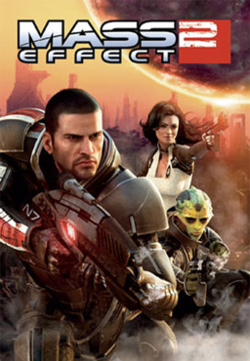
Mass Effect 2

BioWare (EA) - 2010 - PC/X360/PS3

(On my Top 10 Favorite Games list)

I initially thought it would be a neat idea to close out this year and the month of December by doing a countdown of my all-time favorite games and writing reviews for them. But then I realized that I had already done reviews for some of my all-time favorite games like Project M, Minecraft, and Paper Mario: The Thousand Year Door. So while this isn't truly a countdown of my favorite games, the games I write about this month are still very important to me and I have replayed all of them many times. 

The first BioWare game I ever played was Knights of the Old Republic. I admittedly picked it up mostly cause, you know, it's Star Wars! But I actually thought it was mostly a pretty good game. Then Mass Effect came out. I freaking LOVED the first Mass Effect game. Even without the Star Wars license, it was an undeniable improvement over KOTOR in every way. It had a much more interesting and engaging combat system, it had more impactful narrative decision making, and it had more interesting characters and better told story. But maybe most important of all is that the in-game world felt so real and immersive. It had massive lore and backstory and I could read as much or as little about all of the locations and technologies as I wanted. The voice acting and writing was excellent and the game pulled off humor and sarcasm better than most other games at the time. Plus the game looked (and still looks) pretty darn impressive.

Mass Effect 2 is all of these things and more. I believe it to be the epitome of the Mass Effect franchise. ME3 is a good game too, but it didn't feel as refined or complete of a game as ME2. It seemed like one of the design goals of ME2 was to trim a lot of the excess fat that was present in the first Mass Effect. Gone are the clunky vehicle sections. Gone are the annoying canisters of useless extra weapons and armor that you trip over every 5 steps. But returning is the excellent writing and character design. The crewmates on the ship were so varied and interesting, even more so than ME1. Arguably the least interesting characters were the ones that returned from the first game which isn't so much a slight of the first game as much as it is a compliment to the excellent character design of the second. I loved that you also got to see some of the impact of the decisions you made in the first game. It's also a nice reminder that the impact of a lot of the important decisions you make in ME2 will be felt in the next game. Or at least felt at the end of ME2.

Perhaps the most notable improvement in Mass Effect 2 is the combat system. Combat in the first game was somewhat clunky and awkward. It was sometimes hard to tell if you were actually hitting your target and shots tended to clip into invisible barriers or sometimes seem to miss for no reason at all. The combat in ME2 is much more polished and visceral. You KNOW when you get a kill and it feels satisfying. My favorite change in the combat system is with the different weapon types. It's much more rare when you acquire a new weapon, so it feels more exciting. And it's not simply a binary "Is this gun better or worse?" like in ME1. The weapons are all different and have varied strengths and weaknesses. They all play and feel fundamentally differently with different reload speeds, ammo clip sizes, range, and also varied damage and accuracy. You have to play around with the weapons a little to see which one best suits your playstyle. And I love that. Also the excellent level design in ME2 facilitates constant changing of weapons. Some levels are close quarters with lots of short hallways that are perfect for strong shotguns while others can be long, open courtyards perfect for sniper rifles. And the refined abilities and powers are a nice added touch that separates Mass Effect from other action-shooter games. 

While the refinements to the combat system are nice, the real reason I come to ME2 is to get my story on. I loved the darker or at least somewhat more mysterious themes of ME2. I liked that Commander Shepard was no longer a pawn of the Alliance, but was a renegade in league with Cerberus who were villains in the previous game. Sure, Shepard sort of takes orders from the mysterious "Elusive Man" throughout the game, but you're always free to pick your own destinations on the map and unfold the story at your own pace. It gives the game a more open-ended "explore the galaxy on your own terms" kind of feel. The game seems thematically closer to Star Trek than Star Wars which is ironic considering the development team's pedigree. But I loved exploring and discovering the game world in ME2 and the set pieces are all so well written and memorable. Especially at the end of the game. I won't spoil what happens for those who still haven't played it, but ME2 nicely and meaningfully wraps up all of the choices and decisions you've made in the game up to that point. And it does it in a way that is both exciting and memorable.

Mass Effect 2 Video Review:

Summary:
Mass Effect 2 is a great example of a perfect marriage between excellent gameplay and storytelling. It's an excellent sequel that refines everything that was good about the first game in the series and trims out everything else that was not. It should be a must-play game for fans of shooters and fans of great storytelling alike